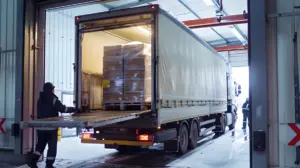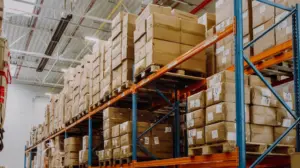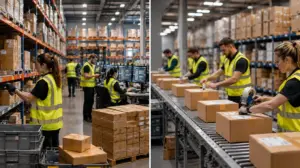

When freight delays or inventory mismatches occur in a supply chain, the impact extends beyond logistics. It disrupts revenue flow and customer trust. A delayed shipment can halt production schedules, create stockouts, increase transportation expenses, and negatively affect customer satisfaction. In an environment where supply chains are expected to move faster and operate leaner, transportation decisions must be based on visibility, cost control, and operational reliability.
For organizations looking to compare LTL freight rates, the challenge is no longer finding a carrier. The challenge is identifying the most efficient transportation option while balancing service quality, transit performance, inventory availability, and total landed cost.
Industry research from Gartner Supply Chain Insights and FreightWaves continues to highlight the growing importance of transportation visibility and digital freight optimization. Companies that leverage carrier comparison tools and integrated logistics platforms are better positioned to control transportation spending and improve fulfillment performance.
ENorth Logistics supports businesses across Canada and the United States through a unified logistics platform backed by a 98.7% on-time delivery rate and management of more than 500 shipments monthly. These capabilities help organizations overcome fragmented freight operations and create a more coordinated transportation strategy.
The reality is that many supply chains still struggle with disconnected systems, inconsistent carrier communication, and limited visibility into freight pricing, creating unnecessary logistics inefficiencies.
Why Modern Supply Chains Are Struggling With Freight Visibility and Fulfillment Delays
Transportation networks have become increasingly complex. Businesses often manage multiple warehouses, fulfillment centers, carriers, suppliers, and delivery destinations simultaneously. While this network structure supports scalability, it also introduces operational blind spots that impact shipping performance.
A Supply Chain Manager handling multi-warehouse operations cannot track SKU-level movement in real time when inventory systems and transportation platforms operate independently. Inventory synchronization gaps frequently lead to shipment delays, stock allocation errors, and fulfillment bottlenecks.
An ecommerce operator using multiple carriers struggles with inconsistent tracking data, varying service levels, and different freight pricing models. Without centralized shipment visibility, comparing transportation options becomes time-consuming and often reactive.
Warehouse Operations Managers face similar challenges when disconnected Warehouse Management Systems (WMS) fail to communicate effectively with Transportation Management Systems (TMS). This disconnect can create delays between order fulfillment, freight booking, and shipment dispatch.
Carrier comparison is most effective when transportation, warehousing, and fulfillment systems operate within a connected environment. Without that visibility, logistics teams often make shipping decisions based on incomplete information, increasing costs and reducing operational agility.
Why Freight Rate Comparison Is About More Than Finding the Lowest Price
Many organizations assume that the cheapest transportation quote automatically delivers the best value. In reality, successful freight optimization requires evaluating the total operational impact of each carrier option.
LTL carriers calculate rates using several variables, including freight class, shipment density, weight, dimensions, distance, fuel surcharges, and accessorial requirements. A lower initial quote can quickly become more expensive if reclassification fees, liftgate charges, residential delivery fees, or transit delays occur later in the shipping process.
Carrier network efficiency also plays a critical role. A carrier with a lower rate may require additional transfer points, increasing the risk of shipment handling issues and delayed deliveries. Transit routing efficiency, cross-dock operations, and service consistency must be evaluated alongside pricing.
ENorth Logistics helps businesses improve freight decision-making through a unified logistics platform supported by 24/7 live tracking support and 99.999% operational reliability. Real-time shipment visibility allows transportation teams to compare service options with greater confidence while maintaining operational control.
For Transportation Managers and Procurement Leaders, this approach improves shipping cost analysis by focusing on total transportation performance rather than base rate comparisons alone. Better visibility often leads to stronger logistics savings over time.
Migrate to an integrated logistics system with ENorth Logistics’ freight, warehousing, and fulfillment platform. Explore solutions here.
How Accurate Shipment Data Prevents Costly LTL Billing Surprises
One of the most common causes of freight cost overruns is inaccurate shipment information. Errors involving freight class, dimensions, pallet counts, weight declarations, or handling requirements frequently result in carrier reweighs and reclassification fees.
The National Motor Freight Classification system assigns freight classes based on density, handling characteristics, liability, and stowability. Incorrect NMFC classifications can significantly increase final shipping costs after invoicing.
Operationally, these errors often originate in warehouse environments where inventory data, packaging information, and transportation planning are not fully synchronized. Inaccurate shipment details can also delay carrier pickups and create disputes between warehouse teams and transportation providers.
ENorth Logistics addresses these challenges through real-time WMS inventory scanning and SKU tracking processes that improve shipment accuracy before freight enters the transportation network. Accurate inventory data supports better freight planning and reduces administrative friction throughout the shipping lifecycle.
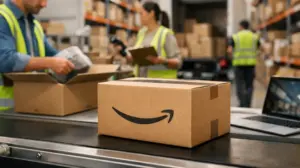
This level of visibility is especially important for Amazon FBA fulfillment operations. Compliance requirements demand accurate labeling, inventory documentation, and shipment preparation. Any discrepancy between warehouse data and transportation records can create costly delays and compliance issues.
For Fulfillment Managers and Logistics Coordinators, accurate shipment profiling supports both operational efficiency and freight cost control.
Migrate to an integrated logistics system with ENorth Logistics’ freight, warehousing, and fulfillment platform. Explore solutions here.
Why Carrier Network Coordination Reduces Cross Border Freight Costs
Cross-border freight transportation between Canada and the United States introduces additional complexity beyond domestic shipping. Customs documentation, regulatory compliance requirements, carrier handoffs, and shipment visibility challenges can all influence transportation costs.
Many businesses experience delays due to fragmented carrier communication and limited shipment traceability. A missed customs document or delayed status update can affect production schedules, inventory replenishment timelines, and customer commitments.
Comparing LTL carriers becomes particularly important in cross-border environments where service consistency and compliance capabilities vary significantly between providers. Organizations must evaluate both pricing and operational execution when selecting transportation partners.
ENorth Logistics leverages a unified Canada and USA logistics platform that integrates freight transportation, warehousing, and fulfillment services. Through carrier relationships with Purolator, DHL Freight, FedEx Freight, XPO Logistics, and TForce Freight, businesses gain access to broader carrier network efficiency while maintaining shipment visibility.
Supported by management of more than 500 monthly shipments and real-time shipment tracking systems, logistics teams can make more informed transportation decisions while reducing cross-border inefficiencies.
Import Export Coordinators, Distribution Managers, and Supply Chain Directors benefit from improved shipment transparency, stronger compliance support, and enhanced carrier orchestration across international freight networks.
Migrate to an integrated logistics system with ENorth Logistics’ freight, warehousing, and fulfillment platform. Explore solutions here.
Why Integrated Freight, Warehousing, and Fulfillment Create Long-Term Logistics Savings
Transportation costs should never be evaluated independently from warehouse operations and fulfillment performance. Freight optimization becomes significantly more effective when logistics functions operate as a connected ecosystem.
Warehouse coordination issues frequently contribute to transportation inefficiencies. Inventory shortages, delayed order releases, poor warehouse slotting practices, and disconnected inventory records can increase transportation costs even when freight rates appear competitive.
Organizations that integrate freight transportation with warehousing and fulfillment operations gain greater visibility into inventory availability, order readiness, shipment planning, and carrier scheduling. This coordination enables freight consolidation opportunities, improved load planning, and better utilization of transportation resources.
ENorth Logistics supports this approach through multi-service logistics integration that combines freight transportation, warehousing, inventory management, ecommerce fulfillment, and Amazon FBA workflows within a unified operational framework. Same-day shipping cutoffs for orders received before 2 PM further improve responsiveness across fulfillment operations.
For Supply Chain Managers and Ecommerce Operators, integrated logistics execution improves shipment visibility, inventory synchronization, and transportation efficiency while reducing administrative complexity.
The result is a more resilient supply chain capable of adapting to changing customer demands and transportation market conditions.
Migrate to an integrated logistics system with ENorth Logistics’ freight, warehousing, and fulfillment platform. Explore solutions here.
ENorth Logistics Editorial Perspective
ENorth Logistics’ editorial insights are developed by professionals with hands-on experience in freight transportation, warehouse operations, and supply chain optimization across Canada and the United States. Our perspective is grounded in real logistics execution environments, not theoretical supply chain models.
Conclusion
Global supply chains are under increasing pressure from rising freight costs, delivery expectations, and inventory complexity. Organizations can no longer rely on disconnected systems, manual carrier selection processes, or limited transportation visibility if they want to remain competitive.
The ability to compare LTL freight rates effectively has become a strategic advantage. Modern logistics leaders are increasingly adopting freight technology, predictive analytics, warehouse automation, and real-time freight orchestration to improve transportation performance and reduce operational costs. AI-driven routing optimization and advanced carrier network analytics are expected to further transform freight decision-making in the years ahead.
At ENorth Logistics, we help businesses evaluate transportation options within a broader supply chain context. By combining freight transportation, warehousing, inventory management, ecommerce fulfillment, Amazon FBA compliance workflows, and real-time shipment visibility, we support more efficient logistics execution across Canada and the United States.
ENorth Logistics helps businesses simplify freight, fulfillment, and warehousing operations across Canada and the USA. Get a logistics quote today.