When freight delays or inventory mismatches occur in a supply chain, the impact extends beyond logistics. It disrupts revenue flow and customer trust. For growing ecommerce businesses, fulfillment decisions directly affect customer experience, inventory availability, shipping costs, and long-term profitability.
One of the most common operational questions facing ecommerce leaders today is FBA vs 3PL fulfillment: which is better? The answer depends on far more than shipping speed or storage costs. Businesses must evaluate inventory visibility, fulfillment flexibility, cross-border capabilities, warehouse efficiency, carrier network access, and long-term growth objectives.
Industry research from Gartner Supply Chain Insights, McKinsey Logistics Reports, and FreightWaves continues to highlight fulfillment agility as a critical competitive advantage. As ecommerce brands expand across Amazon, Shopify, Walmart Marketplace, and direct-to-consumer channels, fulfillment infrastructure becomes increasingly important.
ENorth Logistics supports growing businesses through integrated warehousing, freight transportation, Amazon FBA fulfillment workflows, and ecommerce fulfillment services across Canada and the United States. Supported by a 98.7% on-time delivery rate and more than 500 shipments monthly, ENorth helps businesses create scalable fulfillment strategies aligned with operational goals.
The challenge is that many organizations evaluate FBA and third-party logistics providers as competing solutions rather than understanding how each model supports different stages of business growth.
Why Modern Supply Chains Are Struggling With Freight Visibility and Fulfillment Delays
Ecommerce supply chains have become increasingly complex. Businesses often manage inventory across multiple warehouses while selling through several marketplaces and direct-to-consumer channels simultaneously.
A Supply Chain Manager handling inventory across multiple locations cannot effectively manage stock levels when warehouse systems and transportation workflows operate independently. Inventory synchronization delays frequently result in overselling, stockouts, and fulfillment bottlenecks.
An ecommerce operator using multiple carriers often struggles with fragmented shipment visibility. Different transportation providers may offer inconsistent tracking information, making it difficult to maintain accurate delivery expectations and customer communication.
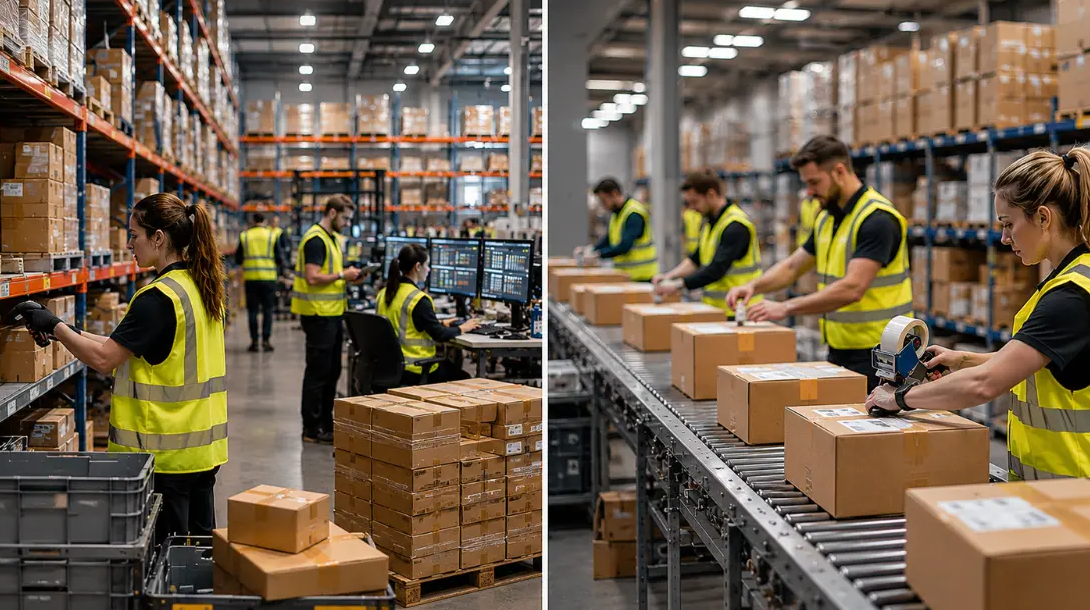
Warehouse teams face similar challenges when fulfillment systems lack integration with Transportation Management Systems (TMS) and Warehouse Management Systems (WMS). Inventory discrepancies, delayed shipments, and operational inefficiencies become more common in disconnected environments.
These operational challenges influence the FBA versus 3PL decision because both fulfillment models address visibility, inventory management, and logistics coordination differently. Understanding those differences is essential for selecting the right fulfillment strategy.
Why Amazon FBA Excels for Marketplace-Centric Growth
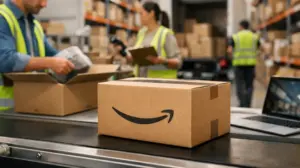
Amazon FBA is designed to simplify fulfillment operations for sellers whose primary revenue comes from the Amazon marketplace. Amazon manages inventory storage, order fulfillment, shipping, returns, and customer service within its fulfillment network.
The primary advantage is immediate access to Prime eligibility. Products fulfilled through Amazon often benefit from increased visibility, faster delivery options, and stronger customer trust. For businesses focused primarily on Amazon sales, this operational simplicity can accelerate growth.
However, FBA introduces limitations that become more apparent as businesses scale. Inventory must comply with strict preparation standards, storage fees can increase during peak periods, and branding opportunities remain limited because products typically ship in Amazon-controlled packaging.
Inventory management can also become challenging when businesses sell across multiple channels. Products stored exclusively within Amazon’s fulfillment network may not provide the flexibility required to support Shopify stores, wholesale programs, Walmart Marketplace operations, or other sales channels.
ENorth Logistics supports Amazon FBA compliance fulfillment workflows through real-time WMS inventory scanning and SKU tracking capabilities. This helps businesses maintain inventory accuracy before products enter Amazon fulfillment centers while reducing compliance-related disruptions.
For Ecommerce Founders and Marketplace Managers, FBA delivers efficiency and marketplace reach. However, operational flexibility may become a concern as channel diversification increases.
Migrate to an integrated logistics system with ENorth Logistics’ freight, warehousing, and fulfillment platform. Explore solutions here.
Why 3PL Fulfillment Provides Greater Control and Scalability
Third-party logistics providers offer a fundamentally different approach to fulfillment. Rather than focusing exclusively on a single marketplace, 3PL providers support inventory storage, order fulfillment, transportation coordination, and returns management across multiple sales channels.
This flexibility allows businesses to maintain greater control over inventory placement, customer experience, and brand presentation. Custom packaging, promotional inserts, bundled products, and specialized fulfillment workflows can often be supported more easily through a 3PL environment.
Multi-channel fulfillment is one of the strongest advantages of third-party logistics. Orders originating from Shopify, WooCommerce, Walmart Marketplace, wholesale customers, and direct-to-consumer websites can be fulfilled from a centralized inventory pool.
ENorth Logistics provides integrated warehousing and fulfillment services supported by real-time inventory visibility, SKU-level tracking, and multi-service logistics integration. Businesses gain operational flexibility while maintaining control over inventory movement and fulfillment execution.
For Fulfillment Managers and Operations Directors, 3PL environments often provide stronger visibility into inventory performance and warehouse activities. Access to detailed inventory data supports more informed replenishment decisions and improved operational planning.
As businesses expand beyond a single marketplace, fulfillment flexibility becomes increasingly important for supporting sustainable growth.
Migrate to an integrated logistics system with ENorth Logistics’ freight, warehousing, and fulfillment platform. Explore solutions here.
Why Transportation and Inventory Visibility Often Determine the Best Choice
Many ecommerce businesses focus primarily on fulfillment fees when comparing FBA and 3PL providers. However, transportation visibility and inventory control often have a greater long-term impact on profitability and operational efficiency.
Carrier communication gaps, delayed shipment notifications, and limited inventory visibility create challenges regardless of fulfillment model. Businesses require accurate information to coordinate replenishment, manage customer expectations, and optimize inventory allocation.
Third-party logistics providers often offer greater transparency across transportation and warehouse operations. Real-time inventory tracking, shipment visibility, and transportation management capabilities can provide operational insights that support better decision-making.
ENorth Logistics supports these requirements through a unified Canada-USA logistics platform, real-time shipment tracking systems, and 24/7 live tracking support. Carrier relationships with Purolator, DHL Freight, FedEx Freight, XPO Logistics, and TForce Freight help improve carrier network efficiency while supporting freight optimization initiatives.
Managing more than 500 shipments monthly while maintaining a 99.999% operational reliability framework allows businesses to gain stronger visibility throughout the fulfillment lifecycle.
For Logistics Coordinators and Supply Chain Leaders, inventory transparency often becomes more valuable than isolated shipping cost comparisons when evaluating fulfillment models.
Migrate to an integrated logistics system with ENorth Logistics’ freight, warehousing, and fulfillment platform. Explore solutions here.
Why Many Ecommerce Brands Ultimately Adopt a Hybrid Fulfillment Strategy
For many growing businesses, the question is no longer whether FBA or a 3PL is better. Instead, the most effective strategy often combines both models to leverage their respective strengths.
Fast-moving products can remain within Amazon FBA to maintain Prime eligibility and marketplace visibility. Slower-moving inventory, bundled products, wholesale orders, and direct-to-consumer shipments can be managed through a 3PL environment that provides greater flexibility.
This hybrid model improves inventory utilization while reducing dependence on a single fulfillment channel. Businesses can also maintain stronger control over customer experiences outside the Amazon ecosystem.
ENorth Logistics supports both Amazon FBA fulfillment workflows and broader ecommerce fulfillment operations through integrated warehousing, inventory management, and transportation services. Same-day shipping cutoffs for orders received before 2 PM further support operational responsiveness across multiple fulfillment channels.
For Supply Chain Managers and Ecommerce Operators, hybrid fulfillment strategies often provide the best balance between scalability, operational control, and customer reach.
As ecommerce ecosystems continue evolving, businesses that maintain fulfillment flexibility will be better positioned to adapt to changing consumer expectations and marketplace requirements.
Migrate to an integrated logistics system with ENorth Logistics’ freight, warehousing, and fulfillment platform. Explore solutions here.
ENorth Logistics Editorial Perspective
ENorth Logistics’ editorial insights are developed by professionals with hands-on experience in freight transportation, warehouse operations, and supply chain optimization across Canada and the United States. Our perspective is grounded in real logistics execution environments, not theoretical supply chain models.
Conclusion
Global supply chains are under increasing pressure from rising freight costs, delivery expectations, and inventory complexity. Ecommerce businesses must choose fulfillment models that support both immediate operational needs and long-term growth objectives.
The answer to FBA vs 3PL fulfillment: which is better? depends on sales channels, customer expectations, inventory complexity, and business strategy. Amazon FBA offers simplicity and marketplace advantages, while third-party logistics providers deliver flexibility, inventory control, and multi-channel fulfillment capabilities. Increasingly, successful ecommerce brands are combining both approaches to maximize operational efficiency and customer reach.
At ENorth Logistics, we help businesses design fulfillment strategies that integrate warehousing, transportation, inventory management, Amazon FBA compliance workflows, and ecommerce fulfillment into a unified operational framework. Supported by a 98.7% on-time delivery rate, 24/7 shipment tracking, and integrated Canada-USA logistics capabilities, we help organizations build fulfillment networks designed for scalability and visibility.
We help businesses simplify freight, fulfillment, and warehousing operations across Canada and the USA. Get a logistics quote today.