Moving industrial freight across long distances requires a highly detailed plan. Standard box trucks work well for uniform retail boxes. However, raw steel beams or massive earth-moving tractors cannot fit inside an enclosed cargo space. If you want to transport large items across North America without facing severe delays, you need to understand the logistics of specialized open-deck transport.
Choosing the wrong trailer configuration can damage your inventory and lead to expensive roadside safety violations. At ENorth Logistics, we look at freight through a practical, data-driven framework. Our team ensures your cargo moves safely across regional lines without facing custom clearance delays or unexpected terminal fees. Let us look at how modern trailer varieties alter the industrial transport sector.
What is Flatbed Industry Shipping and Why Does Your Business Need It?
Heavy freight logistics requires specialized trailer setups to handle unusual dimensions safely. Normal enclosed trailers limit your loading methods. Choosing the right transport path protects your inventory from damage.
The Mechanical Advantages of Open-Deck Transport Layouts
Flatbed industry shipping focuses on moving cargo that exceeds regular legal size boundaries. Because these trailers completely lack walls or a roof, logistics teams can load items from the top or either side using cranes and forklifts. This flexibility accelerates your loading times at busy industrial yards.
And it removes the need for traditional concrete loading docks entirely. Drivers can pull directly up to a job site or storage yard, allowing ground crews to extract the payload from any angle.
Key Performance Metrics for Industrial Open Decks
Every transit project requires selecting a specific trailer style to match your product framework. If your warehouse staff fails to check these specs, carrier penalties will occur.
Let us look at the primary open-deck configurations:
- Standard Flatbeds: These units feature an open platform typically measuring 48 to 53 feet long and support up to 48,000 pounds. They work best for scaffolding, block freight, and lumber delivery.
- Step Decks: These drop deck systems are designed with a lowered main floor to carry taller cargo legally. This lower profile prevents bridge clearance issues during transit.
- Double Drops: These specialized lowboy systems sit extremely close to the ground to handle exceptionally tall industrial machinery. The front neck removes completely so heavy vehicles can drive straight onto the deck.
Info: Standard flatbeds are the most available open-deck option on the highway. They represent a cost-effective choice for general construction assets that fit normal height limits.
Core Sectors That Depend on Flatbed Industry Shipping Systems
Multiple commercial fields rely on open platforms to keep their daily operations moving forward. Standard transport methods simply cannot handle these heavy industrial commodities.
Heavy Infrastructure and Commercial Construction Logistics
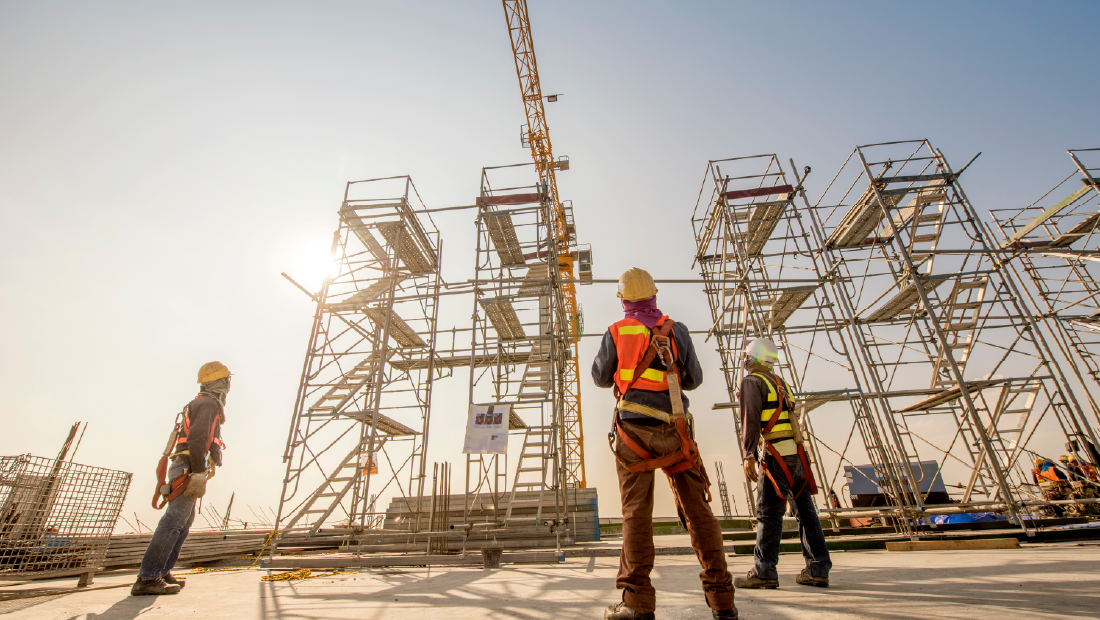
Active building zones operate under tight schedules. Delays can stall entire crews and lead to massive contract overruns. Flatbed industry shipping serves as the backbone of these major developments by delivering structural steel and heavy machinery.
It also moves concrete pieces and pre-assembled building sections directly to your job site. Having open access to the trailer deck allows field workers to unload massive supplies using site forklifts, saving valuable time during busy morning turnarounds.
Energy Sector Logistics and Power Grid Hauling
The utilities and energy market involves moving highly sensitive, high-value assets over long highway distances. Teams must transport oil equipment, turbines, gas machinery, and large-scale components safely.
These expensive assets are often completely irreplaceable. Therefore, these projects demand careful route planning to ensure the heavy truck can clear tight highway overpasses and old rural bridges without causing accidents.
Steel Transport and Raw Metal Distribution
Primary metal producers face intense weight concentrations when moving product lines. Standard van walls cannot support raw steel beams, thick rebar bundles, or heavy fabricated plates.
These products must be loaded using overhead yard cranes. Crews place heavy wooden blocks beneath the metal loads to prevent the steel from sliding across the trailer deck during highway transits. This precise blocking helps distribute the immense payload weight evenly across the truck axles.
Agriculture and Heavy Mining Vehicle Operations
Moving massive commercial vehicles requires specialized transport corridors. Drivers frequently haul large tractors, combines, and heavy mining vehicles across state lines.
These moves require durable lowboy trailers to handle extreme machine heights. Using these dropped platforms keeps your high-clearance machinery from snagging overhead electrical lines on regional shipping lanes.
Summary of Core Industrial Freight Targets
Target Industry | Primary Material Hauled | Required Trailer Feature |
Construction | Scaffolding, concrete, and lumber delivery | Level deck with open side access |
Energy & Oil | Large pipes, turbines, and drilling equipment | Low center of gravity for clearance |
Mining | Massive industrial excavation vehicles | Removable gooseneck drive-on ramp |
Crucial Operational Challenges in Open-Deck Freight Movement
Transporting cargo without the shelter of a box trailer brings unique roadside risks. Your logistics team must plan for changing weather patterns and strict legal rules.
Weather Mitigation and High-Performance Cargo Protection
Because your freight is exposed to the elements, drivers must use high-grade safety gear. Carriers rely on heavy-duty tarps, straps, and chains to shield your goods from road debris.
Note: Proper tarping is a physically demanding task that requires extra driver labor. Always specify your tarping needs early to get an accurate quote.
Workers must follow strict National Safety Code regulations during the tie-down process. The total weight capacity of all your transport chains must equal at least half of the cargo’s total weight. Drivers should use Grade 70 transport chains to prevent freight from shifting during hard braking.
Navigating Regional Transport Permits and Cost Structures
Oversized or overweight loads cannot be broken down into smaller pieces legally. Therefore, you must secure specialized highway permits before your truck starts rolling.
These routing rules vary significantly depending on local, state, or provincial regulations. Exceeding legal width boundaries will also require hiring professional pilot escort vehicles to guide your cargo.
Let us look at current market rate expectations:
- United States Routes: Flatbed rates typically range from $2.50 to $4.00 per mile.
- Canadian Corridors: Costs match U.S. averages but can also be billed at $1.60 to $2.50 per kilometer.
These pricing metrics shift based on seasonal demand, current fuel costs, and your chosen equipment type. Batching multiple shipments into a single heavy haul can lower your total per-mile cost significantly.
Managing Complex Cross-Border Flatbed Shipping and Customs Clearing
Hauling heavy freight across international boundaries introduces intense regulatory oversight. Shippers must coordinate their border arrivals carefully to keep their supply chains seamless.
Streamlining International Customs Clearance Protocols
Moving specialized freight across the Canada and United States border requires extensive paperwork planning. Your carrier must coordinate closely with licensed customs brokers to avoid expensive border delays.
Missing documentation or unverified cargo weights can cause your truck to get stuck at customs inspection points for days. This friction hurts your delivery schedules and leads to major inventory shortages at your receiving warehouses.
Maximizing Digital Pre-Clearance Efficiency
Modern transport systems allow compliant fleets to submit electronic invoices and prior notices before the truck arrives at the crossing. This digital preparation ensures fast customs clearance at the gate, keeping your delivery timelines intact.
Choosing an experienced cross-border carrier guarantees that all safety permits are acquired before the vehicle reaches the border terminal. This proactive planning protects your cargo from border gate enforcement friction.
Why Partner with ENorth Logistics for Your Enterprise Freight?
Navigating the complex rules of heavy industrial hauling requires a licensed partner with deep compliance knowledge. Our enterprise simplifies your logistics by managing your permits and custom steps smoothly.
We maintain full legal operating authority across all North American shipping corridors:
- USDOT Registration: Full federal license for legal interstate transport.
- MC Authority: Active commercial operating authority for cross-border logistics.
- CVOR License: Active Commercial Vehicle Operator’s Registration for safe Canadian transits.
Our team uses live digital tracking to give you complete visibility over your valuable cargo. We build long-term corporate relationships by delivering reliable asset protection and transparent contract pricing. Partnering with ENorth Logistics means your freight is shielded by an elite, fully certified transportation network.
Conclusion
Maximizing your industrial supply chain efficiency requires a smart approach to equipment selection and securement compliance. Choosing the right open-deck trailer protects your heavy machinery from transit damage while controlling your per-mile costs. Managing changing permit rules, custom clearances, and winter weather risks can be incredibly difficult to manage alone. Working with a technology-driven logistics partner takes the administrative pressure off your staff completely.
The transport specialists at ENorth Logistics are always ready to optimize your freight lanes. Contact our customer support team today to check your cargo dimensions and receive an accurate quote for your next industrial shipment.
Frequently Asked Questions
What is flatbed industry shipping and when is it required?
Flatbed industry shipping is a specialized transport method used for oversized, heavy, or irregularly shaped cargo that cannot fit inside standard dry vans. Because these trailers lack walls, they allow flexible loading from the side or top using cranes. It is required for moving construction supplies, steel beams, and heavy machinery.
How does cross-border flatbed shipping affect customs clearance?
Cross-border flatbed shipping requires close coordination with customs brokers to prevent long delays at international gates. Drivers must submit electronic invoices and prior manifest notices before reaching the border. This careful preparation guarantees rapid customs clearance, allowing your heavy-haul industrial shipments to move smoothly across North America.
Why do construction equipment transport projects require specialized permits?
Construction equipment transport projects require specialized permits because these heavy loads often exceed standard legal size limits. If your cargo exceeds legal width, height, or weight boundaries, state and provincial laws mandate official clearance. These permits outline approved highway routes to avoid low bridges and busy urban areas safely.
What factors dictate modern open-deck trucking rates?
Modern open-deck trucking rates are heavily dictated by seasonal market demand, fuel costs, and your specific trailer choice. Rates generally range from $2.50 to $4.00 per mile across the United States and Canada. Specialized equipment like drop decks or RGN lowboys will increase your total cost.