
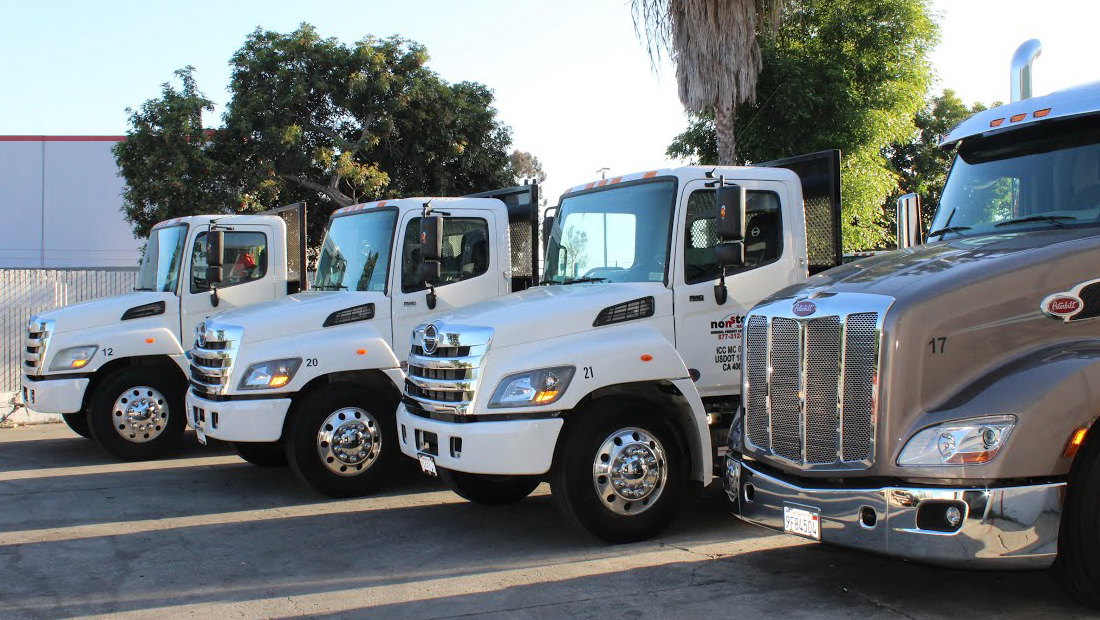
Choosing an FTL carrier on price alone is one of the most common and costly mistakes a business can make. The lowest quote looks attractive until your freight arrives late, arrives damaged, or does not arrive at all.
The reality is that knowing how to find an FTL carrier for your business goes well beyond comparing rates on a spreadsheet. The right carrier is one whose capabilities, capacity, and operational standards align specifically with what your freight needs and what your customers expect. The wrong one creates supply chain disruptions that take far longer to recover from than a single missed shipment.
This guide gives you a step-by-step framework for evaluating and selecting an FTL carrier with confidence, covering the criteria that actually predict performance: reliability, carrier vetting, fleet size, and what a proper carrier onboarding process looks like before the first load ever moves.
Start With Your Own Freight Profile
Before evaluating any carrier, get clear on what you are actually shipping. A carrier that excels at regional dry van freight may be entirely wrong for temperature-controlled cross-border loads. Matching a carrier to your needs starts with knowing your needs precisely.
Work through these questions first:
| Question | Why It Matters |
|---|---|
| What is your average shipment weight and volume? | Confirms whether FTL is the right mode for your load size |
| What trailer type does your freight require? | Dry van, flatbed, and reefer each require different carrier capabilities |
| What lanes do you ship most regularly? | Regional, national, and cross-border lanes require different network coverage |
| How time-sensitive are your deliveries? | Determines whether you need dedicated capacity or flexible spot coverage |
| Do you ship hazardous or high-value freight? | Requires specific insurance, certifications, and compliance documentation |
Once your freight profile is defined, carrier vetting becomes a targeted exercise. You are no longer asking “who does FTL?” — you are asking “who does FTL well, on my lanes, for my freight type?” That is a far more useful question.
The FTL Carrier Vetting Framework
Selecting the right FTL carrier is about more than fleet size or price. It is about finding a provider whose capabilities, standards, and capacity align with your specific shipping requirements.
The four criteria below are the most reliable predictors of long-term carrier performance.
Reliability – Does Their Track Record Back Up Their Claims?
Every carrier will tell you they deliver on time. The question is whether the data supports it.
What to Look For:
On-time delivery rate of 95% or higher on comparable lanes
Regional performance data, not just overall averages — a carrier can have strong national numbers but underperform on your specific corridor
Reference accounts in your industry or on your primary lanes
FMCSA safety ratings and out-of-service rates (US lanes) or CVOR records (Canadian carriers) — both are public and take minutes to verify
A carrier confident in their track record will provide references without hesitation. One that deflects is telling you something important.
Carrier Vetting – Safety, Insurance, and Compliance
Carrier vetting covers the compliance and safety credentials that protect your freight if something goes wrong. These are non-negotiable minimums — not optional checks.
| Vetting Criterion | What to Verify |
|---|---|
| Operating authority | Valid MC number (US) or CVOR certificate (Canada) |
| Cargo insurance | Minimum $100,000 liability; higher for high-value or hazardous freight |
| Safety rating | FMCSA BASIC scores (US) or NSC safety ratings (Canada) |
| Driver qualifications | Licence class, hours-of-service compliance, drug and alcohol programme |
| Claims history | Frequency of damage claims and average resolution time |
Conducting this vetting in-house takes time and freight expertise. This is one of the strongest reasons businesses work with a 3PL — brokers handle carrier vetting, rate negotiation, and in-transit issue management on your behalf.
Fleet Size and Equipment: Can They Handle Your Volume?
A carrier’s fleet size determines their ability to provide consistent capacity — especially during peak periods or when market conditions tighten.
Key Questions to Ask:
How many trucks and trailers do they operate directly?
Do they have the specific trailer type your freight requires available on your lanes?
What happens to your load if their capacity is fully committed on a given day?
Asset-based carriers own their own equipment, which provides accountability — but also means finite capacity. For businesses with variable or growing volumes, a carrier connected to a broader network, or a 3PL with multi-carrier access, provides the flexibility a single fixed-fleet operator cannot.
Technology and Visibility: Can You Track Your Freight?
Real-time tracking is a baseline expectation in modern FTL shipping — not a premium add-on. Before committing to any carrier, confirm what their visibility capabilities actually look like.
Minimum Standards to Expect:
Live GPS tracking through a shipper portal
Automated status updates and estimated arrival times throughout transit
Electronic proof of delivery (ePOD) upon completion
ELD integration for driver hours and location data
A named contact for in-transit issues with a clear response time commitment
Carriers without modern tracking create visibility gaps in your supply chain — and those gaps are where late deliveries and unresolved claims accumulate.
Spot Rates vs. Contract Lanes – Choosing the Right Arrangement
Once you have identified a carrier worth working with, the next decision is how to structure the relationship. The two primary options are spot rates and contract lanes.
Spot rates apply to one-off or ad hoc shipments booked at current market prices. They offer flexibility but no price predictability or capacity guarantee.
Contract lanes are negotiated agreements covering a defined lane, volume, and rate over a set period of six to twelve months. They offer stability in both cost and capacity.
Use this table to identify which arrangement suits your situation:
| Scenario | Recommended Arrangement |
|---|---|
| Regular, recurring lane (weekly or bi-weekly) | Contract — locks in rate and guarantees capacity |
| Occasional or seasonal shipments | Spot — no volume commitment required |
| Testing a new lane or market | Spot initially, then contract once volume is confirmed |
| High-value or time-critical freight | Contract with a dedicated carrier |
Contract arrangements also accelerate the carrier onboarding process. Both parties invest in the relationship from day one, which means faster setup and fewer early-stage friction points.
Carrier Onboarding – Setting the Relationship Up for Success
Carrier selection does not end when you choose a provider. A proper carrier onboarding process formalises the relationship, confirms all compliance documentation, and aligns both parties on expectations before the first load moves.
Skipping this step is one of the most common reasons shipper-carrier relationships break down within the first few months.
A Reliable Carrier Onboarding Checklist Includes:
Collect and verify operating authority, insurance certificates, and safety ratings
Confirm trailer type availability and equipment condition standards
Establish primary and backup contacts for dispatch, tracking, and claims
Agree on rate confirmation procedures and invoicing timelines
Define clear KPIs: on-time delivery target, claims resolution timeframe, and check-in frequency
A comprehensive carrier onboarding process ensures that every load is handled by a provider who has been properly evaluated, not just selected on availability.
Why Work With a 3PL Instead of Going Direct?
Managing direct carrier relationships in-house requires significant time, freight expertise, and operational resources. For most small and mid-sized businesses, a 3PL delivers advantages a single direct carrier relationship cannot match.
What a 3PL Brings to the Table:
Access to a pre-vetted carrier network across multiple lanes and equipment types
Rate leverage through volume aggregation across multiple clients
In-house expertise on carrier vetting, onboarding, and performance management
A single point of contact for booking, tracking, and issue resolution
Capacity backup when a primary carrier cannot cover a load
The time and expertise required to properly vet, onboard, and manage FTL carriers is a full-time operational function. Partnering with a 3PL means that function is handled professionally, without pulling your internal team away from the work that grows your business.
Conclusion
Finding the right FTL carrier is not about finding the cheapest quote. It is about finding a partner whose capabilities, capacity, and standards align with what your business actually needs.
The framework in this guide gives you the tools to do that with confidence:
Define your freight profile before evaluating anyone
Vet carriers on reliability, safety, fleet size, and technology
Choose the rate structure that matches your shipping frequency
Formalise the relationship through a proper carrier onboarding process
ENorth Logistics provides FTL freight services across Canada and the United States, with a vetted carrier network, real-time tracking, and a freight team that manages the entire process on your behalf. Get a free FTL shipping quote today, or contact our team to discuss your lanes and find the right freight solution for your business.
Frequently Asked Questions
Which is cheaper, LTL or FTL?
LTL is typically cheaper for smaller shipments because you only pay for the trailer space your freight occupies. FTL becomes more cost-effective when your shipment fills or nearly fills a full trailer of around 12 to 15 pallets, where the per-unit cost of a dedicated truck drops below consolidated LTL rates.
What are the four types of freight?
The four main types of freight are full truckload (FTL), less than truckload (LTL), partial truckload (PTL), and intermodal freight. Each type suits different shipment sizes, timelines, and cost requirements. FTL is best for large, direct loads; LTL for smaller shared shipments; PTL for mid-size loads; and intermodal for long-distance, cost-sensitive freight.
How is FTL calculated?
FTL pricing is calculated based on lane distance, trailer type, fuel surcharges, and current market capacity conditions. Unlike LTL, which charges by weight and freight class, FTL rates are quoted per load for the full trailer regardless of how much space the freight occupies. This makes it predictable and straightforward for high-volume shippers.
Is FTL faster than LTL?
Yes, FTL is generally faster than LTL. Because the trailer is dedicated to a single shipper, freight moves directly from origin to destination without stopping at intermediate terminals for consolidation or sorting. LTL shipments pass through multiple hubs, which adds transit time, making FTL the preferred choice for time-sensitive deliveries.