Choosing between flatbed vs dry van shipping is one of the most consequential freight decisions a shipper makes. The wrong choice wastes money, damages cargo, and creates compliance problems. The right choice gets your freight to its destination on time, intact, and within budget. This decision is driven by cargo characteristics, not carrier preference.
This guide walks through the flatbed vs dry van vs reefer comparison in full. It covers enclosed vs open trailer mechanics, cargo protection requirements, shipping methods comparison across all three trailer types, and freight suitability criteria for each. By the end, you will know exactly which freight type matches your load and why.
Enorth Logistics specializes in FTL flatbed freight services for industrial and construction shippers. Contact us to confirm whether flatbed is the right trailer type for your next shipment.
The Core Difference: Enclosed vs Open Trailer
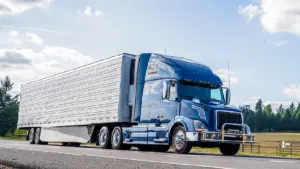
The enclosed vs open trailer distinction is the starting point for every freight type decision. Enclosed trailers, which include dry vans and reefers, have walls, a roof, and a rear door. They protect cargo from weather, road debris, and unauthorized access. Open trailers, specifically flatbed and its open deck variations, have no walls or roof. The cargo sits directly on the platform, exposed to the elements and environment.
This distinction is not about quality or preference. It is about cargo requirements. Enclosed vs open trailer selection must be driven entirely by what the freight needs to travel safely. Consumer packaged goods, electronics, and food products require the protection of an enclosed trailer. Steel coils, lumber, construction equipment, and fabricated metal structures require the accessibility and dimensional freedom of an open deck platform.
Shippers who force dimensional or awkward cargo into enclosed trailers encounter loading failures, dock damage, and transit damage. Shippers who put weather sensitive cargo on open platforms encounter claims, customer complaints, and loss of trust. Matching the trailer type to the cargo is not optional. It is the foundation of competent freight management.
Enclosed trailers protect cargo from weather, theft, and road debris during transit
Open deck trailers enable loading methods such as crane, side forklift, and overhead lift that enclosed trailers cannot accommodate
The enclosed vs open trailer decision must be based on cargo dimensions, loading method, and sensitivity to weather exposure
Neither trailer type is universally superior. Each is right for its specific freight suitability profile
Flatbed Freight: When Open Deck Is the Only Viable Option
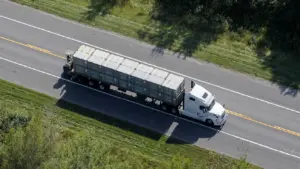
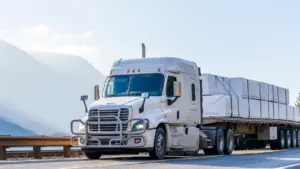
Flatbed freight is not a choice when cargo exceeds the dimensional limits of enclosed trailers. Steel beams, bridge girders, industrial machinery, pre fabricated building components, and large construction equipment physically cannot enter a dry van or reefer. The flatbed trailer exists because an enormous volume of the North American economy moves on open platforms. Without open deck trucking, major infrastructure and industrial sectors would stop.
The freight suitability profile for flatbed is defined by three characteristics. First, cargo that is too large for enclosed trailer dimensions. Second, cargo that must be loaded from the side or top rather than the rear. Third, cargo that is not damaged by weather exposure during transit, or that can be adequately tarped for protection. Steel, concrete products, machinery, pipe, and lumber all meet this profile.
Enorth Logistics operates FTL flatbed services as our primary freight solution. Our flatbed capacity covers standard platforms, step decks, and heavy haul configurations. For shippers who need LTL flatbed moves, we connect you directly with our partner network rather than leave you to source a carrier independently.
Flatbed is mandatory for cargo exceeding 8.5 feet in width, 13.5 feet in height, or requiring non rear loading
Steel products require flatbed because they cannot be safely loaded or secured inside enclosed trailers
FTL flatbed provides dedicated capacity from origin to destination with no terminal handling
Open deck trucking is the foundation of construction, energy, and infrastructure freight supply chains
Dry Van Shipping: When Cargo Protection Drives the Decision
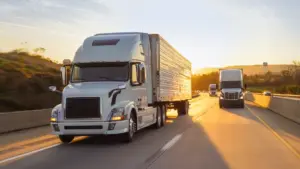
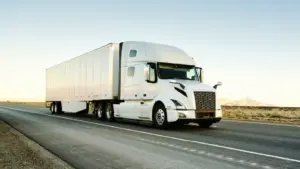
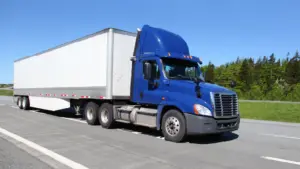
Dry van shipping is the workhorse of the enclosed trailer category. A dry van is a sealed, enclosed trailer with no temperature control. It protects cargo from weather, dust, and road exposure while providing a standard rear door loading configuration. Freight suitability for dry van centers on cargo that is weather sensitive, fits within standard trailer dimensions, and does not require refrigeration.
Consumer goods, retail products, packaged food, building materials that cannot be exposed to moisture, and most manufactured products ship in dry vans. The dry van shipping methods comparison with flatbed comes down to this: if your cargo fits in the box and cannot get wet, dry van is almost always the correct choice. If it does not fit in the box, flatbed is the answer.
Cargo protection is the primary driver of dry van selection. A load of electronics, garments, or packaged consumer products exposed to rain, road spray, or temperature swings during transit is a loss. The enclosed trailer eliminates that risk. Dry van rates are also typically more competitive than flatbed for standard freight because the equipment pool is larger and carrier availability is higher.
Dry van is the default enclosed trailer for non temperature sensitive, standard dimension freight
Cargo protection from weather and road exposure is the primary function of the enclosed trailer design
Shipping methods comparison shows dry van is available for both FTL and LTL freight structures
Enorth Logistics connects shippers to reliable dry van partners for FTL and LTL needs outside our core flatbed service
Not sure whether your freight needs flatbed or dry van? Enorth Logistics evaluates your cargo specifications and connects you with the right freight solution. Get in touch today.
Flatbed vs Dry Van vs Reefer: Full Comparison
Use this shipping methods comparison table to identify the correct trailer type for your specific freight requirements.
| Criteria | Flatbed (Open Deck) | Dry Van (Enclosed) | Reefer (Enclosed + Temp) | Flatbed vs Dry Van vs Reefer |
|---|---|---|---|---|
| Cargo Protection | None (weather exposed) | Full enclosure | Full enclosure + climate | Enclosed trailers protect; flatbed does not |
| Shipping Methods | Open deck / FTL | Enclosed / FTL or LTL | Temp controlled / FTL | Each suits different cargo types |
| Freight Suitability | Steel, lumber, equipment | Packaged consumer goods | Food, pharma, chemicals | Match trailer to cargo needs |
| Dimensional Limits | Oversized capable | Standard dims only | Standard dims only | Flatbed handles what enclosed cannot |
| Loading Method | Side, top, rear | Rear dock only | Rear dock only | Flatbed enables crane loading |
| Permit Requirements | Possible for oversized | Rarely required | Rarely required | Open deck adds permit complexity |
| FTL Availability | Yes (Enorth primary) | Yes (partner network) | Yes (partner network) | Enorth leads in flatbed FTL |
| LTL Option | Via partners | Via partners | Via partners | Enorth connects you to LTL partners |
| Rate Drivers | Dims, weight, permits | Weight, mileage | Weight, temp, mileage | Each type has unique cost inputs |
Reefer Freight: Temperature Controlled Shipping for Sensitive Cargo
Reefer freight is the third category in the flatbed vs dry van shipping decision framework. A reefer trailer is an enclosed trailer with an integrated refrigeration unit capable of maintaining precise temperature ranges throughout transit. Freight suitability for reefer is defined by temperature sensitivity. Food, beverages, pharmaceuticals, certain chemicals, and biological products require refrigerated transport to maintain safety, quality, and regulatory compliance.
The cargo protection level of a reefer exceeds a standard dry van because it adds climate control to the enclosure. This comes at a cost premium driven by fuel for the refrigeration unit, stricter carrier compliance requirements, and more specialized equipment. Reefer freight is not used because it is better than dry van in general. It is used specifically when temperature maintenance is a non negotiable cargo requirement.
Enorth Logistics does not operate reefer equipment as part of our core service offering. Our primary expertise is FTL open deck trucking and flatbed freight services. For shippers with temperature controlled freight requirements, we connect you with our partner network to ensure your reefer capacity needs are met with carriers who specialize in temperature controlled operations.
Reefer trailers maintain temperatures typically ranging from minus 20 degrees Fahrenheit to 70 degrees Fahrenheit
Pharmaceutical and food grade reefer shipments require documented temperature logs for compliance
Reefer rates carry a significant premium over dry van due to equipment and operational costs
Freight suitability for reefer requires confirmed temperature sensitivity. Using reefer for non temperature sensitive cargo is unnecessary cost
Cargo Protection: Matching the Right Level to Your Freight
Cargo protection is not a binary concept. It exists on a spectrum defined by what the freight actually requires during transit. Open deck cargo such as steel and heavy equipment needs physical securement protection through chains, straps, and load distribution. Enclosed cargo such as consumer goods needs protection from environmental exposure. Temperature sensitive cargo needs climate control in addition to enclosure.
Over protecting cargo costs money without adding value. Under protecting cargo costs more in damage claims, schedule failures, and customer relationships. The flatbed vs dry van shipping decision is fundamentally a cargo protection calibration. You apply exactly the level of protection the freight requires and no more.
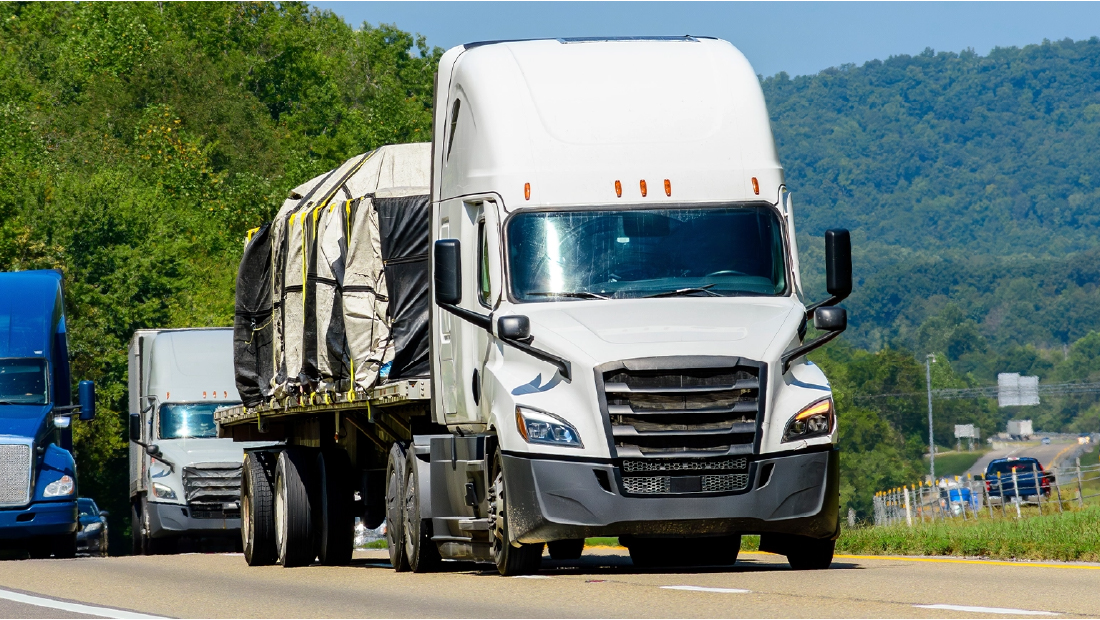
Tarping is the middle ground in the open deck trucking world. Many flatbed loads that need weather protection during transit can be tarped rather than moved to an enclosed trailer. Tarping adds cost and loading time, but it preserves the dimensional advantages of the flatbed platform while providing meaningful moisture protection. It is not the same as a dry van, but it addresses the protection need for many cargo types.
Steel and metal products: open deck with chains and edge protectors. Tarping optional based on surface finish requirements
Lumber and building materials: open deck with tarping for moisture protection in transit
Packaged goods and electronics: enclosed dry van for full weather and road debris protection
Food and pharmaceuticals: reefer for temperature controlled cargo protection throughout the shipment
Shipping Methods Comparison: FTL and LTL Across All Trailer Types
The shipping methods comparison between FTL and LTL applies across all three trailer types but plays out differently for each. FTL means one shipper’s cargo fills and dedicates a trailer from origin to destination. LTL means the trailer space is shared across multiple shippers, with the cargo stopping at terminals for sorting and consolidation. FTL is faster, reduces handling touches, and is the standard for high value, dimensional, or time sensitive freight.
For flatbed freight, FTL is overwhelmingly the dominant structure. The nature of flatbed cargo, large, heavy, awkwardly shaped, and securement intensive, makes shared trailer configurations impractical in most cases. Each load has unique securement requirements, and mixing multiple flatbed shippers on one trailer creates complexity that typically outweighs the cost savings. This is why Enorth Logistics centers our flatbed operations on FTL.
For dry van and reefer, LTL is a viable and widely used option for smaller shipments that do not require full trailer capacity. Enorth Logistics connects shippers with our partner network for dry van and reefer LTL needs. We provide the connection to ensure you access quality carriers rather than navigating the carrier market independently.
FTL flatbed is the standard structure for open deck freight due to load securement and dimensional complexity
LTL dry van is appropriate for standard dimension freight that does not fill a trailer and is not time critical
FTL provides direct origin to destination transit with no terminal handling, reducing damage and delay risk
Enorth Logistics provides FTL flatbed directly and connects shippers to LTL and reefer options through our partner network
Choose the Right Freight Type and Ship with Confidence
The flatbed vs dry van vs reefer decision is resolved by systematically applying your cargo characteristics to the freight suitability criteria for each trailer type. Dimensional cargo that requires open access goes on flatbed. Weather sensitive standard dimension cargo goes in a dry van. Temperature sensitive cargo goes in a reefer. The logic is straightforward once you know what each trailer type is built to do.
Enorth Logistics provides FTL flatbed freight services and connects you with verified partners for every other freight type you need. You do not have to manage multiple carrier relationships to cover your shipping requirements. We provide the solution or we provide the connection.
Book your FTL flatbed freight with Enorth Logistics or let us connect you with the right partner for your dry van, reefer, or LTL needs. Contact us today to get started.
Frequently Asked Questions
1. Can I tarp a flatbed load instead of using a dry van if my cargo is moisture sensitive?
Yes, tarping is a valid cargo protection method for many open deck loads that have moisture sensitivity but do not require full enclosure. Tarped flatbed loads are widely used for lumber, machinery with exposed components, and coated steel products. Tarping does not provide the same level of protection as a dry van enclosure, but for many cargo types it is sufficient and allows you to retain the dimensional and loading advantages of the flatbed platform.
2. Is it ever more cost effective to use flatbed instead of dry van for standard dimension freight?
In limited circumstances, yes. If you are shipping cargo that has awkward loading requirements, such as long metal stock that must be loaded from the side, a flatbed may be more cost effective than attempting to force a dry van loading configuration. However, for standard palletized freight that fits in a dry van, dry van is almost always the more competitive option due to greater carrier availability and equipment volume.
3. How does the freight suitability assessment change for international shipments?
International flatbed and open deck trucking involves additional considerations including border crossing permit requirements, international securement standards such as those under CVSA agreements, and customs documentation specific to oversized or heavy freight. The enclosed vs open trailer decision remains cargo driven, but the compliance layer is more complex. Work with a carrier experienced in cross border open deck operations for international moves.
4. What is the difference between spot market rates and contract rates for flatbed vs dry van shipping?
Spot market rates reflect real time supply and demand for capacity on a given lane. Contract rates are negotiated in advance for committed volume over a defined period. Flatbed spot rates tend to be more volatile than dry van spot rates because the flatbed equipment pool is smaller and demand is concentrated in construction and industrial sectors that have seasonal patterns. Shippers with regular flatbed volume benefit significantly from contract pricing to reduce rate exposure.
5. How do I know if my cargo requires a reefer versus a standard dry van with insulation?
The distinction comes down to temperature range and transit duration. Insulated dry vans without refrigeration units can maintain temperatures within a limited range for short durations using pre cooling or dry ice. If your cargo requires maintained temperatures for transits exceeding a few hours, or requires temperatures below ambient, a reefer unit is required. Pharmaceutical and food grade products almost universally require certified reefer equipment with documented temperature monitoring rather than insulated dry vans.