Choosing between LTL, FTL, and PTL shipping is one of the most consequential logistics decisions a Canadian business makes. Each model represents a fundamentally different approach to moving freight, with distinct cost structures, transit profiles, handling requirements, and capacity considerations. Getting this decision right means your freight moves efficiently and your logistics budget is spent wisely. Getting it wrong means overpaying, delayed deliveries, or cargo that does not receive the care it needs.
E North Logistics operates as a full truckload (FTL) freight specialist and connects clients with trusted carrier partners for LTL and partial truckload (PTL) solutions. Our experience across all three models gives us a clear view of where each one delivers value and where each one falls short.
Need help choosing between LTL, FTL, and PTL for your next shipment? Contact E North Logistics and we will give you a direct recommendation backed by real freight experience.
FTL Shipping Offers Dedicated Capacity and the Fastest Transit Times
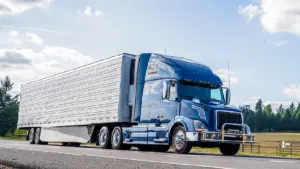
Full truckload shipping dedicates an entire trailer, typically 48 or 53 feet, to a single shipper’s freight. Your cargo is the only load on the truck. It travels directly from pickup to delivery without stopping at intermediate terminals or being transferred to other trailers. This direct routing is why FTL consistently delivers the fastest and most predictable transit times of the three shipping models.
FTL is built for volume. When your shipment fills or nearly fills a trailer, paying for the full truck is more cost effective than booking LTL space at a rate that would quickly exceed the FTL price. The dedicated nature of FTL also eliminates the handling damage risk that comes with multiple terminal transfers, making it the preferred choice for fragile, high value, or time sensitive cargo.
FTL is most cost effective when shipping more than 10,000 pounds or filling over 12 pallets
Direct point to point routing eliminates terminal transfers and reduces transit time
A single driver and trailer means full chain of custody visibility for the entire journey
FTL is the strongest option for perishable, hazardous, or fragile freight requiring controlled handling
E North Logistics is built around FTL as our core service. We manage dedicated truckload shipments across Canadian provinces and into the United States, giving our clients the speed, reliability, and handling care that full truckload delivery provides.
LTL Shipping Optimizes Cost for Smaller Freight Volumes
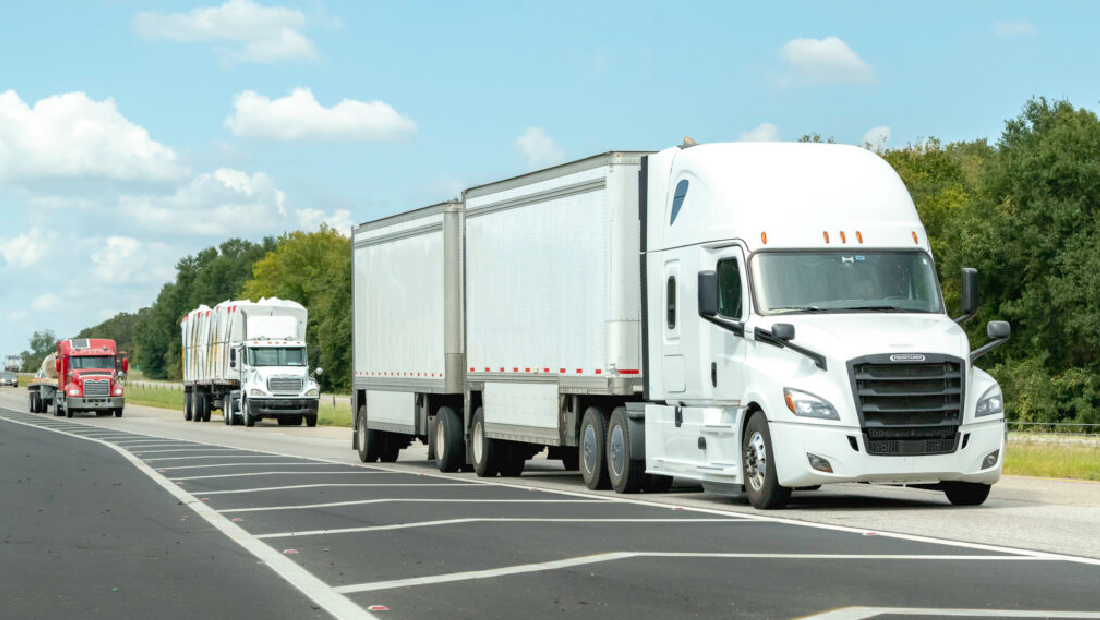
Less than truckload shipping is the right choice when your freight does not justify the cost of a full truck. In LTL, your shipment shares trailer space with other shippers heading in the same direction, and you pay only for the portion of the truck your freight occupies. This shared cost model makes LTL the most economical option for shipments between 150 and 10,000 pounds that do not require the speed or exclusivity of a dedicated truck.
LTL does carry tradeoffs. Because your freight moves through a terminal network, it is handled multiple times and transit times are longer than FTL. For businesses with non urgent shipments that do not require a full trailer, these tradeoffs are easily offset by the cost savings. The key is matching your shipment profile to the right model rather than defaulting to one approach for all your freight.
LTL is ideal for 1 to 6 pallets or shipments between 150 and 10,000 pounds
Freight class determines pricing, so accurate NMFC classification is essential
Multiple terminal transfers mean longer transit times and more handling touchpoints
Accessorial charges for liftgate, residential delivery, or inside pickup add to base LTL rates
Through our LTL carrier partner network, E North Logistics connects clients with established freight carriers that offer reliable LTL services across Canada’s major shipping corridors.
Whether your freight fits LTL or FTL, E North Logistics has the carrier connections to move it. Reach out today and let us build the right solution for your volume.
PTL Bridges the Gap Between LTL Economy and FTL Capacity
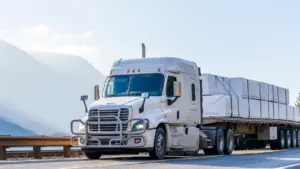
Partial truckload shipping occupies the space between LTL and FTL. PTL, sometimes called volume LTL or partial load shipping, covers shipments that are too large for standard LTL pricing but too small to justify a full truck. Typically this means 6 to 12 pallets or 10,000 to 24,000 pounds. PTL freight often moves with fewer terminal stops than standard LTL, making transit times faster, while still allowing the shipper to avoid the cost of an empty trailer.
PTL is often misunderstood because it does not follow a single standardized pricing model the way LTL does. Carriers approach partial truckload differently, some pricing it as volume LTL based on freight class, others pricing it by linear feet of trailer space used. Understanding how your carrier calculates PTL rates before booking prevents billing surprises.
PTL is best suited for shipments of 6 to 12 pallets or between 10,000 and 24,000 pounds
Fewer terminal transfers than LTL mean faster and more predictable transit
Pricing models vary by carrier, including linear foot pricing and volume LTL class based pricing
PTL is a strong option when LTL costs become prohibitive but FTL capacity exceeds your needs
E North Logistics evaluates PTL options through our partner network for clients whose freight volume sits in this middle range, ensuring you are not paying FTL rates for a partial load or accepting LTL transit times when a faster option is available.
Cost Efficiency in Freight Shipping Is Always a Function of Volume and Urgency
No single freight model is universally cheaper. Cost efficiency is determined by the relationship between your freight volume, your timeline, and the prevailing market rates for each model. A business that regularly ships 4 pallets on a non urgent timeline will almost always find LTL to be the most cost efficient solution. That same business shipping 14 pallets to a time sensitive customer will find FTL delivers better value when the cost of delay is factored in.
The trap many shippers fall into is evaluating only the base freight rate without accounting for the total landed cost of each model. LTL comes with accessorial fees for liftgate, residential delivery, redelivery attempts, and detention that can significantly increase the final invoice. FTL has a higher flat rate but fewer unpredictable cost additions. PTL sits in between, with a rate profile that requires more careful evaluation before committing.
LTL rates appear lower upfront but accessorial fees can add 15 to 30 percent to the base rate
FTL pricing is more predictable because a single rate covers the full trip without per service add ons
PTL rates vary widely by carrier and should be compared carefully before booking
Transit time has an economic cost: delayed deliveries affect customer relationships and inventory cycles
E North Logistics provides transparent cost analysis across all three models for our clients, so you make freight decisions based on total cost, not just the line rate.
Shared Freight and Dedicated Freight Each Carry Different Risk Profiles
Shared freight models, meaning LTL and PTL, expose your cargo to a higher risk of handling damage than dedicated FTL shipments. Every terminal transfer is a moment where freight can be dropped, shifted, or improperly restacked. Carriers that operate high volume LTL networks mitigate this through standardized handling procedures and trained terminal staff, but the risk is structurally higher than FTL where your freight is never touched between origin and destination.
Risk profile should factor into every freight model decision. High value electronics, custom manufactured goods, and fragile items all benefit from the single handling event that FTL provides. Commodity goods, raw materials, and durable packaged products are well suited to the shared freight environment of LTL or PTL. Assessing your cargo’s vulnerability before choosing a shipping model protects your product and your customer relationships.
FTL provides a single loading and unloading event, minimizing damage exposure
LTL freight is handled at every terminal transfer, increasing cumulative risk for fragile items
Proper palletizing, stretch wrapping, and corner protection reduce damage across all shared freight models
Freight liability limits and cargo insurance options differ between LTL, PTL, and FTL contracts
E North Logistics advises clients on appropriate packaging standards and insurance coverage for each freight model, ensuring your cargo is protected regardless of which shipping solution your volume calls for.
Connect with E North Logistics today and let our team determine the most cost effective and reliable shipping model for your freight profile.
Choose the Right Freight Model and Ship with Confidence Through E North Logistics
LTL, FTL, and PTL each serve a distinct role in a well managed freight strategy. LTL delivers cost efficiency for smaller shared shipments. FTL provides speed, security, and predictability for dedicated full loads. PTL bridges the volume gap when your freight is too large for LTL rates but too small for a full truck. Using the right model for each shipment is not a complex decision when you have an experienced logistics partner guiding the evaluation.
E North Logistics is Canada’s trusted partner for full truckload freight, and we extend that expertise to LTL and PTL solutions through our established carrier network. No matter your freight volume, timeline, or destination, we will connect you with the right carrier, the right rate, and the right service level for your business.
Frequently Asked Questions
Can a business use all three shipping models, LTL, FTL, and PTL, within the same logistics program?
Yes. Many Canadian businesses use a combination of all three models depending on the shipment. A company might use LTL for small replenishment orders, PTL for mid size seasonal shipments, and FTL for large volume runs or time sensitive customer deliveries. A logistics partner like E North Logistics can help you build a routing guide that assigns the right model to each shipment type automatically.
Is PTL available on all Canadian freight lanes?
PTL availability varies by carrier and lane. Major corridors between cities like Toronto, Calgary, and Vancouver have strong PTL coverage. Smaller regional lanes may have limited partial load options, making FTL or volume LTL the more practical alternative. E North Logistics evaluates lane specific availability through our carrier network before recommending PTL as a solution.
How does cross border shipping affect the choice between LTL, FTL, and PTL?
Cross border shipments between Canada and the United States introduce customs clearance requirements that add complexity to all three models. LTL cross border shipments face longer delays at border crossings due to combined manifest processing. FTL cross border shipments move more efficiently through customs because the entire load is declared as a single transaction. PTL cross border options exist but require carriers with established customs brokerage capabilities on both sides of the border.
What is the minimum shipment size required to book LTL freight?
Most LTL carriers in Canada have a minimum charge equivalent to a shipment of approximately 500 pounds or one standard pallet. Shipments below this threshold are typically more cost effectively handled through courier or parcel services. Above 500 pounds and up to around 10,000 pounds, LTL pricing generally becomes the most competitive option in the shared freight market.
How do I know if my FTL shipment is large enough to justify the cost versus LTL?
The general industry benchmark is that FTL becomes cost competitive with LTL when your shipment exceeds 10,000 to 12,000 pounds or occupies more than 12 standard pallets. However, urgency, cargo type, and lane specific LTL rates all affect this calculation. E North Logistics performs this analysis for clients on request, comparing LTL and FTL quotes side by side so you can make the decision based on total cost rather than assumptions.