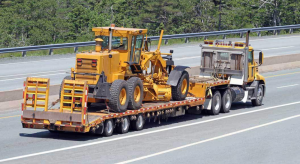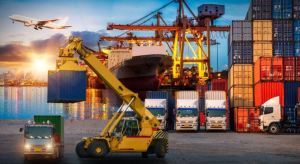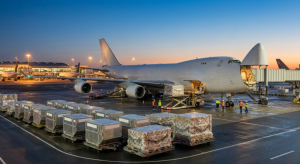

Flatbed freight services are the backbone of North American industrial shipping. From steel coils to construction equipment, the open deck platform has moved the continent’s heaviest and most complex cargo for decades. Understanding how flatbed freight services work is not a nice to have for shippers. It is the foundation of a reliable supply chain strategy. It is the foundation of a reliable supply chain strategy.
This guide covers every dimension of flatbed trailer meaning, open deck trucking mechanics, oversized cargo transport requirements, and heavy haul basics. Whether you are shipping for the first time or looking to optimize an existing freight program, this resource gives you the framework to make informed, cost effective decisions.
Enorth Logistics provides full truckload (FTL) flatbed solutions for industrial, construction, and heavy equipment shippers across North America. Contact us today to get a quote tailored to your cargo.
What Flatbed Freight Services Actually Mean
Flatbed freight services refer to the transportation of cargo on an open, flat platform trailer with no sides, roof, or enclosed structure. The flatbed trailer meaning goes beyond the physical design. It signals a category of freight that is either too large, too heavy, or too awkwardly shaped to fit inside a standard enclosed trailer. Flatbed is the solution when cargo defies conventional containment.
Open deck trucking is the broader term that encompasses flatbed and related trailer types. These trailers are engineered to carry loads that are loaded from the side, top, or rear using cranes, forklifts, or specialized equipment. The exposed nature of the deck is a feature, not a limitation. It allows oversized cargo transport that would be physically impossible with walls or a roof.
Shippers who treat flatbed as a default option rather than a deliberate choice consistently run into problems with securement, compliance, and carrier availability. Knowing precisely what flatbed FTL freight and oversized loads cover puts you in control of those outcomes.
Flatbed trailers have no enclosure, enabling top and side loading of any cargo configuration
Open deck trucking covers standard flatbeds, step decks, double drops, and lowboys
The flatbed trailer meaning always implies a load securement requirement using straps, chains, and edge protectors
FTL (full truckload) flatbed is the standard booking method for dedicated flatbed moves
Open Deck Trucking: The Platform Types You Need to Know
Open deck trucking is not a single trailer type. It is a family of platform configurations, each engineered for specific cargo dimensions and weight profiles. Choosing the wrong platform creates compliance problems, damages cargo, and adds cost. Matching the right open deck trailer to your freight is the first decision every shipper must get right.
Standard flatbeds are 48 to 53 feet long and sit approximately five feet off the ground. They handle the majority of freight volume, including steel products, lumber, and manufactured goods. Businesses can compare equipment types using this flatbed vs dry van vs reefer guide.
Lowboy trailers take open deck trucking to its extreme, with decks that sit as close as 18 inches off the ground. They are the standard platform for heavy construction and mining equipment that cannot be raised to standard deck heights. Each of these platforms serves a distinct role in the oversized cargo transport ecosystem.
Standard flatbed: best for steel, lumber, palletized construction materials up to 8.5 feet wide
Step deck: handles cargo up to 10 feet tall without exceeding height restrictions
Double drop: used for equipment between 10 and 11.5 feet tall
Lowboy: the platform of choice for heavy haul basics involving tracked equipment and industrial machines
Oversized Cargo Transport: Rules, Permits, and Planning
Oversized cargo transport is a regulated activity in every jurisdiction. When freight exceeds standard legal dimensions, shippers and carriers must obtain permits before the truck moves. This is not optional. Moving oversized cargo without the correct permits results in fines, load seizures, and significant delays. The permit process is manageable, but it requires lead time and accurate cargo measurements.
Standard legal limits in most U.S. states are 8.5 feet wide, 13.5 feet tall, 53 feet long, and 80,000 pounds gross vehicle weight. Cargo that exceeds any of these dimensions enters oversized territory. Permit requirements vary by state, meaning a single cross country move may require permits in six or more jurisdictions. Route surveys, pilot car escorts, and travel time restrictions often apply to oversized cargo transport.
Enorth Logistics coordinates FTL flatbed moves for oversized cargo, managing permit acquisition and route planning as part of the service. For complex moves, businesses can also review oversized load flatbed shipping requirements before booking. For LTL oversized moves or loads requiring specialized escort coordination beyond our core FTL offering, we connect shippers with our partner network to ensure the right resources are in place.
Obtain accurate cargo dimensions before booking. Estimates create permit errors and delays
Plan for multi state permitting timelines, which can range from same day to two weeks
Pilot car requirements are mandatory for loads exceeding 14 feet in height or 14 feet 6 inches in width in most states
Travel restrictions such as no night movement or weekend holds are common for the widest and tallest loads
Planning an oversized move? Enorth Logistics manages FTL flatbed permits and routing for complex loads. Reach out to our team for a consultation before your next shipment.
Flatbed Service Type Comparison
Use this table to identify the right open deck configuration for your cargo profile.
| Feature | Flatbed | Open Deck | Heavy Haul | Oversized |
|---|---|---|---|---|
| Load Visibility | Full | Full | Full | Full |
| Cargo Securement | Straps/Chains | Straps/Chains | Heavy Chains | Pilot Cars |
| Weight Capacity | Up to 48,000 lbs | Varies | 80,000+ lbs | Varies by permit |
| Permit Required | Sometimes | Sometimes | Yes | Yes |
| FTL Availability | Yes | Yes | Yes | Yes |
| Ideal For | Steel, lumber | Construction equip. | Mining machinery | Modular structures |
| Enorth Logistics | Primary service | Primary service | Available | Available |
Heavy Haul Basics Every Shipper Must Understand
Heavy haul basics start with one principle: weight management determines everything. Heavy haul freight is cargo that exceeds standard weight limits, which means the truck, trailer, and load together push beyond 80,000 pounds gross vehicle weight. This triggers a separate permit category, different securement requirements, and often requires axle configuration changes to distribute weight legally across the road surface.
Axle spread is the critical variable in heavy haul operations. Federal and state bridge laws govern how much weight can be placed on any given stretch of pavement per axle. Adding axles to the trailer or using a specialized multi axle configuration allows heavier gross weights while keeping per axle loads within legal limits. This is why heavy haul trailers look dramatically different from standard flatbeds. They are engineered specifically around weight distribution math.
Route surveys are standard practice for heavy haul moves. Engineers assess bridge ratings, overhead clearances, turning radii, and pavement strength along the proposed route. For cost planning, businesses can review flatbed freight costs 2026. Understanding these heavy haul basics upfront prevents expensive last minute reroutes and schedule failures.
80,000 lbs gross vehicle weight is the threshold where standard flatbed becomes heavy haul territory
Axle configuration directly controls per axle weight and determines permit eligibility
Bridge formula calculations must be completed before routing any heavy haul move
Enorth Logistics FTL heavy haul services include route analysis and permit management for qualifying loads
Load Securement Standards for Flatbed Freight Services
Load securement is a legal and operational requirement for all flatbed freight services. The Federal Motor Carrier Safety Administration (FMCSA) sets binding standards for how cargo must be secured on open deck trailers. These rules specify minimum working load limits for tie downs, the number of tie downs required based on cargo length and weight, and the placement of edge protectors to prevent strap damage.
Drivers bear primary legal responsibility for securement, but shippers who understand the requirements create better outcomes. Cargo that arrives properly staged and marked for securement points loads faster, reduces driver time on the dock, and lowers the risk of a violation stop. The securement requirements for steel coils, pipe, lumber, machinery, and plate steel each have specific rules. Treating them interchangeably is a common and costly mistake.
Working with a carrier like Enorth Logistics that runs dedicated FTL flatbed operations means your freight is handled by drivers who secure specific commodity types regularly. Familiarity with the cargo type is a direct input to securement quality and compliance.
Minimum one tie down per 10 feet of cargo length, with a minimum of two tie downs for any load
Working load limit of all tie downs combined must equal at least 50 percent of cargo weight
Edge protectors are required wherever tie downs contact the cargo edge
Chains are required for metal cargo. Straps alone do not meet FMCSA standards for steel loads
Why FTL Is the Right Structure for Flatbed Freight
Full truckload (FTL) is the standard freight structure for flatbed shipments, and the reasons are practical. Flatbed cargo is typically large, heavy, and requires dedicated securement attention from a single driver who takes the load from origin to destination. Splitting flatbed freight across multiple shipments introduces handling points that increase damage risk and securement complexity.
FTL flatbed moves also provide scheduling certainty. Your cargo does not wait at a terminal for a consolidation load. It departs when ready and arrives on a defined timeline. For project freight, construction deliveries, and industrial equipment moves where site readiness and crane schedules are coordinated, FTL reliability has direct financial value.
Enorth Logistics operates FTL flatbed services as our primary freight offering. We provide dedicated capacity for full truckload flatbed moves across open deck trailer types. For shippers who need LTL flatbed options, we do not operate LTL lanes directly, but we connect you with our trusted partner network to ensure your LTL requirements are covered without gaps.
FTL flatbed eliminates terminal handling and consolidation risk for dimensional and heavy cargo
Dedicated drivers develop cargo specific securement expertise over repeated loads
FTL scheduling aligns with project timelines where delivery windows are tight
Enorth Logistics FTL flatbed capacity covers standard flatbed, step deck, and heavy haul configurations
Get Your Flatbed Freight Moving with Confidence
Flatbed freight services reward preparation. Shippers who understand open deck trucking platform types, oversized cargo transport permit requirements, and heavy haul basics before they book consistently achieve better rates, fewer delays, and lower damage rates. The information in this guide gives you the foundation to operate from a position of knowledge rather than assumption.
Enorth Logistics provides FTL flatbed solutions built for the industrial and construction sectors. Our team manages the complexity of open deck freight so you focus on your project and your business.
Ready to move your flatbed freight? Contact Enorth Logistics today for a dedicated FTL quote. For LTL needs, we will connect you with our verified partner network.
Frequently Asked Questions
1. How far in advance should I book an FTL flatbed shipment for oversized cargo?
Lead time for oversized cargo transport depends on permit complexity. Standard flatbed FTL moves can often be booked two to five business days out. Multi state oversized loads requiring pilot cars should be booked at least one to two weeks in advance to allow permit processing time across all jurisdictions.
2. What documentation do I need to provide for a heavy haul shipment?
Heavy haul moves require certified cargo weight and dimensions, the specific pickup and delivery addresses for route survey purposes, and any existing permits if you have obtained them. Your carrier will use this information to calculate axle configurations, apply for permits, and confirm route viability before scheduling the move.
3. Can flatbed trailers carry cargo that is not strapped from the top?
Yes. Certain cargo types, including large machinery with integrated tie down points, are secured using chains through designated anchor points rather than over the top strapping. The securement method must always meet FMCSA working load limit requirements regardless of the method used. Your carrier will specify the correct approach based on cargo type.
4. What happens if my cargo dimensions change after a permit is issued?
Permits are issued for specific dimensions. If your cargo dimensions change even slightly, the permit must be amended or reissued. Moving with incorrect permit dimensions is a violation. Contact your carrier immediately if dimensions change after permit issuance so the paperwork can be corrected before dispatch.
5. Does weather affect flatbed freight service schedules and rates?
Weather affects open deck trucking operations in two ways. Active weather events such as high winds, ice, and heavy snow can halt movement of oversized loads due to safety regulations and permit travel restrictions. Seasonal demand patterns also influence flatbed capacity availability and pricing. Spring and summer construction season typically creates tighter capacity and higher rates for FTL flatbed services.