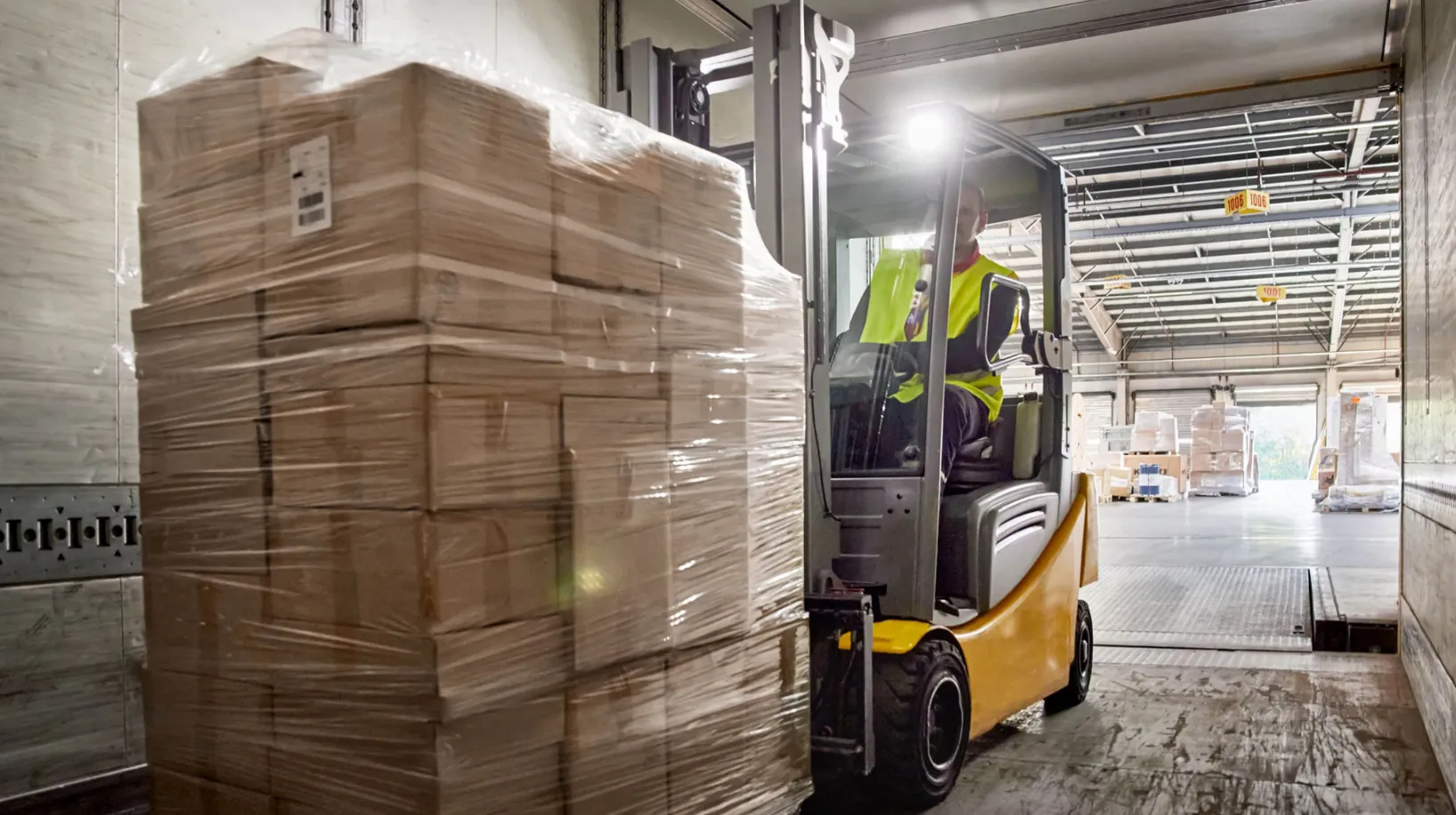
When freight delays or inventory mismatches occur in a supply chain, the impact extends beyond logistics. It disrupts revenue flow, inventory planning, customer satisfaction, and operational efficiency. For manufacturers, ecommerce brands, distributors, and retailers operating across Canada, transportation costs are often one of the largest and least understood logistics expenses.
Understanding how LTL freight pricing works in Canada is essential for controlling transportation budgets, reducing unexpected charges, and improving supply chain predictability. Industry research from organizations such as CSCMP, Gartner, and FreightWaves consistently highlights transportation cost management and shipment visibility as top priorities for supply chain leaders.
At ENorth Logistics, freight transportation teams coordinate more than 500+ shipments monthly, supported by a 98.7% on-time delivery rate, 24/7 live tracking support, and 99.999% operational reliability across Canada and the United States.
Yet many businesses still struggle with freight cost variability caused by freight classification errors, dimensional weight calculations, accessorial charges, and fragmented carrier networks. Understanding these variables is the first step toward building a more efficient transportation strategy.
Why Modern Supply Chains Are Struggling With Freight Visibility and Fulfillment Delays
Many organizations operate within fragmented logistics environments where warehousing, fulfillment, transportation, and carrier management function independently. This lack of integration often creates visibility gaps that directly impact freight pricing accuracy and operational performance.
A Supply Chain Manager overseeing multiple distribution centers may struggle to track SKU-level inventory movement in real time. When inventory data is disconnected from transportation planning, shipments are often consolidated incorrectly, resulting in higher freight costs and delayed deliveries.
Similarly, an ecommerce operator working with several carriers may receive inconsistent shipment updates, creating customer service challenges and fulfillment delays. Without synchronized inventory systems, warehouse teams frequently encounter stock discrepancies that affect shipping schedules and carrier bookings.
The challenge becomes even greater when cross-border freight enters the equation. Customs documentation requirements, carrier communication gaps, and changing transportation regulations can create bottlenecks that increase costs and extend transit times.
Modern logistics operations require connected systems that combine freight transportation, warehouse management, fulfillment execution, shipment visibility, and carrier communication into a single operational framework.
Understanding the Core Factors That Determine LTL Freight Pricing
LTL freight allows multiple shippers to share trailer capacity, making it a cost-effective transportation solution for shipments that do not require a full truckload. In most Canadian transportation networks, LTL freight services are commonly used for shipments weighing between 150 and 10,000 pounds.
Carrier pricing is influenced by several interconnected variables.
| Pricing Factor | Impact on Freight Cost | Why It Matters |
|---|---|---|
| Weight | Directly affects base rate | Heavier shipments generally receive lower per-unit rates |
| Dimensions | Determines space utilization | Larger shipments consume trailer capacity |
| Freight Class | Influences carrier risk and handling costs | Higher classes result in higher rates |
| Distance | Impacts transportation cost | Longer routes increase total charges |
| Fuel Surcharge | Variable market adjustment | Reflects diesel fuel market fluctuations |
| Accessorial Services | Additional fees | Specialized handling increases operational costs |
Most carriers use a combination of actual weight and dimensional weight calculations. If a shipment occupies significant trailer space relative to its weight, carriers may charge based on dimensional weight rather than actual weight.
Freight classification also plays a significant role. Using freight classification standards and NMFC-based methodologies, carriers evaluate density, stowability, liability, and handling requirements to determine pricing categories.
At ENorth Logistics, transportation teams leverage integrated carrier networks that include Purolator, DHL Freight, FedEx Freight, XPO Logistics, and TForce Freight, helping businesses optimize routing decisions while maintaining shipment visibility through a unified logistics platform.
Integrate transportation planning with ENorth Logistics’ freight, warehousing, and fulfillment platform to improve pricing visibility and operational efficiency.
Why Freight Classification and NMFC Codes Have a Major Impact on Shipping Rates
One of the most common causes of unexpected freight charges is incorrect freight classification. Many businesses underestimate how significantly freight class affects transportation costs.
Freight classes typically range from Class 50 to Class 500. Lower classes are assigned to dense, durable products that are easy to store and transport. Higher classes apply to freight that is lightweight, bulky, fragile, or difficult to handle.
For example, steel products may fall into a lower classification due to their density and ease of handling. Lightweight consumer products with large packaging footprints often receive higher classifications because they consume more trailer space while generating less revenue per cubic foot for carriers.
NMFC codes provide standardized commodity identification and help carriers consistently classify freight across transportation networks. Errors in freight classification often trigger carrier audits, resulting in reclassification charges, billing corrections, and operational delays.
These issues become particularly problematic during periods of high freight volume. Warehouse teams may be forced to reconcile invoice discrepancies while transportation managers negotiate adjustments with carriers.
Organizations shipping across Canada and the United States benefit significantly from accurate freight classification processes supported by Transportation Management Systems (TMS), Warehouse Management Systems (WMS), and EDI logistics integrations.
ENorth Logistics combines transportation execution with real-time shipment visibility, helping businesses reduce classification-related disruptions while maintaining operational accuracy throughout the freight lifecycle.
Integrate freight execution, carrier management, and shipment visibility through ENorth Logistics to reduce costly freight classification errors.
How Dimensional Weight and Accessorial Charges Increase Freight Costs
Many organizations focus exclusively on shipment weight while overlooking dimensional weight and accessorial charges, two factors that can significantly inflate freight invoices.
Dimensional weight reflects the amount of physical trailer space occupied by freight. Large but lightweight shipments often cost more because they reduce overall trailer utilization efficiency.
For example, ecommerce fulfillment operations frequently ship products with oversized packaging. Even when actual weight is relatively low, dimensional calculations may place the shipment into a higher pricing category.
In addition to dimensional pricing, accessorial charges often represent a substantial portion of total freight expenses.
| Common Accessorial Charge | Typical Cost Range (CAD) |
|---|---|
| Liftgate Service | $50 to $150 |
| Residential Delivery | $75 to $200 |
| Inside Delivery | $75 to $250 |
| Appointment Scheduling | $25 to $75 |
| Customs Broker Processing | $50 to $150 |
These charges become especially common in last-mile coordination environments where delivery locations lack loading docks or require specialized handling procedures.
For ecommerce operators and fulfillment managers, accessorial charges can erode profit margins when they are not incorporated into transportation planning.
ENorth Logistics addresses these challenges through integrated transportation and fulfillment workflows that connect warehouse operations, shipment planning, inventory synchronization, and carrier execution within a single logistics ecosystem.
Connect freight transportation and fulfillment planning through ENorth Logistics to reduce avoidable accessorial expenses and improve shipment efficiency.
Why Integrated Logistics Platforms Deliver Better Freight Cost Control
Transportation costs are rarely isolated from broader supply chain performance. Freight pricing, inventory accuracy, warehouse productivity, and fulfillment execution are closely connected.
A warehouse operating without real-time inventory visibility may experience stock discrepancies that delay outbound shipments. Those delays can trigger expedited transportation costs or missed delivery windows.
Similarly, disconnected carrier communication can create routing inefficiencies that increase transit times and transportation expenses. Cross-border freight movements face additional challenges related to customs compliance, documentation accuracy, and shipment traceability.
ENorth Logistics addresses these issues through a unified logistics platform supporting freight transportation, warehousing, ecommerce fulfillment, Amazon FBA compliance workflows, refrigerated transportation, and cross-border logistics operations.
The platform integrates real-time shipment tracking, WMS inventory scanning, SKU-level tracking, and transportation visibility across Canada and the United States. Businesses gain access to centralized operational data, enabling more informed transportation decisions and improved carrier network efficiency.
With 24/7 live tracking support, real-time shipment tracking systems, and multi-service logistics integration, organizations can improve coordination between warehouse teams, transportation planners, fulfillment operations, and carrier partners.
This level of visibility is increasingly important as supply chains become more complex and customer expectations continue to rise.
Move toward an integrated logistics strategy with ENorth Logistics’ transportation, warehousing, and fulfillment solutions.
Typical Canadian LTL Freight Rate Examples
While actual pricing varies based on market conditions, freight class, dimensions, and carrier availability, businesses can expect approximate terminal-to-terminal pricing on major Canadian transportation lanes. For a deeper understanding of market trends and cost factors, businesses can review the 2026 LTL freight rates pricing guide.
| Shipping Lane | Estimated Cost (CAD) |
|---|---|
| Toronto to Calgary | Approximately $320 |
| Toronto to Winnipeg | Approximately $283 |
| Vancouver to Edmonton | Approximately $264 |
| Calgary to Vancouver | Approximately $249 |
These estimates typically represent standard palletized shipments around 500 pounds and do not include accessorial charges, fuel surcharges, or specialized handling requirements.
Freight optimization strategies such as shipment consolidation, accurate classification, packaging improvements, and carrier network comparison can often generate meaningful cost reductions.
ENorth Logistics Editorial Expertise
ENorth Logistics’ editorial insights are developed by professionals with hands-on experience in freight transportation, warehouse operations, and supply chain optimization across Canada and the United States. Our perspective is grounded in real logistics execution environments, not theoretical supply chain models.
Conclusion
Global supply chains are under increasing pressure from rising freight costs, delivery expectations, and inventory complexity. Transportation managers, ecommerce operators, warehouse leaders, and procurement teams can no longer rely on fragmented systems that separate freight execution from inventory management and fulfillment operations.
The future of logistics will increasingly depend on AI-powered routing, predictive transportation planning, warehouse automation, inventory synchronization, and real-time freight orchestration. Organizations that invest in integrated logistics infrastructure will be better positioned to control costs, improve visibility, and respond quickly to market disruptions.
At ENorth Logistics, we help businesses simplify transportation, warehousing, fulfillment, and cross-border logistics through a unified operational approach. From LTL and FTL freight services to Amazon FBA fulfillment, inventory management, refrigerated transportation, and shipment visibility solutions, our team supports supply chain performance across Canada and the USA.
Contact ENorth Logistics today to request a freight quote online and explore how integrated logistics solutions can improve operational efficiency across your supply chain.