When freight delays or inventory mismatches occur in a supply chain, the impact extends beyond logistics. It disrupts revenue flow, customer trust, inventory availability, and operational efficiency. For businesses shipping across Canada and the United States, choosing the wrong transportation mode can significantly increase freight costs while creating avoidable service disruptions.
The question “LTL vs FTL: which is cheaper for your shipment?” is one of the most important decisions facing Supply Chain Managers, Transportation Directors, Procurement Teams, and Ecommerce Operators. The answer depends on shipment volume, delivery urgency, freight characteristics, handling requirements, and overall logistics planning strategy.
According to insights from Gartner Supply Chain research and FreightWaves market analysis, transportation optimization remains one of the largest opportunities for supply chain cost reduction. Organizations that align shipment size with the correct freight mode often improve cost efficiency while increasing shipment visibility and delivery reliability.
ENorth Logistics supports more than 500 shipments monthly across Canada and the USA through an integrated logistics network supported by a 98.7% on-time delivery rate, 24/7 live tracking support, and 99.999% operational reliability.
Yet many organizations continue to face fragmented transportation planning, disconnected warehouse operations, and carrier coordination challenges that make freight decisions more expensive than they need to be.
Why Modern Supply Chains Are Struggling With Freight Visibility and Fulfillment Delays
The decision between less-than-truckload and full truckload shipping rarely exists in isolation. It is often influenced by broader operational challenges occurring across transportation, warehousing, fulfillment, and inventory management systems.
A Supply Chain Manager handling inventory across multiple facilities may lack real-time visibility into SKU availability, resulting in fragmented shipments that increase transportation costs. An ecommerce operator working with multiple carriers may receive inconsistent shipment updates, creating customer service issues and delayed fulfillment performance.
Disconnected Warehouse Management Systems (WMS) and Transportation Management Systems (TMS) frequently create inefficiencies that affect freight planning. Inventory synchronization problems can force expedited shipments, while poor carrier communication can result in missed pickup windows and delayed deliveries.
Cross-border freight operations add another layer of complexity. Customs documentation requirements, compliance verification, and carrier handoffs can create bottlenecks that affect both LTL and FTL shipments.
Without integrated shipment visibility, businesses struggle to determine whether a less-than-truckload solution or a full truckload strategy will deliver the best balance between freight costs, transit speed, and operational efficiency.
Understanding the Real Cost Difference Between LTL and FTL Freight
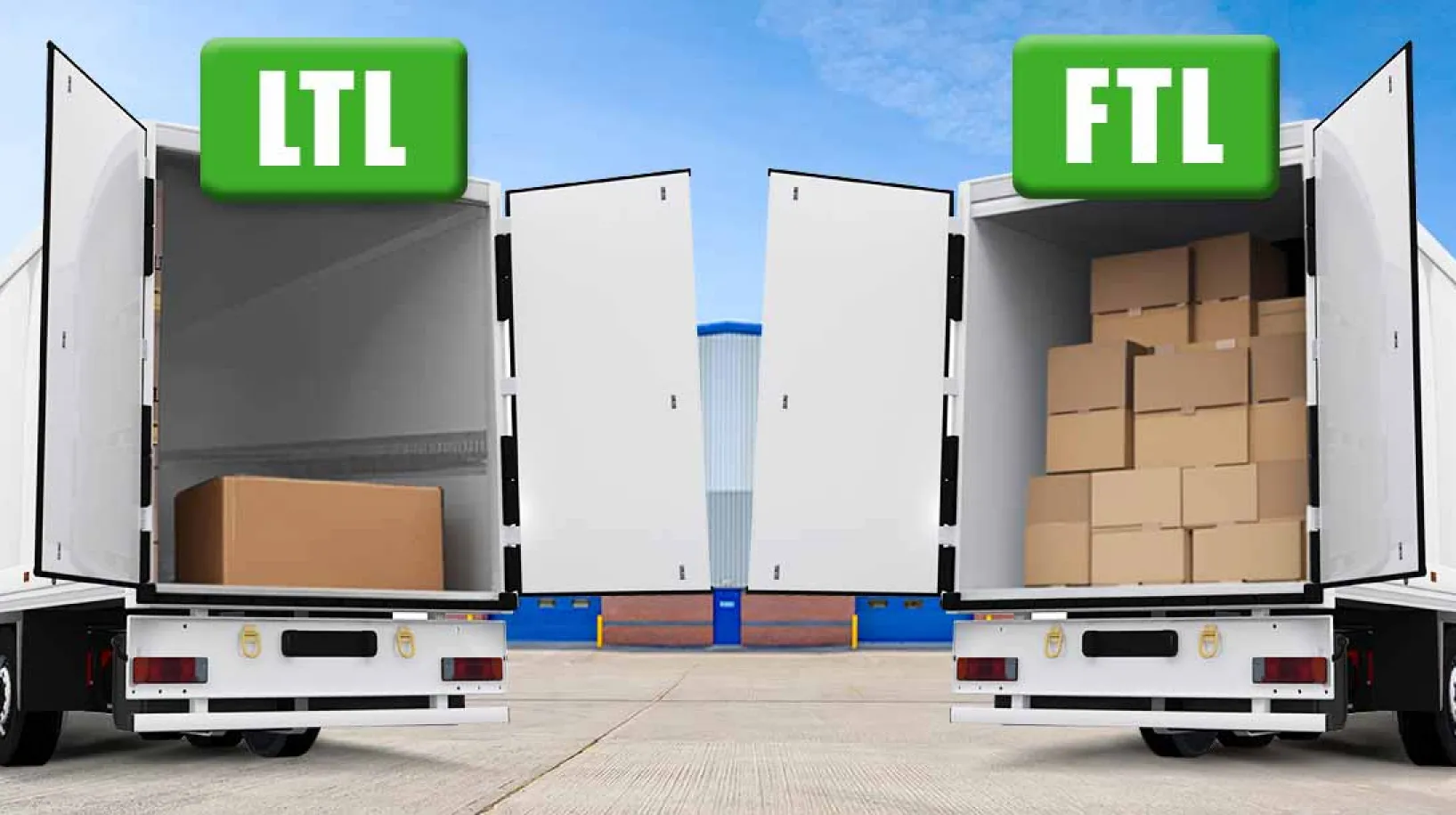
The primary difference between LTL and FTL transportation is how trailer capacity is utilized.
With LTL shipping, multiple companies share trailer space. Each shipper pays only for the portion of the trailer occupied by their freight. This model is typically ideal for shipments between one and six pallets or loads under approximately 15,000 pounds. Learn how LTL freight services support efficient transportation for smaller shipments.
FTL shipping provides exclusive use of an entire trailer. The truck moves directly from pickup to delivery without multiple terminal transfers or consolidation points.
LTL vs FTL Comparison Table
| Factor | LTL (Less Than Truckload) | FTL (Full Truckload) |
|---|---|---|
| Typical Shipment Size | 1 to 6 pallets | 10 to 12+ pallets |
| Weight Range | Up to 15,000 lbs | 20,000+ lbs |
| Trailer Space | Shared | Dedicated |
| Cost Structure | Weight, dimensions, freight class | Flat lane or mileage rate |
| Transit Time | Longer | Faster |
| Handling Frequency | Multiple touchpoints | Minimal handling |
| Damage Risk | Higher | Lower |
| Best For | Small shipments | Large volume shipments |
For smaller freight volumes, LTL is generally the more economical option because businesses only pay for the space they use. However, as shipment volume increases, FTL often becomes more cost-effective on a per-pallet and per-pound basis.
ENorth Logistics leverages carrier partnerships including Purolator, DHL Freight, FedEx Freight, XPO Logistics, and TForce Freight to evaluate both LTL and FTL routing options, helping customers identify the most cost-efficient transportation strategy.
Migrate to an integrated logistics system with ENorth Logistics’ freight, warehousing, and fulfillment platform. Explore solutions today.
Why Shipment Volume Is the Biggest Cost Driver
Many businesses focus exclusively on freight rates while overlooking shipment density and trailer utilization.
A shipment occupying two pallets typically benefits from LTL pricing because the customer only pays for a small portion of trailer capacity. However, once freight volumes reach eight to twelve pallets, the economics begin to shift. Businesses comparing transportation options can also review this LTL vs FTL vs PTL shipping guide.
At this point, paying for shared trailer space may become more expensive than reserving an entire trailer. Additional handling charges, freight classification costs, terminal processing fees, and longer transit times can increase total landed cost.
| Shipment Profile | Most Cost Effective Option |
|---|---|
| 1 to 3 pallets | LTL |
| 4 to 6 pallets | Usually LTL |
| 7 to 9 pallets | Depends on lane and urgency |
| 10 to 12+ pallets | Usually FTL |
| Time-sensitive freight | FTL |
| Fragile or high-value freight | FTL |
For Transportation Managers and Procurement Teams, the key objective is not simply reducing freight spend but optimizing total logistics cost across transportation, warehousing, inventory carrying costs, and customer service outcomes.
Migrate to an integrated logistics system with ENorth Logistics’ freight, warehousing, and fulfillment platform. Explore solutions today.
Why FTL Reduces Risk for High Value and Time Sensitive Freight
Cost is rarely the only factor influencing transportation decisions. Many organizations evaluate freight modes based on transit reliability, cargo security, inventory availability, and customer delivery commitments.
LTL networks operate through freight consolidation hubs where shipments are loaded, unloaded, sorted, and transferred between multiple terminals before reaching the final destination. While this model provides excellent cost efficiency for smaller shipments, it also introduces additional handling events that can increase transit variability.
For manufacturers shipping production-critical components, retailers moving seasonal inventory, or ecommerce brands replenishing Amazon FBA inventory, even minor delays can create significant downstream consequences. Missed inventory replenishment windows can lead to stockouts, lost sales opportunities, and reduced customer satisfaction.
FTL transportation minimizes these risks because freight remains on the same trailer from pickup through delivery. Direct routing improves transit routing efficiency while reducing cargo handling requirements. This is particularly important for fragile products, high-value electronics, temperature-sensitive freight, and urgent replenishment shipments.
ENorth Logistics supports these operations through a unified Canada-USA logistics platform, maintaining 24/7 shipment visibility and operational coordination across freight networks. Combined with a 98.7% on-time delivery rate and 99.999% operational reliability, businesses gain greater confidence in transportation planning and delivery execution.
For Transportation Managers and Fulfillment Directors, selecting FTL often becomes less about transportation cost and more about protecting inventory availability, production schedules, and customer commitments.
Migrate to an integrated logistics system with ENorth Logistics’ freight, warehousing, and fulfillment platform. Explore solutions today.
Why Integrated Freight and Warehousing Operations Improve Cost Efficiency
One of the most overlooked contributors to freight costs is the disconnect between transportation planning and warehouse operations.
Many organizations manage freight, inventory, fulfillment, and warehousing through separate systems. As a result, transportation decisions are often made without real-time inventory visibility. Warehouse teams may discover inventory shortages after carrier pickups have already been scheduled, creating costly delays and rebooking fees.
Inventory synchronization challenges also affect freight consolidation opportunities. Without accurate SKU-level visibility, organizations frequently ship partial loads that could have been consolidated into larger, more cost-effective shipments.
ENorth Logistics addresses these challenges through integrated freight transportation, warehousing, and fulfillment operations supported by real-time WMS inventory scanning and SKU tracking. This creates a connected logistics ecosystem where inventory availability, freight planning, fulfillment execution, and shipment tracking operate from a unified source of operational data.
Operational Impact of Integrated Logistics
| Logistics Function | Disconnected Operations | Integrated Operations |
|---|---|---|
| Inventory Visibility | Delayed updates | Real-time visibility |
| Shipment Planning | Reactive | Proactive |
| Freight Consolidation | Limited | Optimized |
| Carrier Coordination | Fragmented | Centralized |
| Fulfillment Accuracy | Variable | Improved |
| Customer Updates | Manual | Real-time tracking |
For ecommerce operators managing Amazon FBA replenishment, synchronized logistics operations are especially important. Inventory inaccuracies can result in delayed shipments, missed compliance deadlines, and increased fulfillment costs.
Integrated logistics infrastructure improves carrier network efficiency while reducing warehouse coordination issues that often drive transportation expenses higher.
Migrate to an integrated logistics system with ENorth Logistics’ freight, warehousing, and fulfillment platform. Explore solutions today.
Why Cross Border Freight Often Changes the LTL vs FTL Cost Equation
Cross-border logistics introduces variables that can significantly alter the economics of both LTL and FTL transportation.
Unlike domestic freight, Canada-USA shipments must navigate customs documentation requirements, border inspections, regulatory compliance procedures, and carrier coordination across multiple transportation networks. Any breakdown in documentation accuracy can create costly delays.
For smaller shipments, LTL often remains the most economical option. However, as freight volumes increase, customs processing, terminal handling, and consolidation activities can add complexity and extend transit times.
FTL transportation often provides greater efficiency for larger cross-border shipments because the freight remains consolidated throughout the journey. Direct transportation reduces handling events while simplifying shipment traceability and customs coordination.
Organizations shipping frequently between Canada and the United States benefit from integrated logistics providers capable of managing freight transportation, documentation workflows, shipment visibility, and compliance requirements through a single operational platform.
ENorth Logistics supports cross-border transportation through a unified logistics network that combines freight services, warehousing, fulfillment, and real-time shipment tracking. This centralized approach helps reduce communication gaps while improving shipment traceability across international supply chains.
For Import/Export Coordinators and Supply Chain Managers, the decision between LTL and FTL should include customs processing efficiency, inventory carrying costs, and transit reliability rather than focusing solely on transportation rates.
Migrate to an integrated logistics system with ENorth Logistics’ freight, warehousing, and fulfillment platform. Explore solutions today.
Choosing the Right Freight Mode Based on Operational Priorities
The most cost-effective shipping option is not always the one with the lowest freight rate. Experienced logistics leaders evaluate transportation decisions based on total operational impact.
A company shipping two pallets of inventory from Toronto to Calgary will likely benefit from LTL pricing because trailer sharing reduces transportation expenses. However, a manufacturer moving twelve pallets of production-critical inventory may find FTL provides greater value through faster transit times and reduced handling risk.
Similarly, ecommerce businesses replenishing Amazon FBA inventory often prioritize delivery consistency and compliance deadlines over marginal transportation savings. Delayed inbound inventory can directly affect product availability and sales performance.
LTL vs FTL Decision Matrix
| Operational Priority | Recommended Mode |
|---|---|
| Lowest Transportation Cost | LTL |
| Fastest Delivery | FTL |
| Minimal Freight Handling | FTL |
| Small Shipment Volume | LTL |
| Large Shipment Volume | FTL |
| Amazon FBA Replenishment | Depends on urgency and volume |
| Cross Border High Volume Freight | FTL |
| Flexible Delivery Schedule | LTL |
| Fragile Products | FTL |
| Inventory Consolidation Strategy | LTL or FTL based on shipment density |
Organizations that combine transportation planning with inventory management, fulfillment operations, and real-time shipment visibility consistently achieve stronger freight optimization outcomes than businesses operating with disconnected logistics systems. For broader transportation comparisons, review the FTL vs LTL vs PTL shipping guide.
ENorth Logistics supports this approach through multi-service logistics integration that combines freight transportation, warehousing, ecommerce fulfillment, Amazon FBA workflows, and shipment tracking into a single operational framework.
Migrate to an integrated logistics system with ENorth Logistics’ freight, warehousing, and fulfillment platform. Explore solutions today.
ENorth Logistics Editorial Expertise
ENorth Logistics’ editorial insights are developed by professionals with hands-on experience in freight transportation, warehouse operations, and supply chain optimization across Canada and the United States. Our perspective is grounded in real logistics execution environments, not theoretical supply chain models.
Conclusion
Global supply chains are under increasing pressure from rising freight costs, delivery expectations, inventory complexity, and growing customer demands for shipment transparency. Choosing between LTL and FTL is no longer simply a transportation decision. It has become a strategic supply chain decision that affects inventory availability, fulfillment performance, customer satisfaction, and overall operational efficiency.
As logistics networks continue to evolve, technologies such as AI-powered route optimization, predictive transportation planning, warehouse automation, inventory synchronization, and real-time freight orchestration will play an increasingly important role in transportation decision-making.
At ENorth Logistics, we help businesses evaluate transportation strategies based on operational realities rather than assumptions. Through integrated freight transportation, warehousing, fulfillment, Amazon FBA compliance workflows, real-time inventory visibility, and shipment tracking technology, organizations gain the tools needed to make more informed logistics decisions.
Whether your business requires cost-efficient LTL transportation, dedicated FTL capacity, cross-border freight coordination, refrigerated logistics, or ecommerce fulfillment support, our team provides the infrastructure and expertise needed to improve supply chain performance across Canada and the United States. Learn more about how LTL shipping supports businesses.
ENorth Logistics helps businesses simplify freight, fulfillment, and warehousing operations across Canada and the USA. Get a logistics quote today.