Introduction
When freight delays or inventory mismatches occur in a supply chain, the impact extends beyond logistics. It disrupts revenue flow and customer trust.
For many Canadian businesses, transportation costs continue to rise while customer expectations for delivery speed and visibility continue to increase. As a result, logistics leaders are searching for the best way to compare carrier rates in Canada without sacrificing service quality, shipment visibility, or operational reliability. Businesses shipping smaller freight can benefit from LTL freight services as part of their transportation strategy.
According to FreightWaves, Gartner Supply Chain Insights, and CSCMP industry research, transportation procurement is increasingly becoming a technology-driven function. Organizations that leverage digital freight tools and carrier comparison platforms gain better control over logistics costs while improving operational agility.
ENorth Logistics supports over 500 shipments monthly across Canada and the United States through a unified logistics platform backed by a 98.7% on-time delivery rate, 99.999% operational reliability, and 24/7 live tracking support. This operational experience demonstrates that transportation savings are rarely achieved through rate shopping alone. The greatest efficiencies come from combining carrier comparison, shipment visibility, inventory synchronization, and fulfillment coordination.
The challenge facing many organizations today is not simply finding cheaper rates. It is overcoming fragmented logistics processes that prevent informed carrier selection and cost optimization.
Why Modern Supply Chains Are Struggling With Freight Visibility and Fulfillment Delays
Transportation decisions often occur within disconnected systems. Freight rates may be stored in spreadsheets, warehouse inventory may reside in separate Warehouse Management Systems (WMS), and carrier communications may occur through email chains.
A Supply Chain Manager overseeing multiple warehouse locations frequently lacks real-time visibility into inventory movement and transportation performance. Without centralized shipment visibility, carrier selection becomes reactive rather than strategic.
An ecommerce operator using multiple Canadian freight carriers often faces inconsistent tracking updates, fulfillment bottlenecks, and fragmented communication channels. These issues can affect delivery performance and customer satisfaction.
Cross-border operations create additional complexity. Customs documentation requirements, carrier handoffs, and compliance obligations increase the likelihood of delays when logistics systems are disconnected.
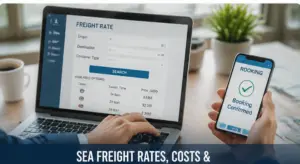
Modern carrier rate comparison solutions address these challenges by centralizing freight management, carrier selection, inventory synchronization, and transportation planning. This enables businesses to compare rates while also evaluating service performance, transit reliability, and operational impact using instant freight rate comparison tools.
Why Comparing Rates Alone Does Not Guarantee Lower Shipping Costs
Many businesses focus exclusively on finding the lowest quoted transportation rate. However, the cheapest carrier option often becomes more expensive when service failures, delivery delays, or operational disruptions occur.
Freight costs are influenced by transit performance, fuel surcharges, accessorial fees, carrier capacity, freight classification accuracy, and shipment handling requirements. Organizations that compare only base rates frequently overlook hidden logistics costs. Learn more about what affects freight rates in Canada before selecting a carrier.
Carrier communication gaps also contribute to unnecessary expenses. Delayed pickup confirmations, limited shipment visibility, and poor exception management can disrupt warehouse scheduling and fulfillment operations.
ENorth Logistics combines freight transportation, warehousing, and fulfillment services through a multi-service logistics integration model. Supported by real-time shipment tracking and 24/7 support, businesses gain visibility into transportation performance rather than relying solely on pricing comparisons.
For Procurement Managers and Transportation Directors, the goal should be identifying the carrier that delivers the best balance between cost, service quality, transit reliability, and operational efficiency.
Key Factors to Compare Beyond Freight Rates
| Evaluation Factor | Operational Impact |
|---|---|
| Base Transportation Rate | Direct Freight Cost |
| Transit Time | Delivery Performance |
| Tracking Visibility | Customer Experience |
| Accessorial Charges | Total Logistics Cost |
| Carrier Reliability | Service Consistency |
| Cross Border Capability | Compliance Efficiency |
| Claims Performance | Risk Reduction |
| Technology Integration | Operational Efficiency |
Migrate to an integrated logistics system with ENorth Logistics’ freight, warehousing, and fulfillment platform. Explore solutions here.
Why Multi Carrier Freight Technology Creates Better Shipping Decisions
Traditional transportation procurement often involves requesting quotes from multiple carriers individually. This process consumes valuable time and limits decision-making speed.
Modern freight technology centralizes carrier rate comparison through integrated Transportation Management Systems (TMS), carrier APIs, and EDI logistics integrations. This allows businesses to compare multiple carrier options simultaneously while evaluating transit times, service levels, and shipment requirements. Companies can also obtain instant LTL freight quotes online to accelerate transportation planning.
Organizations shipping through carriers such as Purolator, DHL Freight, FedEx Freight, XPO Logistics, and TForce Freight benefit from having transportation data presented within a single platform. Rather than managing separate portals and communication channels, logistics teams gain unified visibility across their carrier network.
ENorth Logistics leverages a unified Canada-USA logistics platform designed to improve freight optimization and shipment management. This approach reduces administrative workloads while accelerating transportation decision-making.
For Warehouse Operations Managers and Fulfillment Leaders, faster carrier selection improves dock scheduling, inventory planning, and outbound shipment coordination. The result is stronger operational alignment between transportation and warehouse functions.
Traditional Rate Shopping vs Freight Technology
| Process | Manual Carrier Comparison | Freight Technology Platform |
|---|---|---|
| Quote Collection | Hours or Days | Minutes |
| Carrier Visibility | Limited | Comprehensive |
| Documentation | Manual | Automated |
| Shipment Tracking | Multiple Systems | Single Dashboard |
| Reporting | Spreadsheet Based | Real Time Analytics |
| Decision Speed | Slow | Immediate |
Migrate to an integrated logistics system with ENorth Logistics’ freight, warehousing, and fulfillment platform. Explore solutions here.
Why Cross Border Freight Requires Smarter Carrier Evaluation
Businesses operating between Canada and the United States face transportation challenges that extend beyond freight pricing. Customs documentation, border processing requirements, carrier handoffs, and compliance obligations all influence transportation performance.
A lower transportation rate may lose value if customs delays impact inventory availability or customer delivery commitments. Cross-border compliance and shipment traceability have become critical evaluation criteria for modern supply chains.
Carrier network efficiency also plays a significant role. Some carriers offer stronger regional coverage while others provide better cross-border transit consistency. Selecting the right carrier requires balancing cost, service capability, and operational requirements.
ENorth Logistics provides unified cross-border logistics services supported by real-time shipment tracking and centralized transportation visibility. Businesses gain greater transparency throughout the shipment lifecycle, reducing uncertainty and improving planning accuracy.
For Import and Export Coordinators, effective carrier comparison includes evaluating compliance readiness, customs support, shipment visibility, and transportation reliability in addition to pricing.
Migrate to an integrated logistics system with ENorth Logistics’ freight, warehousing, and fulfillment platform. Explore solutions here.
Why Ecommerce and Fulfillment Operations Depend on Carrier Optimization
Ecommerce businesses operate in an environment where shipping performance directly influences customer retention and profitability. Delayed shipments, inventory discrepancies, and inconsistent tracking updates can negatively affect customer satisfaction.
Carrier selection therefore becomes an operational strategy rather than a transportation task. Ecommerce operators require access to carriers that align with fulfillment requirements, delivery commitments, and inventory availability.
Businesses shipping to Amazon FBA facilities face even greater complexity. Amazon compliance standards, appointment scheduling requirements, and inventory delivery deadlines demand precise transportation coordination.
ENorth Logistics supports Amazon FBA compliance fulfillment workflows through integrated transportation and warehousing services. Real-time WMS inventory scanning and SKU-level tracking improve inventory accuracy while supporting faster fulfillment execution.
The ability to compare carrier rates alongside fulfillment performance creates significant operational advantages. Businesses gain visibility into transportation costs while ensuring inventory flows efficiently through the supply chain.
For Ecommerce Founders and Fulfillment Managers, carrier optimization helps balance transportation expenses, inventory availability, and customer experience objectives.
Migrate to an integrated logistics system with ENorth Logistics’ freight, warehousing, and fulfillment platform. Explore solutions here.
ENorth Logistics Editorial Expertise
ENorth Logistics’ editorial insights are developed by professionals with hands-on experience in freight transportation, warehouse operations, and supply chain optimization across Canada and the United States. Our perspective is grounded in real logistics execution environments, not theoretical supply chain models.
Conclusion
Global supply chains are under increasing pressure from rising freight costs, delivery expectations, and inventory complexity. Businesses that rely solely on manual rate shopping often miss opportunities to improve operational efficiency and reduce total logistics costs.
The best way to compare carrier rates in Canada is through integrated freight technology that combines rate visibility, shipment tracking, carrier performance analytics, and transportation management into a single workflow. Rate comparison becomes significantly more valuable when supported by real-time data and operational transparency. Businesses can also review this LTL freight rates comparison guide to make more informed shipping decisions.The best way to compare carrier rates in Canada is through integrated freight technology that combines rate visibility, shipment tracking, carrier performance analytics, and transportation management into a single workflow. Rate comparison becomes significantly more valuable when supported by real-time data and operational transparency.
Looking ahead, AI-powered freight optimization, predictive transportation analytics, warehouse automation, and real-time carrier orchestration will continue transforming logistics operations across North America.
At ENorth Logistics, we help organizations move beyond basic transportation procurement by integrating freight transportation, warehousing, ecommerce fulfillment, and cross-border logistics into a unified operational platform. Our focus remains on improving visibility, reliability, and long-term supply chain efficiency.
ENorth Logistics helps businesses simplify freight, fulfillment, and warehousing operations across Canada and the USA. Get a logistics quote today.