
Operating a profitable business that imports or exports merchandise requires a steady transportation plan. When you must move huge volumes of materials across oceans, managing your shipping lanes becomes a primary focus. Relying on disorganized logistics methods can lead to massive delays at destination docks and unexpected billing adjustments. To protect your company cash flow, you must learn how the international maritime shipping network functions.
The global trading network relies heavily on sea channels to keep manufacturing plants and retail store shelves properly stocked. Choosing the right transport partners ensures your merchandise travels safely from one continent to another. At ENorth Logistics, we look at ocean cargo movements through a practical, data-driven framework. This guide will explain port systems, cargo containers, and commercial trade terms to keep your supply chain completely predictable.
The Crucial Role of Ocean Freight Carriers in Global Trade
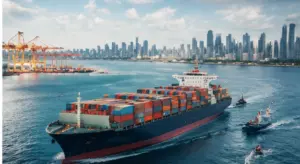
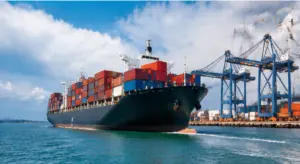
Commercial shipping lines operate massive cargo vessels that cross international waters on fixed schedules. These organizations provide the physical infrastructure needed to connect distant international markets. New business networks partner with ocean freight carriers to move heavy materials, bulk retail products, and industrial equipment at a fraction of the cost of air cargo services.
Understanding how these carriers schedule their voyages helps your logistics team plan warehouse workflows with great accuracy. Let us examine the operational methods that carriers deploy to manage their massive fleets efficiently.
Vessel Operations and Capacity Management Trends
Ocean carriers utilize structured scheduling frameworks to balance container space supply with global shipping demand. In the current market, carriers face a steady but moderate demand environment alongside an expanded global fleet. Because there are many new ships on the water, carriers actively manage available slot space to keep their operations profitable.
Line operators rely heavily on blank sailings, which are planned voyage cancellations, to control the volume of active cargo space. By withholding vessel space during weak quarters, carriers can maintain stable contract rates across major trade corridors. Importers must track these capacity changes closely to secure their container allocations before seasonal rushes begin.
Pillar 1 – Mastering Port Logistics Operations and Terminal Systems
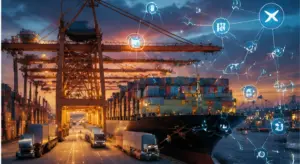
Marine terminals and harbors function as the vital meeting points where your cargo transitions between land trucks and ocean ships. These massive complexes operate under intense schedule pressures and enforce strict safety guidelines to maintain yard fluidity. If your logistics team ignores terminal rules, your containers can get stuck in long gate lines.
Managing your harbor arrivals carefully protects your supply chain from sudden transportation bottlenecks. Let us break down the standard processes that occur during routine port logistics operations across North America.
Terminal Handling and Port Fee Structures
Every container that enters a marine facility requires significant physical labor and heavy machinery coordination. The moment your box lands at the dock, the carrier assesses Terminal Handling Charges, which are commonly called THC. These fixed fees pay for operating giant ship-to-shore cranes, moving items across storage yards via straddle carriers, and staging units for truck drivers.
THC must be settled at both the port of origin and the final port of discharge. Knowing these fees in advance helps your accounting department build accurate landed cost calculations.
Customs Clearance Protocols at Entry Gateways
Clearing your freight through international customs checkpoints is a mandatory step for every global transaction. Your cargo must successfully clear export customs at the origin port before workers can load the container onto the vessel.
Once the ship completes its ocean transit and arrives at the destination country, the payload must pass through import customs clearance as well. Importers must submit accurate commercial invoices and packing lists to border authorities to prevent expensive container inspection holds.
Managing Commercial Storage Penalties – Demurrage and Detention
Marine ports allow a strict window of free time, which usually spans two to four days, to clear your cargo off the property. Exceeding these timelines triggers expensive automated financial penalties that can quickly erode your business margins. Shippers must study these cost rules to protect their logistics budgets from unexpected inflation.
Note: Demurrage and detention are completely separate expenses. Demurrage applies when a loaded container is held inside the port terminal for too long. Detention applies when a container is taken outside the port and not returned to the carrier within the permitted free days.
Review this summary of port storage penalties to keep your tracking team fully alert:
Penalty Category | Primary Storage Location | Main Cause of Accrual |
Demurrage Fee | Inside the container terminals yard | Customs paperwork delays or lack of local truck drivers |
Detention Fee | Outside the port facility boundaries | Warehouse unloading delays or late empty trailer returns |
Pillar 2 – Shipping Containers Explained and Cargo Suitability
The invention of the standardized steel container revolutionized how modern industries distribute their goods worldwide. Before these boxes existed, workers had to load individual crates by hand, which caused massive port delays and high theft risks. Today, standardized boxes allow crane crews to load thousands of tons of cargo every hour.
Selecting the right equipment shell ensures your products remain fully protected from open-sea moisture and rough highway travel. Let us explore the primary container types available through modern shipping networks.
Standard Dry Vans and Volume Extensions
Standard enclosed steel boxes represent the baseline tool for moving general, non-perishable commodities across global trade lanes. When researching shipping containers explained, you will find these units are classified into two primary lengths.
The 20-foot container is known as a TEU, or Twenty-foot Equivalent Unit. The larger 40-foot container is called an FEU, or Forty-foot Equivalent Unit.
For businesses moving high-volume, lightweight items, carriers offer high cube configurations. A high cube container is identical to a standard 40-foot dry van but stands exactly one foot taller. This slight change in geometry provides roughly 12% more interior loading volume, allowing you to pack more cartons onto a single ocean run.
Specialized Reefers for Temperature-Sensitive Products
Perishable foods, fresh agricultural produce, sensitive liquids, and pharmaceuticals require specialized environmental controls during transit. For these custom shipments, logistics teams deploy refrigerated containers, which are commonly known as reefers.
These insulated units incorporate built-in mechanical cooling and heating systems that plug directly into the ship’s electrical grid. Using reefers ensures cold chain safety compliance, preventing early product spoilage over long travel windows.
Choosing Your Mode – Full Container Load vs Less than Container Load
Your final container sourcing choice depends on the total physical volume of your payload lot. Shippers can choose between two primary load formats to balance their transit speed and budget goals.
Info: The total volume of ocean freight is measured in cubic meters, or CBM. If your total shipment lot measures over 15 CBM, booking a full container is generally the most economical choice.
Review these core operational categories to find the best fit for your weekly volumes:
- Full Container Load (FCL): You pay for and utilize an entire container exclusively for your goods. This method minimizes product handling, reduces damage risks, and offers direct port-to-port routing because the trailer stays sealed from origin to destination.
- Less than Container Load (LCL): Your cargo is smaller and shares a single container with shipments from other importing businesses. LCL is priced strictly per cubic meter, providing an affordable entry point for small batches, though transit times are longer due to terminal consolidation steps.
Pillar 3 – Incoterms Sea Freight Explained for Risk and Liability
International trade transactions require a universal language to define who pays for shipping costs and who holds legal liability during transit. Established by the International Chamber of Commerce (ICC), Incoterms dictate exactly when risk and responsibility transfer from the seller to the buyer.
Using the wrong trade term can leave your business financially responsible for goods lost at sea or damaged on a truck road haul. Let us evaluate the primary rules applied to modern sea transport contracts.
Classic Maritime Trade Terms – FOB, CIF, and CFR
The ICC has maintained specific rules for sea and inland waterway transport for decades. When studying incoterms sea freight explained parameters, you must track the exact point where the physical transfer of risk takes place.
Review these popular maritime-only terms used for traditional bulk cargo loads:
- FOB (Free on Board): The seller is responsible for local inland transport, export clearance, and loading the goods safely onto the vessel. Risk transfers to the buyer the moment the goods cross the ship’s rail, meaning the buyer arranges and pays for the main ocean freight.
- CIF (Cost, Insurance, and Freight): The seller pays for the main ocean freight and procures minimum cargo insurance to the destination port. However, the risk of loss still transfers to the buyer the moment the items are loaded on the ship.
- CFR (Cost and Freight): The seller pays for the ocean transport to the destination port, but the buyer is responsible for insuring the goods. Risk transfers to the buyer upon loading at the origin dock.
Modern Multimodal Rules for Containerized Cargo – FCA and DDP
For modern containerized cargo passing through complex marine logistics networks, experts recommend using “any mode” transport rules instead of old maritime-only terms. Containers are handed over at inland container yards or cross-dock terminals long before they reach the actual ship deck. Using maritime-only terms like FOB for a sealed container creates confusing legal gray areas if damage occurs on the road to the port.
Review these versatile multimodal alternatives to streamline your contract drafting:
- FCA (Free Carrier): The seller delivers the goods to a named carrier at an inland container yard, after clearing export customs. Risk and cost transfer early, which limits the seller’s exposure to highway hazards on the way to the port, making it a perfect fit for containerized shipments.
- DDP (Delivered Duty Paid): The seller handles everything, including export clearance, ocean freight, import duties, VAT, and final delivery to the buyer’s warehouse door. It provides maximum convenience for the buyer, but it carries significant cost and compliance risks for the seller.
To ensure absolute legal safety across your active supply chain, any contract signed must explicitly reference the official Incoterms 2020 Rules. Writing the specific location and rulebook edition into your documentation eliminates legal ambiguity between trading partners.
Strategic Sourcing and Best Practices for Shippers
Lowering your total transportation expenses requires moving away from last-minute spot market tracking habits. Shippers who implement disciplined data practices can handle volatile capacity crunches easily. Use these smart operational habits to protect your corporate shipping budget.
Review these actionable best practices to optimize your distribution grid:
- Book Your Capacity Early: Schedule your container space three to four weeks before your cargo readiness date to protect your slots from seasonal blank sailings.
- Verify Your Cargo Weight Exactly: Ensure your warehouse staging crews record certified scale weights to eliminate expensive container re-weigh penalties during port audits.
- Deploy a Hybrid Pricing Plan: Mix long-term contract pricing with spot market flexibility to shield your ledger from sudden regional freight spikes.
- Partner with an Enterprise Provider: Working with an organized team like ENorth Logistics connects your business with premium tracking systems and vetted ocean carriers.
The ENorth Logistics Operational Guarantee
Managing an efficient international distribution network requires working with a certified provider focused on absolute asset safety and digital visibility. ENorth Logistics provides premium transportation management solutions across Canada, the United States, and international corridors. Our team removes the administrative burden of global shipping by coordinating your carrier bookings, managing your customs clearance steps, and monitoring your container status live.
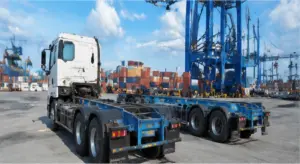
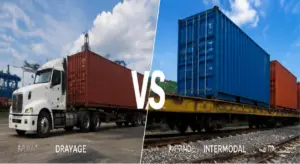
To protect your enterprise from rising legal liabilities and cross-border disruptions, our organization operates under strict compliance approvals across all domestic and international highway lanes. We handle your inland drayage using professional drivers who maintain active operating permits and full regulatory safety backing. Our advanced digital platform integrates your multi-carrier data feeds seamlessly, giving your office real-time visibility over your cargo status from origin to final destination. Choosing ENorth Logistics means choosing a technology-driven team dedicated to your long-term commercial growth.
Conclusion
Succeeding in a highly volatile international market requires an organized approach to managing your ocean freight carriers sourcing steps. Transitioning away from unmanaged, last-minute terminal bookings toward structured contract shipping agreements shields your corporate ledger from expensive port storage fines and driver delays. By tracking your container lifecycles carefully, checking your local free time limits, and utilizing advanced multi-carrier tracking platforms, you can eliminate expensive terminal penalties effortlessly.
The experienced container logistics specialists at ENorth Logistics are ready to build a more resilient distribution framework for your business. Our team handles the complex details of route planning, port scheduling, carrier safety auditing, and customs clearance coordination so your staff can focus entirely on core commercial growth. Reach out to our customer support center today to execute a comprehensive lane performance audit, secure competitive volume contract pricing, and request an accurate quote for your next cargo run.
Frequently Asked Questions
What factors dictate baseline rates for ocean freight carriers?
Baseline rates for ocean freight carriers are determined by a combination of physical cargo dimensions, total travel distance, and active equipment availability along your target lane. Your final pricing is driven heavily by whether you select FCL or LCL methods, current fuel costs, and local port infrastructure congestion levels. Seasonal demand shifts can also add temporary premiums during busy quarters.
How do demurrage and detention fees differ in port logistics operations?
Demurrage and detention are completely separate storage penalties. Demurrage applies when a loaded container sits inside the port terminal yard past the allowed free days, often caused by customs clearance or driver delays. Detention is assessed by the shipping line when an empty container or trailer chassis is held outside the port facility past the return deadline.
Why do experts recommend FCA over FOB for shipping containers?
Experts recommend FCA over FOB because it transfers risk and responsibility as soon as the goods are delivered to the carrier at an inland container yard. FOB only transfers risk once the cargo crosses the ship’s rail, which creates a dangerous legal gray area if a sealed container drops or suffers damage on the road to the port. FCA matches the physical reality of containerized logistics perfectly.
What is the main advantage of utilizing a high cube container?
The main advantage of a high cube container is that it stands exactly one foot taller than a standard 40-foot dry van shell. This slight increase in height expands your interior loading space by roughly 12% without changing the underlying footprint of the container. Shippers deploy high cubes to maximize trailer density when moving lightweight, high-volume retail commodities.