
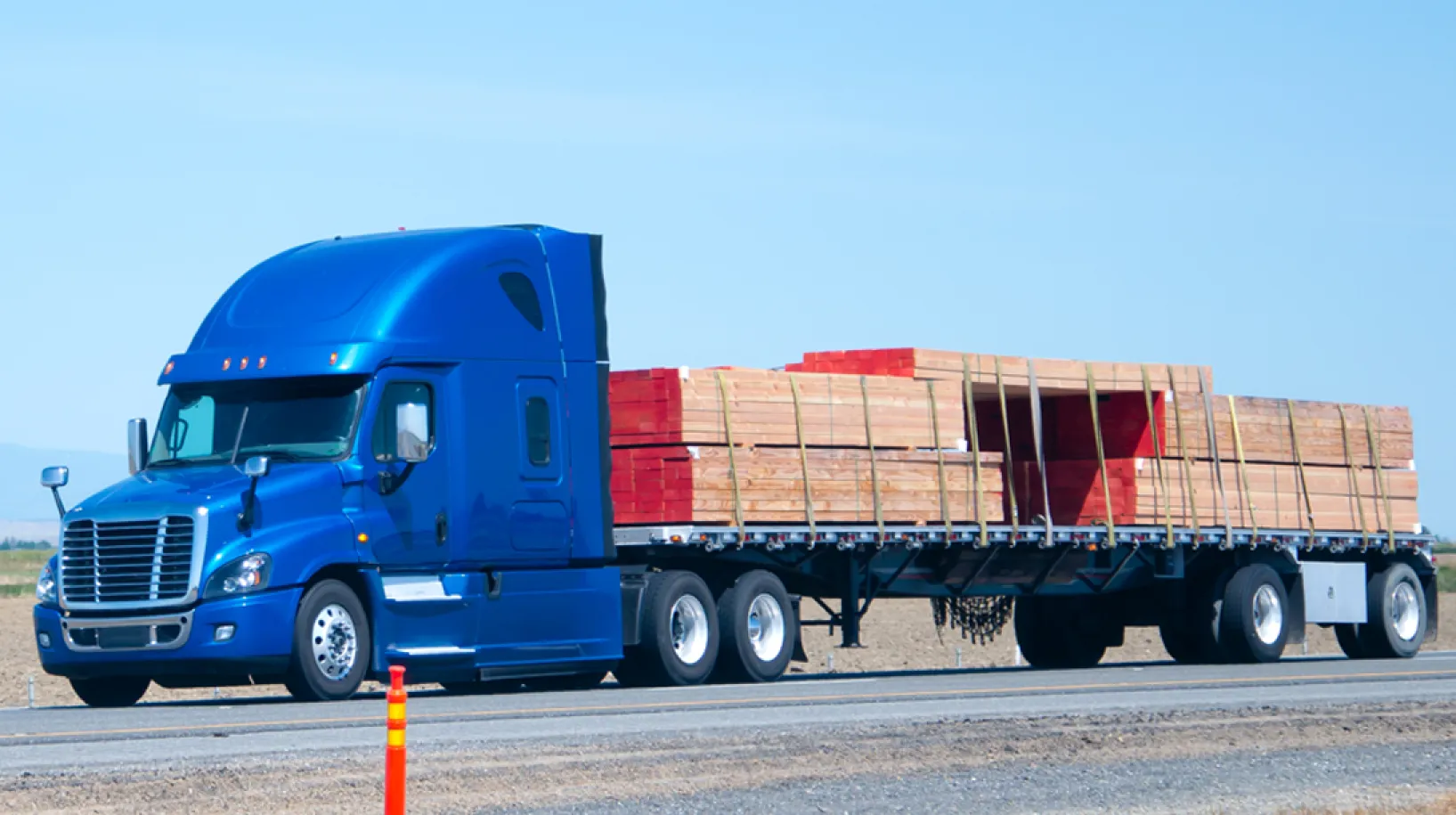
Operating an efficient corporate supply chain requires a deep understanding of your transport options and their real-world pricing structures. For many years, businesses could budget for their logistics needs using steady cost models. However, in the current 2026 transportation market, shipping budgets face continuous pressure from changing economic factors. Businesses looking to understand equipment options can explore flatbed freight services to better manage transport requirements.
Calculating your shipping costs can feel overwhelming because flatbed freight rates respond rapidly to shifts in trailer availability and regional demand. Many logistics managers overpay for their weekly lanes because they build their shipping plans on incomplete data. To protect your corporate profit margins, you must learn how carriers build their pricing structures and calculate their operational surcharges.
This comprehensive guide will break down current marketplace trends, trailer classification costs, and essential truck routing strategies. Understanding these primary price factors allows you to eliminate hidden accessorial surcharges and keep your shipping budget fully predictable. Businesses can also review the flatbed freight services guide 2026 to understand current market trends.
Current Flatbed Freight Rates Market Overview
The modern open-deck shipping market operates under strict pricing regulations and significant capacity limits. Flatbed spot and contract rates consistently track higher than standard dry van and refrigerated reefer averages. This price premium exists because open-deck trailers require specialized driver labor and are structurally vital for moving heavy industrial commodities.
National flatbed freight rates currently range from $1.75 to $4.25+ per mile depending on your target region, total haul length, and specific equipment configurations. Spot market pricing has shown strong upward momentum this year, with national averages hovering steadily around $2.50 to $3.44 per mile.
Geographical Pricing Trends and Borders
Flatbed transportation costs are heavily localized, meaning that a regional capacity shortage can cause rates to spike along specific highway corridors. For example, outbound rates in the Southeast and Southwest regions often experience sudden increases due to seasonal agricultural shipping and heavy industrial manufacturing spikes.
Cross-border lanes require even deeper planning and extra financial oversight. Review the standard baseline pricing benchmarks for domestic and cross-border lanes:
- United States Domestic Shipments: Average rates fluctuate between $2.00 to $3.50 per mile based on lane density.
- Canadian Domestic Shipments: Flatbed trucking costs typically span from $2.50 to $4.00 per mile CAD.
- Over-the-Road Kilometer Metrics: Over-the-road runs within Canada frequently bill at $1.60 to $2.50 per kilometer.
Furthermore, cross-border routes moving between Canada, the United States, and Mexico incur unique administrative add-ons. Shippers must factor in international customs brokerage fees, border processing charges, and multi-jurisdiction transport permit fees when calculating their total all-in lane costs.
The Compression of Spot and Contract Pricing
One of the most important developments in modern logistics is the closing gap between open-market spot rates and fixed contract rates. Historically, contract rates carried a substantial premium because they guaranteed carrier capacity for long periods.
In the current market, this pricing gap has compressed significantly, bringing spot and contract rates near parity in tight shipping corridors. When trailer availability is limited, transactional spot market rates rise rapidly to match or exceed long-term contract baselines. This compression means that shippers can no longer rely on last-minute bookings to find cheap transport options on the open market.
Flatbed Pricing Matrix by Trailer Equipment Class
The specific type of open-deck trailer required to lift your cargo alters your baseline per-mile cost directly. Specialized trailers require a higher capital investment from carriers, which translates into premium rates for the shipper.
Review this scannable chart to see how different trailer equipment models function across standard market rates:
Trailer Equipment Class | Average Rate Per Mile (USD) | Primary Structural Advantage | Best Cargo Target |
Standard Flatbed | $2.00 – $2.75 / mile | Level deck structure, accessible from any side or angle. | Steel beams, raw lumber, pipes, and palletized construction items. |
Step Deck / Drop Deck | $2.40 – $3.00 / mile | Features a lowered rear deck to accommodate taller freight. | Oversized industrial machinery, tractors, and tall building components. |
Double Drop / RGN Lowboy | $3.50 – $10.00+ / mile | RGN drops to the ground to allow heavy vehicles to drive straight on. | Extreme heavy-haul items, military tanks, and massive manufacturing turbines. |
Major Cost Factors Driving Your Flatbed Quote
Securing an accurate freight quote online requires looking past standard mileage distance tables. Carriers look closely at five core operational variables to protect their profit margins and offset highway risks. Complex shipments often fall under flatbed FTL freight and oversized loads categories.
1. Load Dimensions and Density Anomalies
Cargo weight and physical volume do not scale in a clean, linear fashion inside less-than-truckload (LTL) or full truckload networks. Lighter flatbed loads often carry an unexpected premium per pound compared to dense payloads.
Because a light, airy piece of equipment takes up the exact same physical trailer deck footprint as a massive 45,000-pound stack of steel, carriers lose the ability to pack other items onto that trailer. Therefore, you must pay for the entire physical area your cargo occupies, regardless of how light the items are.
2. Oversized Dimensions and Regulatory Permit Fees
Transporting cargo that exceeds standard legal highway measurements requires absolute data precision and strict legal compliance. For a detailed comparison of transport equipment, see flatbed vs dry van vs reefer guide. Any shipment that stretches beyond 8.5 feet wide, 13.5 feet tall, or 80,000 pounds gross weight triggers immediate over-dimensional regulatory rules.
Shippers must acquire specific state or provincial permit fees, which can cost anywhere from $500 to $2,000 per jurisdiction crossed. Furthermore, these massive loads require pilot escort vehicles to guide the truck safely through tight highway turns, adding $300 to $500 in daily fees to your final transportation bill.
3. Fuel Surcharges and Energy Market Indexes
With global diesel fuel prices hovering at high levels, the fuel surcharge represents one of the largest separate line items on your logistics invoice. Surcharges are calculated using live national energy indexes to protect carriers from sudden pricing spikes at the pump. As a general rule of thumb, a simple $0.50 spike per gallon of commercial diesel adds roughly $0.08 to $0.12 per mile directly to your all-in transport bill.
4. Market Seasonality and Weather Disruptions
The traditional peak flatbed season runs from April through October each year, matching up with the busy North American building push. During these months, thousands of construction crews draw trailers away from the general market, causing transactional trucking rates to climb rapidly.
Conversely, winter weather introduces physical travel limitations like iced mountain passes and frozen docks. These winter hazards slow down transit times and tighten trailer availability, leading to sudden pricing spikes during severe winter storms.
5. Accessorial Handling and Securement Requirements
Securing open-deck cargo requires rugged tools like heavy chains, steel straps, coil cradles, and edge protectors. If your cargo requires specialized blocking, structural bracing, or mandatory canvas tarping to prevent rain or road-salt corrosion, carriers will assess an accessorial handling fee ranging from $100 to $600 to cover the extra manual labor.
Practical Strategies to Save on Flatbed Rates
Logistics managers must shift away from last-minute, reactive shipping habits that expose their budgets to high spot market prices. Implementing disciplined warehouse practices allows you to secure competitive rates even during peak construction seasons.
Consolidate Flatbed Freight Volumes
Carriers offer much lower rates per pound when their open decks are fully utilized. If your warehouse frequently ships separate 15,000-pound components across different days, you are burning valuable transport capital. Batching those smaller pieces into a single 45,000-pound full truckload run drops your total per-mile cost dramatically. It maximizes trailer density and eliminates multiple accessorial terminal fees.
Provide Absolute, Exact Dimensions
Submitting vague or estimated cargo metrics to an online portal is a dangerous mistake that almost always backfires. When you provide estimated measurements, carriers will issue a lowball estimate that is corrected upward once their driver inspects the load with a tape measure.
These manual corrections result in heavy surprise rebilling fees and cause extended delays at the loading dock. Inputting exact, certified weights and physical measurements keeps your billing completely predictable.
Utilize Real-Time Digital Market Tools
Savvy supply chain teams do not rely on guesswork when budgeting for their seasonal freight lanes. They use an automated pricing calculator and real-time digital market networks to check live marketplace conditions.
Tracking active index platforms like DAT Trendlines or using digital freight exchanges like Freightera helps you compare full truckload and less-than-truckload options instantly. This digital intelligence ensures you secure a highly competitive rate without calling multiple brokers manually.
Why Partner with ENorth Logistics?
Managing complex open-deck shipping requires a logistics partner with deep technology integrations and absolute regulatory compliance knowledge. ENorth Logistics provides top-tier transportation solutions across Canada and the United States, keeping your supply chain completely seamless. We remove the stress of freight coordination by checking your load dimensions, auditing your accessorial needs, and managing your permits before the truck ever arrives at your dock.
Our Core Transportation Strengths
- Complete Regulatory Safety Coverage: We verify all structural load securement plans to ensure full highway compliance.
- Advanced Cost Optimization: Our software analyzes your shipping patterns to build consolidation pools that lower your per-mile costs.
- Transparent Digital Tracking: Shippers gain real-time visibility over their cargo paths with direct digital status updates.
- Comprehensive Custom Brokerage Support: We manage the complex paperwork needed to clear cross-border shipments quickly.
Our Professional Regulatory Credentials
Authority Registration | Compliance Code / License | Core Supply Chain Benefit |
Active USDOT Number | Fully Registered Federal Operator | Authorized to execute legal interstate commerce across all US highways. |
Valid MC Authority | Active Interstate Carrier License | Licensed to manage high-volume cross-border commercial freight projects. |
Canada CVOR License | Verified Ontario Provincial Registrant | Fully authorized to operate heavy transport assets within Canadian corridors. |
International IFTA Compliance | Audited Tax Reporting Framework | Fully compliant with all IRS, CRA, and fuel reporting laws. |
Conclusion
Succeeding in modern industrial distribution requires a smart, proactive approach to calculating your flatbed freight rates. Oversized shipments can be better managed through proper planning using oversized load flatbed shipping solutions. Sourcing the right trailer style ensures your cargo moves safely across North America without experiencing freight damage or terminal delays. Prioritizing open decks for oversized cargo, dry vans for secure palletized boxes, and reefers for temperature-sensitive items keeps your supply chain completely resilient.
Working with a fully licensed, technology-driven third-party logistics specialist simplifies your logistics operations completely. The experienced freight management specialists at ENorth Logistics are always ready to optimize your asset distribution. Contact our support team today to review your cargo dimensions, analyze your lanes, and secure a transparent quote for your next shipment.
Frequently Asked Questions
How do I secure an accurate flatbed freight quote online?
To secure an accurate freight quote online, you must provide precise cargo dimensions, certified scale weights, and clear pictures of your loading points. Shippers must also declare all specialized handling needs upfront to prevent carriers from adding surprise accessorial upcharges to the final bill.
What factors dictate the cost of a commercial fuel surcharge?
A fuel surcharge is calculated using live national diesel fuel price indexes regulated by federal energy departments. This surcharge fluctuates weekly to protect carriers from volatile pricing swings at the pump. A standard $0.50 increase per gallon of diesel typically adds $0.08 to $0.12 per mile directly to your baseline shipping costs.
When are specialized permit fees required for open-deck shipping?
Mandatory permit fees are triggered whenever a flatbed load exceeds standard legal highway measurements, typically 8.5 feet wide, 13.5 feet tall, or 80,000 pounds gross weight. Shippers must purchase separate over-dimensional permits for each state or province the truck crosses, which can cost between $500 to $2,000 per jurisdiction.
Why do over-dimensional loads face high oversized load costs?
Oversized load costs are high because these shipments require specialized trailers, regulatory transit permits, and custom route planning to avoid low bridges. They also require professional pilot escort vehicles to guide the truck safely through traffic, which adds a daily operational fee of $300 to $500 to your total freight invoice.
How does market seasonality impact regional flatbed trucking rates?
Flatbed trucking rates surge during the peak construction and agricultural season, which runs from April through October each year. During this window, demand for open-deck equipment sky-rockets across the country, tightening available fleet capacity and driving up transactional spot market rates along major shipping corridors.