Moving heavy industrial equipment or oversized structural manufacturing pieces across national highways requires deep planning. If your freight exceeds standard legal highway dimensions, you face strict safety regulations and complex transport logistics. Shippers often find themselves overwhelmed by the sheer volume of permits and securement requirements needed for a smooth transit. Managing these massive movements demands an experienced approach to minimize roadside liabilities and avoid heavy regulatory fines.
Fortunately, you can simplify this difficult distribution loop by mastering the basic rules of heavy hauling. This detailed 2026 guide will help you coordinate your open-deck freight shipments safely. Businesses managing oversized cargo can also explore flatbed freight services for specialized transportation support.
What is Oversized Load Flatbed Shipping?
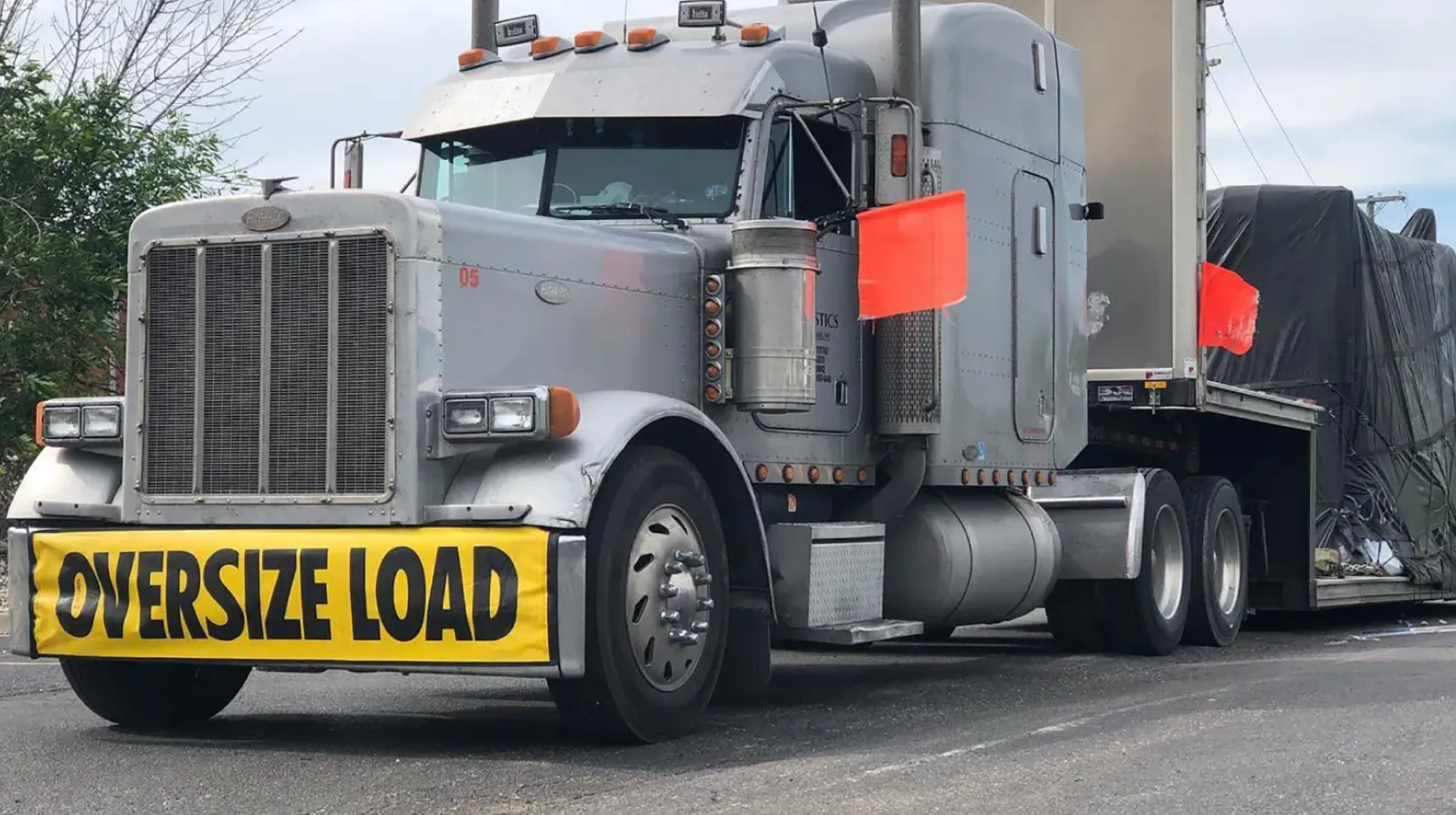
Oversized load flatbed shipping handles any commercial cargo that exceeds the standard legal size parameters of standard trailers. These boundaries generally cap at specific limits across North America:
- Width Maximum: 8.5 feet
- Height Maximum: 13.5 feet
- Length Maximum: 75 feet
- Gross Weight Maximum: 80,000 pounds
When your freight goes past any of these specific operational metrics, it becomes an over-dimensional shipment. Businesses handling these projects can also review this flatbed, FTL, and oversized loads guide.
Sourcing Specialized Transport Trailer Assets
Specialized open-deck trailers are required to support these heavy industrial shipments safely. And because this cargo cannot fit into an enclosed box, route planning experts must map every mile of the journey in advance. This specialized process ensures the vehicle avoids low bridges, low-hanging utility wires, narrow roads, and tight highway corners.
Strict Load Securement Rules and FMCSA Regulations
Safety is the absolute most important element of moving heavy open-deck freight. Drivers must comply strictly with FMCSA regulations and local Department of Transportation safety codes. Fulfilling these load securement rules ensures your cargo stays firmly anchored during hard highway braking or sudden sharp turns.
The aggregate Working Load Limit (WLL) represents the most critical calculation for your transport safety.
The 50% Safety Rule: The total combined weight capacity of all your tie-downs must equal at least half (50%) of the total weight of your cargo.
Counting Tie-Downs for Long Hauls
If you fail to meet this legal threshold, your truck can be placed out of service immediately during a roadside check. Shippers must follow specific, data-driven approaches to keep their loads secure:
- Initial Tie-Down Count: For any cargo measuring 10 feet or longer, you must use at least 2 distinct tie-downs right from the start.
- Length Extension Penalties: You must add 1 additional tie-down for every extra 10 feet of cargo length beyond the initial 10 feet.
Securing Heavy Industrial Equipment
For industrial vehicles or equipment pieces that weigh over 10,000 pounds, you are required to secure all 4 physical corners of the asset. Technicians must use heavy-duty Grade 70 transport chains along with appropriate ratcheting chain binders.
Protecting Synthetic Web Straps
Abrasive cargo edges can easily cut through synthetic web straps during a long highway transit. Therefore, drivers must always install durable edge protectors to guard their tie-down materials against tearing and crushing forces.
Trailer Selection Guide for Heavy Hauls
Matching your unique cargo dimensions to the correct equipment style saves your business massive amounts of capital. Standard flatbed platforms work perfectly for basic legal loads or uniform palletized goods, but heavy hauls need specialized alternatives. For a broader overview, review this flatbed freight services guide 2026.
Review this breakdown of open-deck trailer types:
- Standard Flatbed: This is the classic workhorse of the transport industry. It is ideal for standard legal weight limits, simple palletized products, and durable raw materials.
- Step Deck / Drop Deck: This trailer features a lowered main deck section that lets you carry taller cargo legally. It accommodates items measuring up to 10 or 10.5 feet tall without triggering oversized height violations.
- Removable Gooseneck (RGN): The front section of this specialized trailer detaches completely, allowing the front neck to drop flat onto the ground. This setup provides an easy drive-on, drive-off ramp for heavy wheeled vehicles and tracked construction excavators.
- Double Drop Trailer: Designed with an ultra-low center well section to handle extremely tall freight shipments. This style is used when your cargo height exceeds the legal limits of a standard step deck trailer.
- Conestoga Trailer Systems: This model combines a standard flatbed deck with a rolling, flexible canvas tarp frame system. It delivers the wide-open side access of an open platform along with the total weather protection of an enclosed dry van box. Businesses comparing equipment options can also review this Flatbed vs Dry Van vs Reefer guide.
Oversized Permitting and Regional Travel Rules
Moving an over-dimensional payload requires close coordination with local and national government agencies. Because oversized loads cannot be broken down into smaller pieces, you must buy formal heavy haul permits for every state or province along your route.
Navigating Daylight Travel Blackouts
Regulatory authorities enforce strict travel time limitations to protect the general motoring public. For example, in the Province of Ontario and across many other North American jurisdictions, permits restrict your travel hours from half an hour before sunrise to half an hour after sunset. These movements are restricted strictly to Monday through Friday operations.
Understanding Weekend and Rush-Hour Bans
Major transportation corridors have strict holiday and weekend bans. Many states and provinces completely prohibit over-dimensional freight movement during busy holiday weekends. They also enforce strict blackouts during peak urban rush hours. If you are moving a load through the Greater Toronto Area (GTA), your driver must park the truck between 7:00 AM to 9:00 AM and from 3:30 PM to 6:30 PM.
Organizing Pilot Escort Vehicles
Depending on the exact width or height of your cargo, you might also be required to hire professional pilot escort vehicles. These safety cars drive ahead of and behind the truck to alert oncoming traffic and check bridge clearances. To guarantee complete legal compliance, you must cross-reference your route rules with official governing bodies. Shippers can consult the Ontario Ministry of Transportation (MTO) for local highway rules, or study the Canadian Council of Motor Transport Administrators (CCMTA) to review the National Safety Code (NSC) standards.
Carrier Selection Framework and Competitor Analysis
Finding the best flatbed carrier requires checking for active insurance coverages, proven field experience, and total regulatory compliance. Many brokers will quote low prices but fail to secure the correct regional permits or pilot vehicles on time. Selecting the proper equipment early can also help businesses better understand flatbed freight costs in 2026.
Prominent Regional Open-Deck Fleets
Let us analyze some of the prominent regional carriers managing industrial logistics across the Canada and United States border:
- ET Transport: This automotive company operates a highly dedicated flatbed division. They specialize in moving heavy construction materials, large industrial equipment, and complex over-dimensional freight safely.
- ULS Freight: Provides specialized heavy-haul transport options throughout the Greater Toronto Area and beyond. Their team handles custom logistics plans along with complete pilot vehicle coordination for complex moves.
- Floatr Inc.: Located directly in the Toronto and Mississauga region. They provide highway-ready heavy trucks and experienced operators who understand the technical demands of moving oversized industrial machinery.
- NATS Canada: Focuses heavily on cross-border full truckload flatbed shipping configurations. They work proactively to mitigate custom clearance delays for Ontario-to-U.S. oversized loads.
- Flying Falcon Logistics: Offers broad flatbed transportation coverage across the GTA, national Canadian routes, and major United States lanes.
Why Partner with ENorth Logistics?
Managing a complex heavy haul requires an elite logistics partner with real-world technical expertise and deep technology integrations. ENorth Logistics provides premium transportation solutions across North America, keeping your freight operations completely seamless. We remove the stress of industrial logistics by analyzing your cargo dimensions, planning your travel routes, and securing your legal permits before the truck ever arrives at your dock.
Fully Verified Transportation Credentials
To guarantee absolute peace of mind and complete cargo safety, our enterprise maintains full legal operating credentials across all federal and provincial jurisdictions:
- Active USDOT Number: Full federal authorization to execute legal interstate commerce across all United States highways.
- Valid MC Authority: Active interstate carrier licensing to manage high-volume cross-border commercial freight moves.
- Ontario CVOR License: Active Commercial Vehicle Operator’s Registration to operate heavy equipment legally within Canadian transport corridors.
- IFTA Tax Compliance: Fully audited fuel tax reporting compliance across all state and provincial boundary lines.
Our team utilizes advanced digital tracking systems to provide real-time freight visibility from pickup to drop-off. We continuously monitor changing weather conditions, permit restrictions, and highway border delays to keep your cargo moving forward safely. Partnering with ENorth Logistics means choosing a professional team dedicated to your ongoing commercial success.
Conclusion
Successfully managing oversized load flatbed shipping projects requires total attention to detail and strict adherence to load securement rules. Ensuring your tie-downs meet the aggregate working load limit prevents roadside accidents and protects your valuable inventory from damage. By choosing the correct specialized trailer and respecting regional travel blackouts, you can avoid expensive transit delays.
You do not have to tackle these dangerous, highly complex logistical challenges all by yourself. The experienced heavy-haul optimization team at ENorth Logistics is always here to protect your corporate supply chain. Contact our customer support department today to map your regional lanes, calculate your weight distribution, and secure a transparent quote for your cargo.
Frequently Asked Questions
What is the core definition of oversized load flatbed shipping?
Oversized load flatbed shipping handles any commercial cargo that exceeds standard legal size parameters. These legal boundaries generally cap at specific limits, including 8.5 feet wide, 13.5 feet high, and 75 feet long. Exceeding these metrics requires specialized open-deck trailers, custom route planning, and formal heavy-haul permits.
How do load securement rules dictate tie-down requirements for heavy freight?
Load securement rules state that the aggregate working load limit of all tie-downs must equal at least 50 percent of the cargo’s total weight. For freight measuring 10 feet or longer, you need a minimum of 2 initial tie-downs. You must then add 1 extra tie-down for each additional 10 feet of cargo length.
Why does carrier compliance matter for cross-border heavy hauling?
Carrier compliance ensures that your transport provider holds active USDOT numbers, valid MC authorities, and local provincial CVOR licenses. Working with a compliant carrier guarantees that your international customs paperwork is prepared correctly, which prevents expensive border impoundments, safety infractions, and transit delays at the gateway.
What are the standard travel time restrictions for over-dimensional freight?
Oversized freight travel is typically restricted from half an hour before sunrise to half an hour after sunset, Monday through Friday. Many states and provinces completely ban movement on weekends, major holidays, and during peak urban rush hours to protect general highway traffic safety.