Energy transport logistics is the planning and movement of equipment and materials that power generation, transmission, and distribution operations depend on, from transformers and turbines to drilling equipment and grid infrastructure. This guide covers the general industry practice, not a specific carrier by the same name, and focuses on what makes freight for energy and utilities companies different from standard commercial shipping.
Energy and utilities freight combines two demanding constraints that rarely show up together in other industries: oversized, heavy equipment that requires specialized trailers and permits, and strict timelines where a delayed delivery can mean a grid outage or a stalled construction project. This guide breaks down the equipment involved, the freight modes and trailer types used to move it, the compliance requirements, and how to evaluate a freight provider for this kind of work.
What Makes Energy and Utilities Freight Different?
Energy and utilities freight differs from standard commercial shipping in three specific ways: the equipment is often oversized or overweight, the destinations are frequently remote, and the delivery timelines leave little to no room for delay. These three factors combine to make this freight category meaningfully more complex than moving standard palletized cargo.
The core challenges specific to this freight category:
- Oversized dimensions. Power transformers, generators, and wind turbine blades routinely exceed standard legal weight and size limits, requiring specialized trailers and permits.
- Remote destinations. Drilling pads, substations, and utility rights-of-way often sit far from major freight corridors, which means detailed route surveys are necessary before a shipment ever leaves the yard.
- Strict timelines. Grid failures, plant outages, and active construction windows create deadlines where a logistics failure directly translates into an operational or safety problem for the client.
What Equipment Gets Moved in Energy and Utilities Freight?
Energy and utilities freight covers equipment across oil and gas, electric power generation and transmission, and renewable energy, with each segment having its own typical equipment profile and handling requirements. Understanding which category a shipment falls into helps determine the right trailer type and permitting approach from the start.
| Sector | Typical Equipment |
|---|---|
| Oil and gas | Drilling rigs, wellhead equipment, frac equipment, pipeline components, compressors, pumps |
| Electric power (generation and transmission) | Transformers, generators, switchgear, substation equipment, transmission structures, utility poles |
| Renewable energy | Wind turbine blades, nacelles, towers, solar panels and racking, battery energy storage system (BESS) components, inverters |
Transformers deserve particular attention here, since large power transformers are custom-manufactured, expensive, and can take a long time to replace if damaged in transit or delayed at a job site, making careful handling and scheduling especially important for this equipment category.
Freight Modes and Trailer Types for Energy Equipment
Choosing the right freight mode and trailer type for energy equipment depends primarily on weight, dimensions, and how time-sensitive the shipment is, since no single trailer configuration handles every type of energy freight efficiently. Matching equipment to the right setup avoids costly permit delays or a trailer that simply can’t carry the load.
| Trailer/Mode | Best For |
|---|---|
| Flatbed | Standard long runs of transmission wire, steel lattice towers, and structural components that don’t require special deck height |
| Step deck | Taller cargo that needs extra clearance without requiring a full oversize permit |
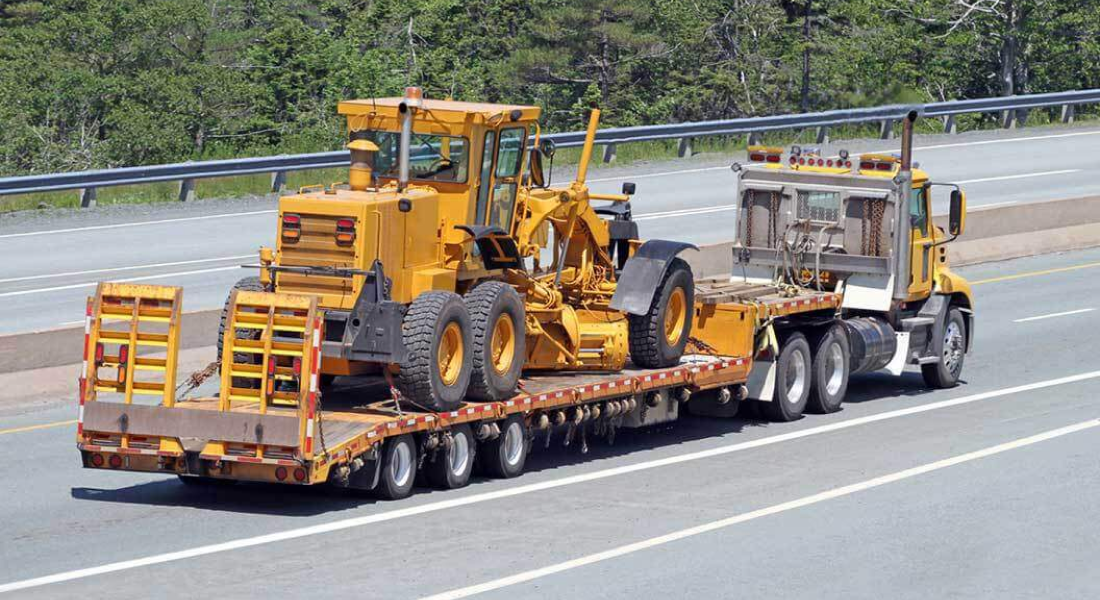
| RGN (removable gooseneck) / lowboy | Heavy power transformers, industrial generators, and tracked equipment that needs to roll or crane onto a low deck |
| Full truckload (FTL) | Dedicated, single-shipment moves where the load doesn’t share space with other freight |
| Expedited/air freight | Critical spare parts needed urgently, such as during an outage or equipment failure |
| Rail or intermodal | Long-distance moves of heavy, non-urgent equipment where cost efficiency matters more than speed |
How ENorth Logistics’ Team Handles This
Matching an energy shipment to the right trailer configuration is one of the most common places projects run into avoidable delays, since a load that turns out to exceed a trailer’s deck capacity or clearance mid-route can mean a costly reroute or a missed delivery window. ENorth Logistics’ Freight/Carrier Operations team works through equipment dimensions and weight during intake before a shipment is booked, coordinating flatbed transport and specialized heavy-haul capacity through an established carrier network rather than defaulting to a standard trailer and hoping it fits. This is designed to catch a trailer mismatch before a truck is already en route, which is a far more expensive point to discover the problem.
Moving Time-Sensitive and Emergency Energy Freight
Time-sensitive energy freight requires a different operational approach than routine shipments, since a delayed delivery during a grid outage or equipment failure carries direct financial and, in some cases, safety consequences. Businesses in this sector often need to weigh the cost of expedited freight against the cost of extended downtime.
Common time-sensitive scenarios in energy and utilities freight:
- Grid outage response, where a replacement transformer or generator needs to reach a site as fast as possible to restore power
- Planned outage windows, where equipment must arrive within a narrow construction or maintenance schedule to avoid extending the outage
- Critical spare parts delivery, where a single failed component can halt an entire operation until it’s replaced
- Storm or disaster recovery, where utility restoration work depends on getting replacement equipment into a disrupted region quickly
In most of these scenarios, the cost of expedited freight is small relative to the cost of extended downtime, which is why energy and utilities companies often treat freight speed as an operational priority rather than a line-item expense to minimize.
Permits, Routing, and Load Securement Requirements
Oversized and overweight energy equipment requires permits, route surveys, and specific load securement practices before it can legally move on public roads, and skipping or rushing any of these steps creates real delay and safety risk. This compliance layer is one of the biggest differences between energy freight and standard commercial shipping.
Key compliance requirements to plan for:
- Multi-state and local permits, cleared in advance to account for bridge weight ratings, road clearances, and jurisdiction-specific rules
- Route surveys, confirming that bridges, overhead lines, and turns along the planned route can actually accommodate the load’s dimensions
- Pilot car or escort requirements, which apply once a load exceeds certain width, height, or length thresholds and vary by state or province
- Load securement, following Department of Transportation (DOT) rules for chains, binders, and blocking to prevent dangerous weight shifts during transit
Because permit and routing requirements vary significantly by state, province, and even municipality, planning this well before a shipment date, rather than the week of, is what keeps oversized energy freight moving on schedule.
Cost Considerations: Freight Cost vs. Downtime Cost
The real cost comparison in energy and utilities freight is rarely just the freight bill itself, but the freight cost weighed against the cost of equipment downtime if the shipment is delayed. A relatively small expedited freight premium is often the cheaper option once downtime costs are factored in.
Factors that influence energy freight costs:
- Equipment weight and dimensions, since oversized loads require specialized trailers and permit fees
- Route complexity, including the number of jurisdictions crossed and whether escorts are required
- Urgency, since expedited or emergency freight commands a premium over standard scheduling
- Distance to remote or hard-to-access job sites, which can add drayage or specialized routing costs
Deloitte’s 2026 Power and Utilities Industry Outlook points to rising demand pressure on the power and utility sector as it works to meet growing electricity needs while managing affordability, a dynamic that puts sustained pressure on infrastructure equipment supply chains and, by extension, on the freight networks that move that equipment to job sites on schedule.
Common Challenges in Energy and Utilities Freight
Several recurring challenges show up across most energy and utilities freight projects, and recognizing them early helps a shipper plan around them rather than react to them mid-shipment. Most of these challenges trace back to the same root causes: oversized equipment, remote destinations, and tight timelines.
- Permit delays. Multi-jurisdiction permitting can take longer than expected, especially for loads crossing several states or provinces.
- Route obstacles discovered late. A bridge clearance or road weight limit missed during initial planning can force a costly reroute.
- Equipment damage risk. Oversized, high-value equipment like transformers is expensive to repair or replace if handled or secured improperly.
- Remote site access. Drilling pads, substations, and rights-of-way often require specialized routing that standard freight networks aren’t built to handle.
- Capacity constraints during peak demand. Storm recovery periods or major construction pushes can strain specialized heavy-haul capacity across an entire region at once.
How to Choose an Energy Freight Provider
Choosing a freight provider for energy and utilities equipment means evaluating their experience with oversized loads, their permitting and route-planning capability, and how they handle time-sensitive shipments specifically, not just their general freight capacity. Generalist carriers without this specific experience can create real risk on a project with zero room for delay.
Questions worth asking a prospective energy freight provider:
- Do they have direct experience with the specific equipment type (transformers, turbines, drilling equipment) you need moved?
- What trailer types and heavy-haul capacity do they have access to, and is that capacity owned or coordinated through a carrier network?
- How do they handle multi-jurisdiction permitting and route surveys for oversized loads?
- What is their process for expedited or emergency freight when a timeline is critical?
- Do they provide real-time visibility into where a shipment stands, especially for a multi-day heavy-haul move?
How ENorth Logistics’ Team Handles This
Energy and utilities clients often need a freight partner who can move both routine equipment shipments and urgent, time-sensitive freight without switching providers depending on the situation. ENorth Logistics serves energy and utilities companies alongside manufacturers, construction firms, and other industrial clients, using flatbed transport and an established carrier network to support both standard and heavy-haul equipment moves across Ontario, Quebec, British Columbia, Texas, California, and Illinois. Live shipment tracking synced to a client’s own systems is designed to give operations and procurement teams visibility into where a critical piece of equipment stands, rather than waiting on a phone call for a status update during a time-sensitive project.
Frequently Asked Questions
What is energy transport logistics?
Energy transport logistics is the planning, coordination, and physical movement of equipment and materials that energy production, transmission, and distribution operations depend on, including transformers, generators, turbines, and drilling equipment. It’s a general industry practice distinct from any single company that happens to share a similar name.
What trailer type is used to move a power transformer?
Large power transformers are typically moved on RGN (removable gooseneck) or lowboy trailers, since these trailers sit low to the ground and allow heavy equipment to roll or be craned onto the deck. The specific trailer choice depends on the transformer’s exact weight and dimensions.
Why does energy and utilities freight require special permits?
Energy equipment like transformers, generators, and wind turbine components routinely exceeds standard legal weight and size limits for road transport, which means shipments require oversize or overweight permits from every state, province, or municipality along the route. These permits confirm the route can accommodate the load’s dimensions, including bridge weight ratings and clearances.
How fast can emergency energy equipment be delivered during an outage?
Delivery speed depends on the equipment’s size, the distance to the site, and whether expedited or air freight is used instead of standard ground transport. Time-sensitive scenarios like grid outages are generally treated as an operational priority, with freight providers working to minimize delay given the direct cost of extended downtime.
What is the difference between a flatbed and an RGN trailer for energy equipment?
A flatbed trailer works well for standard cargo like transmission wire and structural components that don’t require special deck height, while an RGN (removable gooseneck) trailer sits lower to the ground and is built for heavy, tall equipment like transformers and generators that need to roll or be craned on. Step deck trailers fall in between, offering extra clearance for taller cargo without needing a full RGN setup.
How is the cost of energy freight typically justified against downtime costs?
The freight premium for expedited or specialized transport is usually small compared to the cost of extended equipment downtime, whether that’s a grid outage, a stalled construction project, or halted operations waiting on a critical spare part. This is why energy and utilities companies often prioritize freight speed and reliability over minimizing the freight line item alone.
What should energy companies look for in a freight provider?
Energy companies should look for direct experience with oversized and heavy-haul equipment, established permitting and route-planning capability, the ability to handle both routine and emergency time-sensitive shipments, and real-time visibility into shipment status. A provider without specific heavy-haul and permitting experience can introduce real risk on a project with a tight timeline.