Freight is the commercial transport of goods in bulk, typically by truck, rail, ship, or air, moving products from a manufacturer, supplier, or warehouse to a store, distribution center, or end customer. The term also refers to the shipment itself and to the charge paid to a carrier for moving it.
If you’re new to shipping products commercially, freight can sound like its own language, full of terms like LTL, BOL, and accessorial charges. This guide breaks freight shipping down in plain English, from what actually counts as freight to how a shipment moves from pickup to delivery, and how ENorth Logistics’ Freight/Carrier Operations team manages that process for clients across Canada and the USA.
What Is Freight?
Freight refers to goods or cargo transported in bulk or large quantities by truck, rail, ship, or aircraft, as well as the cost of moving those goods and the general business of transporting them. Unlike a parcel sent through standard mail carriers, freight covers items that are too large, heavy, or numerous to ship as a small package.
The term freight is used in three related ways in everyday shipping conversation:
- The goods themselves, as in “the freight arrived undamaged”
- The transportation cost, as in “freight charges came to $450”
- The industry or method, as in “we ship by freight, not parcel”
Most commercial freight moves on pallets, in crates, or as full truckloads, and it typically weighs more than what a parcel carrier like a standard courier service is set up to handle efficiently.
Freight vs. Parcel Shipping: What’s the Difference?
Freight and parcel shipping both move goods from one place to another, but they differ in the size, weight, and handling method involved. Parcel shipping covers individually boxed items, usually under about 150 pounds, sent through standard courier networks. Freight shipping covers palletized or crated goods that exceed parcel weight and size limits and require truck-based transport.
| Factor | Parcel Shipping | Freight Shipping |
|---|---|---|
| Typical weight | Under 150 lbs per package | 150 lbs and up, often much more |
| Packaging | Individual boxes | Pallets, crates, or bulk loads |
| Handling | Automated conveyor sortation | Dock-to-dock loading and unloading |
| Pricing basis | Weight and dimensional weight | Freight class, weight, and density |
| Common carriers | Courier and parcel networks | LTL and FTL trucking carriers |
A useful rule of thumb: if a shipment needs a pallet, a loading dock, or specialized handling to load and unload, it’s freight, not parcel.
How Does Freight Shipping Work?
Freight shipping moves goods through a structured sequence of booking, pickup, transit, and delivery, with documentation and tracking connecting each step. Understanding this sequence helps explain why accurate information at booking matters so much for a smooth, on-time delivery.
The general process runs as follows:
- Booking: The shipper provides shipment details, weight, dimensions, origin, and destination, to a carrier or logistics provider, who confirms pricing and schedules pickup.
- Pickup: The carrier loads the freight onto a truck, trailer, or railcar at the shipper’s location, usually from a loading dock.
- Transit: The shipment travels along a planned route, sometimes changing trucks or trailers at a terminal if it is an LTL shipment consolidated with other freight.
- Delivery: The shipment arrives at its destination, is unloaded, and is inspected by the receiver before being signed for.
Throughout this process, documentation such as the bill of lading travels with the shipment, and tracking systems let the shipper and receiver monitor progress in real time.
Who Is Involved in a Freight Shipment?
A typical freight shipment involves several distinct parties, each with a defined role, and understanding who does what helps clarify who to contact when something needs attention.
- Shipper (consignor): The business or individual sending the freight, responsible for accurate shipment details and proper packaging.
- Carrier: The trucking company or transportation provider that physically moves the freight.
- Freight broker or 3PL: An intermediary that arranges transportation on the shipper’s behalf, matching freight to an appropriate carrier and often managing documentation and tracking.
- Consignee: The business or individual receiving the freight at the destination.
- Freight forwarder: Typically involved in international shipments, coordinating multiple carriers and customs documentation across borders.
Working with a 3PL or freight broker, rather than contacting individual carriers directly, is common for businesses that ship regularly, since it consolidates carrier relationships, rate negotiation, and tracking into a single point of contact.
Types of Freight Transportation
Freight moves by several transportation modes, and the right one depends on shipment size, distance, timeline, and product type. Most domestic commercial freight in North America moves by truck, split between less-than-truckload and full truckload service.
- Less-Than-Truckload (LTL): Used for shipments that don’t fill an entire trailer. Multiple shippers’ freight shares trailer space, and each shipper pays only for the space their freight uses.
- Full Truckload (FTL): Used for larger shipments that fill an entire trailer or require exclusive use of a truck, typically for efficiency or to avoid the handling that comes with LTL consolidation.
- Ground freight: A general term for truck-based transportation, encompassing both LTL and FTL moves over regional or long-haul distances.
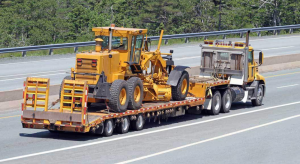
- Flatbed transport: Used for freight that is oversized, irregularly shaped, or needs to be loaded from the top or sides rather than through trailer doors, such as construction materials or machinery.
- Refrigerated transport (reefer): Used for temperature-sensitive freight, such as food, beverages, and other perishable goods, requiring an active refrigeration unit rather than just an enclosed trailer.
- Rail freight: Used for very large volumes moving long distances, often in combination with trucking for the first and last legs of the journey.
- Ocean and air freight: Used primarily for international shipments, with ocean freight suited to large volumes moving over weeks and air freight suited to urgent, high-value, or time-sensitive shipments.
- Intermodal freight: Combines multiple transportation types, such as moving a container by rail for the long-haul portion and by truck for pickup and final delivery.
How ENorth Logistics’ Team Handles This ENorth Logistics’ Freight/Carrier Operations team matches each shipment to the right mode and carrier based on weight, dimensions, product type, and delivery timeline, drawing on an established network that includes carriers such as Purolator, DHL Freight, Day & Ross, XPO Logistics, TForce Freight, TST-CF Express, Minimax Express, and FedEx Freight and FedEx Express. This is designed to take the mode-selection guesswork off the client’s plate, since choosing between LTL, FTL, flatbed, or refrigerated transport depends on details a shipping manager doesn’t need to track carrier by carrier.
How Freight Shipping Costs Are Calculated
Freight shipping cost is generally based on weight, freight class, distance, and any additional services the shipment requires, with LTL and FTL pricing following somewhat different logic. LTL rates depend heavily on freight class and density, since carriers price based on how much trailer space a shipment uses relative to its weight, while FTL rates depend more on distance and current market capacity for that lane, since the shipment fills the trailer regardless of class.
On top of the base rate, most freight invoices include a fuel surcharge, calculated as a percentage that adjusts periodically, along with any accessorial charges for services like liftgate delivery, residential delivery, or appointment scheduling.
Weight, Dimensions, Density, and Freight Class
Freight class is a standardized rating from 50 to 500 that LTL carriers use to price shipments, based primarily on density, the shipment’s weight relative to its volume, along with handling difficulty and liability risk. Denser, more compact freight generally carries a lower class and costs less to ship, while bulky, lightweight freight carries a higher class and costs more.
Getting freight class right at booking matters because an inaccurate class is one of the most common causes of a corrected, higher invoice after a carrier inspects the shipment. Shippers who ship regularly benefit from confirming their freight’s NMFC classification periodically, since classifications can change over time.
Common Freight Documents
Freight shipments rely on a small set of standard documents that carry shipment details, confirm delivery, and support any later claims or disputes. Understanding these documents helps explain what to check before signing for a delivery or filing a dispute.
- Bill of Lading (BOL): The core shipping document, listing the shipper, consignee, commodity, weight, freight class, and any special instructions. It travels with the shipment and is used to verify pricing and handling.
- Proof of Delivery (POD): Confirms the shipment was delivered, signed for, and in what condition, often noting any visible damage at the time of delivery.
- Freight invoice: The carrier’s bill for the shipment, reflecting the base rate, fuel surcharge, and any accessorial charges.
- Packing list: An itemized list of what’s included in the shipment, used to verify contents against the order.
For cross-border shipments between Canada and the United States, additional documentation, including customs paperwork and commercial invoices, is required alongside the standard freight documents.
How Freight Tracking Works
Freight tracking lets shippers and receivers follow a shipment’s location and status from pickup through delivery, typically using a tracking or PRO (progressive) number assigned at booking. Most carriers provide online tracking portals, and many 3PLs consolidate tracking across multiple carriers into a single dashboard.
Freight tracking status typically moves through stages such as picked up, in transit, out for delivery, and delivered, with an exception status flagged if something disrupts the planned schedule, such as a weather delay or a missed appointment.
How ENorth Logistics’ Team Handles This Clients working with ENorth Logistics see live shipment tracking synced directly to their own storefronts and order systems, rather than needing to check a separate carrier portal for each shipment in transit. ENorth Logistics’ Customer Support & Tracking team monitors this data continuously, so exceptions like delays or missed appointments are flagged and addressed before they become a surprise at the client’s end.
How to Prepare Freight for Shipment
Preparing freight properly protects the shipment from damage and helps ensure the freight class and weight declared at booking match what the carrier finds at pickup. Proper preparation generally includes:
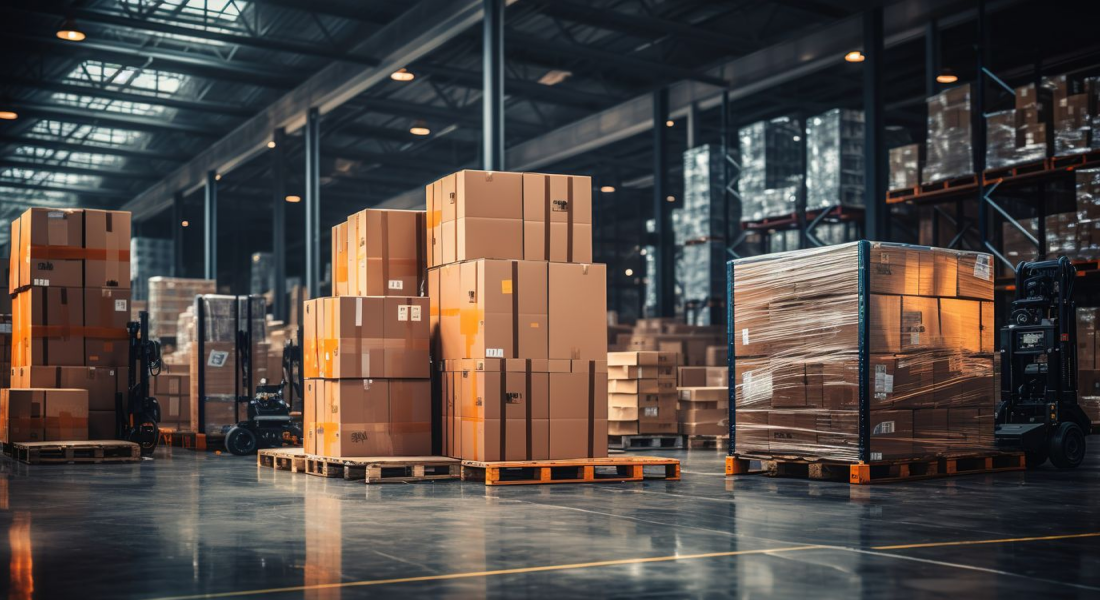
- Palletizing the shipment, using a standard pallet size where possible, to make loading, stacking, and handling straightforward.
- Securing the load with shrink wrap, straps, or banding so nothing shifts during transit.
- Protecting fragile or irregular items with adequate packaging, without adding unnecessary bulk that increases the shipment’s dimensions.
- Labeling clearly, including the destination address and any special handling instructions, such as “this side up” or temperature requirements.
- Measuring and weighing the full packaged shipment, pallet included, to confirm the freight class and weight declared at booking are accurate.
What Happens When Freight Is Damaged or Lost
When freight arrives damaged or a shipment is lost in transit, the receiver should note any visible damage on the proof of delivery before signing, since an unqualified signature can complicate a later claim. Most freight claims require documentation, including the original bill of lading, photos of the damage, and the proof of delivery showing the noted condition at receipt.
Carrier liability for damaged or lost freight is typically limited by the terms of the bill of lading and applicable tariffs, which is why shippers moving high-value freight often consider additional cargo insurance beyond the carrier’s standard liability coverage.
Domestic vs. Cross-Border Freight
Domestic freight moves entirely within one country, while cross-border freight, such as shipments moving between Canada and the United States, involves additional customs documentation, potential border wait times, and duties or brokerage fees depending on the commodity. These additional steps don’t change how the physical shipment travels, but they do add time and documentation that domestic freight doesn’t require.
How ENorth Logistics’ Team Handles This With operations across Ontario, Quebec, British Columbia, Texas, California, and Illinois, ENorth Logistics’ Freight/Carrier Operations team builds cross-border documentation and typical border processing time into the shipment plan from the start, rather than leaving clients to navigate customs requirements on their own for a shipment crossing between Canada and the USA.
Common Freight Terms Explained
A short glossary of terms that come up constantly in freight shipping:
| Term | Meaning |
|---|---|
| LTL | Less-than-truckload; shared trailer space for smaller shipments |
| FTL | Full truckload; exclusive use of an entire trailer |
| BOL | Bill of lading; the core shipping document |
| PRO number | A carrier-assigned tracking number for a shipment |
| Consignee | The party receiving the shipment |
| Consignor | The party sending the shipment (the shipper) |
| Accessorial | An additional service charge beyond standard pickup and delivery |
| Dimensional weight | A billable weight calculated from a shipment’s size, used mainly in parcel shipping |
| Freight class | A standardized NMFC rating used to price LTL shipments |
| Last-mile delivery | The final leg of delivery from a local terminal to the end destination |
How to Choose the Right Freight Method
Choosing between LTL, FTL, flatbed, and refrigerated transport depends on shipment size, product type, and delivery timeline, and getting this choice right affects both cost and delivery reliability. As a general guide: use LTL for shipments that don’t fill a trailer, FTL for larger volumes or time-sensitive freight, flatbed for oversized or irregularly shaped loads, and refrigerated transport for anything temperature-sensitive.
Businesses shipping regularly across multiple product types often benefit from working with a single freight and fulfillment partner that can move freight across all of these methods, rather than managing separate carrier relationships for each shipment type.
Frequently Asked Questions
What is the difference between freight and cargo?
Freight and cargo are often used interchangeably to describe goods being transported in bulk. In practice, “cargo” is used more often in ocean and air shipping contexts, while “freight” is the more common term for truck and rail transportation in North America.
What is the difference between LTL and FTL freight?
LTL (less-than-truckload) freight shares trailer space with other shipments and is priced by freight class, weight, and density. FTL (full truckload) freight uses an entire trailer exclusively and is priced mainly by distance and current market capacity for that lane.
What counts as freight versus a regular package?
Generally, if a shipment exceeds about 150 pounds, requires a pallet, or needs a loading dock for pickup and delivery, it’s considered freight rather than a standard parcel shipped through a courier network.
What is a bill of lading?
A bill of lading (BOL) is the core shipping document for a freight shipment, listing the shipper, consignee, commodity, weight, freight class, and any special handling instructions. It travels with the shipment and is used to verify pricing and handling at pickup and delivery.
How long does freight shipping typically take?
Transit time depends on distance, mode, and whether the shipment is LTL or FTL. LTL shipments often take longer than FTL over the same distance because they may be consolidated and handled at multiple terminals along the route.
What happens if my freight arrives damaged?
Note any visible damage on the proof of delivery before signing, and keep the original bill of lading, photos of the damage, and the delivery documentation, since these are typically required to file a freight claim with the carrier.
Do I need freight insurance?
Carrier liability for damaged or lost freight is generally limited by the terms of the bill of lading and applicable tariffs, so shippers moving high-value freight often add cargo insurance for coverage beyond what a carrier’s standard liability provides.
How do I choose between LTL, FTL, flatbed, and refrigerated freight?
Choose based on shipment size and product type: LTL for freight that doesn’t fill a trailer, FTL for larger or time-sensitive loads, flatbed for oversized or irregular freight, and refrigerated transport for anything temperature-sensitive.