
Choosing the right freight shipping company comes down to matching your shipment type and volume to a provider’s actual capabilities, then checking their compliance record, technology, and pricing transparency before you commit. The steps below cover what to check, in order.
Step 1: Assess Your Shipping Volume and Type
Start by defining what you actually need to ship before comparing providers. This determines whether you need LTL, FTL, or a specialized service.
- Shipment size: LTL generally covers loads roughly 150 to 15,000 lbs that do not fill a trailer. FTL fits larger volume or shipments that benefit from a dedicated trailer.
- Type of goods: Standard palletized freight has different requirements than food or pharmaceutical products needing refrigerated transport, or oversized equipment needing a flatbed.
- Geography: Confirm whether your shipments move locally within a province or state, nationally, or across the Canada-U.S. border, since not every provider covers all three.
A provider that cannot match your actual shipment profile is the wrong fit regardless of price.
Step 2: Verify Service Capabilities
A freight company’s website listing “freight services” does not guarantee it can handle your specific shipment type well. Confirm directly that the provider has real experience with your freight category, whether that is standard ground freight, flatbed transport for oversized cargo, or refrigerated transport for temperature-sensitive goods.
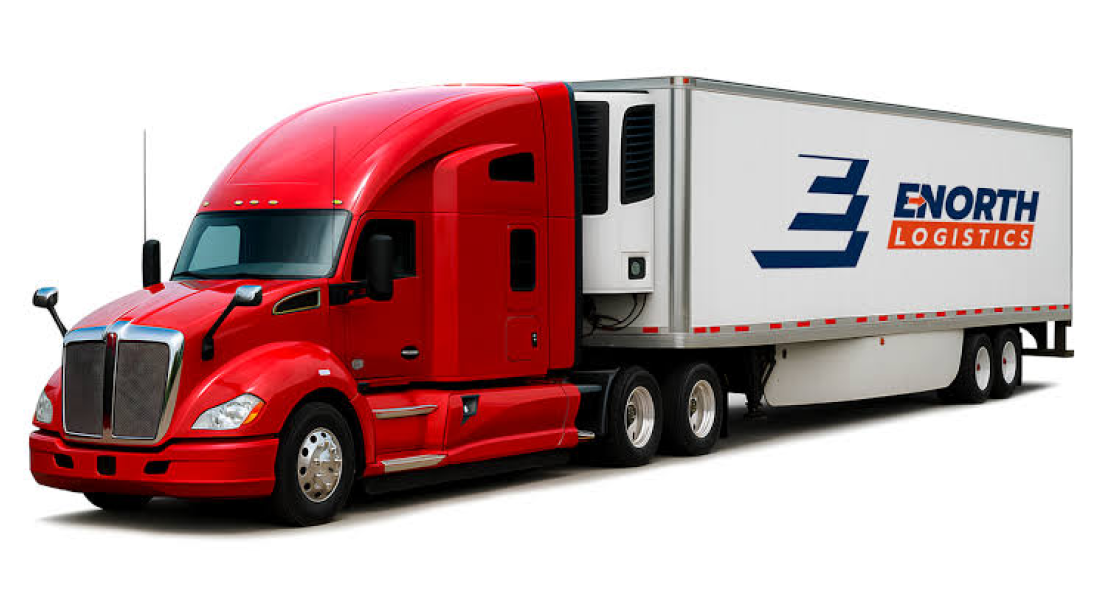
How ENorth Logistics Fits This: ENorth Logistics covers LTL Shipping, FTL Shipping, Ground Freight, Flatbed Transport, and Refrigerated Transport across Ontario, Quebec, British Columbia, Texas, California, and Illinois, so clients with mixed freight needs can work with one provider instead of coordinating multiple specialized carriers.
Step 3: Check Compliance and Carrier Relationships
A freight provider should be able to speak clearly about how it handles safety compliance and carrier relationships, not just quote a rate.
- Ask whether the company owns transport assets, brokers to third-party carriers, or works through an established carrier network with direct relationships.
- Ask how carrier equipment is matched to your specific shipment type, especially for specialized freight like flatbed or refrigerated loads.
- Ask what happens if your assigned carrier has a service issue partway through a shipment.
A provider with an established carrier network and direct relationships generally has more control over service quality than one that books whichever carrier is available at the lowest cost.
Step 4: Evaluate Technology and Tracking
Real-time visibility should be standard, not an upsell. Ask specifically:
- Is GPS tracking available in real time, or only through manual status requests?
- Does the tracking data sync to a platform you can check yourself, or does it require calling a representative?
- Can the provider connect freight tracking with your broader order or inventory systems if you also need fulfillment or warehousing support?
How ENorth Logistics Fits This: ENorth Logistics runs shipment tracking through a unified platform that syncs live tracking data to client storefronts, so freight visibility connects with a client’s existing order and inventory management rather than sitting in a separate system.
Step 5: Review Pricing and Support Structure
Pricing transparency and support quality often matter more long-term than the initial quote.
| What to Ask | Why It Matters |
|---|---|
| Is the quote itemized? | Separates line-haul cost from accessorial fees like fuel surcharges or liftgate charges |
| Who is my point of contact? | A dedicated contact resolves issues faster than a general call center |
| How are exceptions communicated? | Determines whether you find out about a delay proactively or after the fact |
| What is included in the base rate? | Prevents surprise charges added after pickup |
A provider that avoids itemizing costs or cannot name a specific point of contact is harder to hold accountable when something goes wrong mid-shipment.
Putting It Together
The right freight shipping company is the one that matches your actual shipment type and volume, has verifiable carrier relationships, gives you real-time visibility, and prices transparently. Providers that check all four boxes are generally easier to scale with as shipping volume grows, since you are not renegotiating fit every time your needs change.
[INTERNAL LINK: suggested anchor text “the complete guide to freight shipping services”]
Frequently Asked Questions
How do I know if I need LTL or FTL for my business?
If your shipments are generally under 15,000 lbs and do not fill a trailer, LTL is usually more cost-effective. If you regularly ship enough volume to fill a trailer, or ship fragile or high-value freight, FTL reduces handling and can be worth the added cost.
Should I choose a freight broker or a carrier with its own network?
Both can work well. A provider with direct carrier relationships and an established network generally gives you more consistency and accountability than a broker relying on whichever carrier is available at the lowest price.
What questions should I ask about freight tracking?
Ask whether tracking updates in real time, whether it is available through a self-service platform, and whether the data can connect with your other systems, such as inventory or order management.
Are cheaper freight quotes always a red flag?
Not always, but a quote with no itemized breakdown of line-haul and accessorial costs is harder to evaluate fairly. Ask for an itemized quote so you can compare providers on the same basis.
Can I use the same company for freight shipping and warehousing?
Yes. Providers like ENorth Logistics offer freight shipping alongside warehousing, inventory management, and ecommerce fulfillment, which keeps shipment and inventory data in one platform instead of multiple disconnected systems.