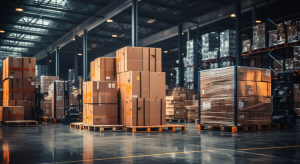
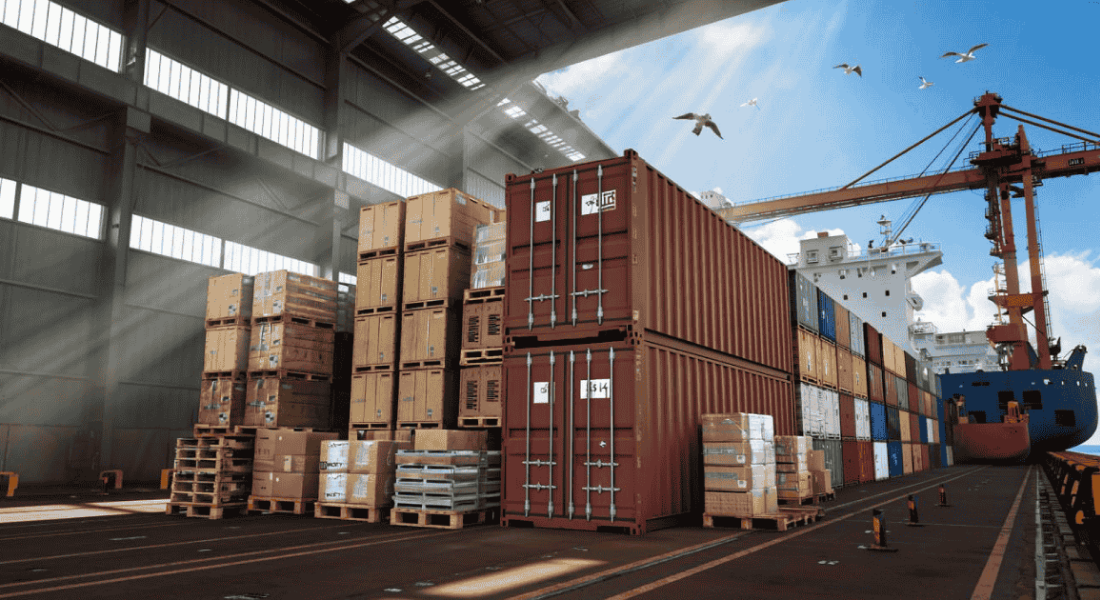
Third-party ecommerce fulfillment, often called 3PL fulfillment, is when an outside logistics provider stores a business’s products, packs each order after a customer buys it, and ships that order to the customer’s door. The business sends inventory to the provider’s warehouse in bulk, connects its online store to the provider’s system, and the provider handles receiving, storage, order processing, and shipping from there.
This guide walks through exactly how that process works step by step, what separates a strong 3PL partner from a weak one, and where ENorth Logistics fits into that process for ecommerce businesses shipping across Canada and the USA.
What Is Third-Party Ecommerce Fulfillment (3PL)?
Third-party fulfillment means a logistics provider handles the physical work of storing, packing, and shipping a business’s online orders, instead of the business doing it in-house. The business keeps control of sales, marketing, and customer relationships while the 3PL provider manages the warehouse floor.
Ecommerce businesses turn to 3PL fulfillment for a few consistent reasons:
- Time savings: Founders and operations teams stop packing boxes and making daily post office runs.
- Shipping cost access: Established fulfillment providers often negotiate lower carrier rates through volume, rates that are difficult for a single small business to access on its own.
- Regional reach: Storing inventory closer to customers, rather than in one central location, can shorten delivery distances and transit times.
- Scalability: A 3PL provider can absorb order volume spikes, such as seasonal peaks, without the business needing to hire and manage seasonal warehouse staff itself.
The trade-off is reduced direct control over the fulfillment process and a dependency on the provider’s accuracy, technology, and communication. Choosing the right partner is what determines whether that trade-off works in a business’s favor.
How the Order Fulfillment Process Works Step by Step
Ecommerce fulfillment follows a consistent sequence regardless of which 3PL provider handles it, though the accuracy and speed of each step vary significantly between providers. Understanding each stage helps a business know what to ask a potential fulfillment partner.
Receiving Inventory
Receiving is the first step, where a business ships its products in bulk to the fulfillment provider’s warehouse. Warehouse staff count every unit against the shipment paperwork and inspect for damage before the inventory is accepted into the system.
Errors at this stage, such as miscounted units or undetected damage, create inventory accuracy problems that surface later during order fulfillment. A thorough receiving process catches these issues before they affect a customer order.
Storage and Inventory Management
Once inventory clears receiving, warehouse staff place it on shelves, in bins, or on pallets, and the system records exactly where each SKU is stored. Accurate storage location tracking is what makes fast, accurate picking possible later in the process.
Modern fulfillment operations use a warehouse management system, or WMS, to track inventory levels and locations in real time. Without real-time tracking, a provider risks overselling products that are actually out of stock or delaying orders while staff search for misplaced inventory.
Order Sync and Processing
When a customer places an order on the business’s online store, that order needs to reach the fulfillment provider’s system immediately for same-day or next-day processing to be possible. This connection is usually handled through a direct integration between the ecommerce platform and the provider’s fulfillment system.
A delay or failure in this sync step is one of the most common causes of missed shipping deadlines, since warehouse staff cannot act on an order they have not received. Reliable, real-time order sync is a core requirement for any fulfillment partner a business is evaluating.
Pick and Pack
Pick and pack is the physical fulfillment step, where warehouse staff locate the ordered items, pull them from their storage location, and pack them securely for shipment. Packing quality directly affects damage rates and the customer’s unboxing experience.
Fulfillment providers vary in how much packing customization they offer, from basic generic boxing to branded packaging, inserts, and kitting for bundled products. Businesses with specific packaging requirements should confirm a provider can support them before signing on.
Shipping and Carrier Handoff
After packing, the provider applies a shipping label, selects a carrier based on cost, speed, and destination, and hands the package off for delivery. This step determines the actual transit time a customer experiences.
Carrier selection and negotiated rates matter here, since a provider with an established carrier network can often secure better pricing and more reliable service levels than a business shipping independently.
Returns Management
Returns management covers how a fulfillment provider receives, inspects, and processes items customers send back. A returned item in resalable condition typically goes back into inventory, while damaged or unsellable items are flagged separately.
Slow or disorganized returns processing creates inventory accuracy problems and delays refunds to customers, which affects customer satisfaction even though the return happens after the original sale.
[INTERNAL LINK: suggested anchor text “ecommerce fulfillment services”]
In-House Fulfillment vs Third-Party Fulfillment
Deciding between in-house fulfillment and a 3PL partner comes down to volume, cost structure, and how much operational complexity a business wants to manage directly.
| Factor | In-House Fulfillment | Third-Party Fulfillment |
|---|---|---|
| Upfront investment | Requires warehouse space, staff, and equipment | Minimal upfront investment, pay per order or per service |
| Shipping rates | Limited to whatever rates the business can negotiate alone | Often benefits from the provider’s established carrier network |
| Scalability | Requires hiring and space expansion to handle growth | Generally easier to scale up or down with order volume |
| Regional reach | Limited to wherever the business operates its own warehouse | Can span multiple regions if the provider has multi-location coverage |
| Control | Full direct control over every step | Dependent on the provider’s accuracy, speed, and communication |
| Best fit | Very high-volume businesses or those with highly specialized handling needs | Growing ecommerce businesses that need to scale without building warehouse infrastructure |
What to Look for in a 3PL Partner
Choosing a 3PL partner is a decision that affects delivery speed, order accuracy, and customer experience directly, so it deserves the same scrutiny as any other core vendor relationship. A few criteria consistently separate strong fulfillment partners from weaker ones.
- Real-time inventory visibility: A provider using WMS-based scanning gives a business an accurate, live view of stock levels rather than relying on periodic manual counts.
- Order sync speed and reliability: Confirm how quickly orders placed on the business’s storefront reach the provider’s fulfillment system, since delays here directly affect shipping deadlines.
- Same-day or next-day shipping cutoffs: Ask what time orders need to be received to ship the same day, since this affects the delivery promises a business can make to its own customers.
- Carrier network breadth: A provider with an established relationship across multiple carriers can generally offer more flexibility on cost and speed than one relying on a single carrier.
- Regional warehouse coverage: Multi-region storage can shorten delivery distances for customers spread across a wide geographic area.
- Platform integration: Confirm the provider connects directly with the business’s ecommerce platform, rather than requiring manual order entry.
- Returns handling process: Ask how returns are inspected, processed, and returned to sellable inventory, since a slow returns process affects both inventory accuracy and customer satisfaction.
Common Fulfillment Problems and How ENorth Logistics Solves Them
Most fulfillment breakdowns trace back to one of three root causes: inventory inaccuracy, slow order sync, or inconsistent carrier performance. Each of these creates a domino effect that shows up as a late or incorrect order on the customer’s end.
How ENorth Logistics’ Team Handles This
Inventory and order sync issues are the most common source of fulfillment delays, and they are largely preventable with the right systems in place. ENorth Logistics’ Warehouse Management team uses real-time WMS-based inventory scanning, so stock counts stay accurate as items move through receiving, storage, and picking. The Fulfillment Operations team works from a unified platform that syncs orders, inventory, and shipment data together, and live shipment tracking connects directly to a client’s storefront so both the business and its customers can see order status without needing to contact support. Orders received before 2 PM are processed for same-day shipping, which is designed to help ecommerce businesses set realistic delivery promises to their own customers.
Costs and Trade-offs of Using a 3PL
Fulfillment costs typically break down into a few recurring categories: receiving fees, storage fees based on space or volume, pick and pack fees per order, and shipping costs passed through from the carrier. Understanding this structure helps a business compare providers accurately rather than judging cost on a single number.
The trade-off against these costs is largely time and scalability. A business paying for 3PL fulfillment is generally trading a per-order cost for the ability to grow order volume without proportionally growing its own warehouse staff, space, and management overhead.
Businesses evaluating cost should also weigh indirect costs of poor fulfillment, such as lost sales from stockouts, refunds from shipping errors, and customer churn from late deliveries, against the fees a quality 3PL provider charges.
Technology Behind Modern Ecommerce Fulfillment
Technology is what separates fast, accurate fulfillment from slow, error-prone fulfillment, since manual processes cannot keep pace with the order volume and speed expectations of modern ecommerce. A few core technologies drive this.
- Warehouse Management Systems (WMS): Track inventory location, quantity, and movement in real time as items are received, stored, and picked.
- Order Management Integration: Connects a business’s ecommerce platform directly to the fulfillment provider’s system, so orders sync automatically without manual entry.
- Live Shipment Tracking: Gives both the business and its customers visibility into where an order is in transit, reducing support inquiries about order status.
- Unified Data Platforms: Bring order, inventory, shipment, and performance data into a single view, which helps a business spot trends or issues without checking multiple separate systems.
[INTERNAL LINK: suggested anchor text “warehousing and inventory management”]
When Ecommerce Businesses Should Switch to a 3PL
There is no single order volume that signals it is time to switch to a 3PL, but a few common signs point toward outsourcing fulfillment being the right next step.
- Order volume is outpacing available staff and space for in-house packing and shipping.
- Shipping costs are higher than they should be because the business lacks the volume to negotiate competitive carrier rates on its own.
- Customers are located across a wide geographic area, and a single-warehouse setup means longer delivery times for customers farther away.
- Founders or operations staff are spending more time on fulfillment logistics than on growing the business itself.
- Seasonal order spikes are difficult to staff for without over-hiring during slower periods.
Businesses experiencing several of these signs at once are generally strong candidates for evaluating a 3PL partner.
Frequently Asked Questions
What is third-party fulfillment (3PL)?
Third-party fulfillment is when an outside logistics provider stores a business’s inventory, packs orders after a customer purchases them, and ships those orders to customers, handling the physical fulfillment work so the business does not need its own warehouse operation.
How does the ecommerce fulfillment process work?
The process generally follows six steps: receiving inventory, storing it with tracked locations, syncing orders from the business’s storefront, picking and packing each order, shipping through a selected carrier, and managing any customer returns.
What is the difference between fulfillment and shipping?
Fulfillment covers the full process of storing inventory, processing orders, and packing them for delivery, while shipping refers specifically to the carrier transporting the package from the warehouse to the customer’s address.
How much does 3PL fulfillment cost?
Costs typically include receiving fees, storage fees based on space or volume, per-order pick and pack fees, and pass-through shipping costs. Exact pricing varies by provider and depends on order volume, product size, and service level.
What should I look for when choosing a fulfillment partner?
Key factors include real-time inventory visibility, fast and reliable order sync with your ecommerce platform, clear same-day or next-day shipping cutoffs, a broad carrier network, regional warehouse coverage, and an organized returns process.
Is 3PL fulfillment worth it for a small ecommerce business?
It depends on order volume, shipping cost pressures, and how much time the business wants to spend on fulfillment logistics. Businesses facing rising order volume, high shipping costs, or geographically spread-out customers often benefit most from outsourcing fulfillment.
How does inventory accuracy work in a 3PL warehouse?
Inventory accuracy depends on a warehouse management system tracking stock as it moves through receiving, storage, and picking, combined with careful counting and inspection during the initial receiving process to catch discrepancies early.
Can a 3PL provider support same-day shipping?
Many 3PL providers offer same-day shipping for orders received before a set daily cutoff time, though this depends on the provider’s warehouse processes and how quickly orders sync from the business’s storefront into the fulfillment system.