Choosing between flatbed, sprinter van, and power-only freight comes down to three questions: what you’re shipping, how it needs to be loaded, and whether you already have a trailer that needs a truck. Get those three answers right and the trailer choice practically makes itself — get them wrong, and you either overpay for capacity you don’t need or damage cargo that needed better protection.
This guide breaks down each option in plain terms, compares them side by side, and walks through the real-world factors — freight class, dock access, weather exposure, budget — that should drive your decision in 2026’s tightening capacity market.
What Is Trucking Logistics, and Why Does Trailer Type Matter?
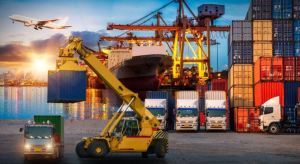
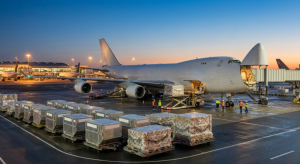
Trucking logistics is the planning and coordination behind moving freight by truck — matching the right equipment, route, and carrier to a shipment so it arrives on time, intact, and at a fair price. Trailer type is one of the first decisions in that planning process, because it determines what can physically be hauled and how it gets loaded.
Pick the wrong trailer and everything downstream gets harder: dock scheduling, load securement, insurance costs, even which carriers will quote you. That’s why experienced shippers and brokers treat trailer selection as a logistics decision, not just an equipment preference.
Trucking logistics also covers strategic routing, freight matching between shippers and carriers, hours-of-service compliance, and load tracking — but none of that matters if the freight is on the wrong trailer to begin with. A flatbed hauler with tarps and chains solves a different problem than a sprinter van running same-day parcels, and a power-only carrier solves a different problem than either.
Flatbed Freight: Best For Oversized, Heavy, or Odd-Shaped Loads
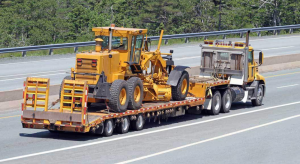
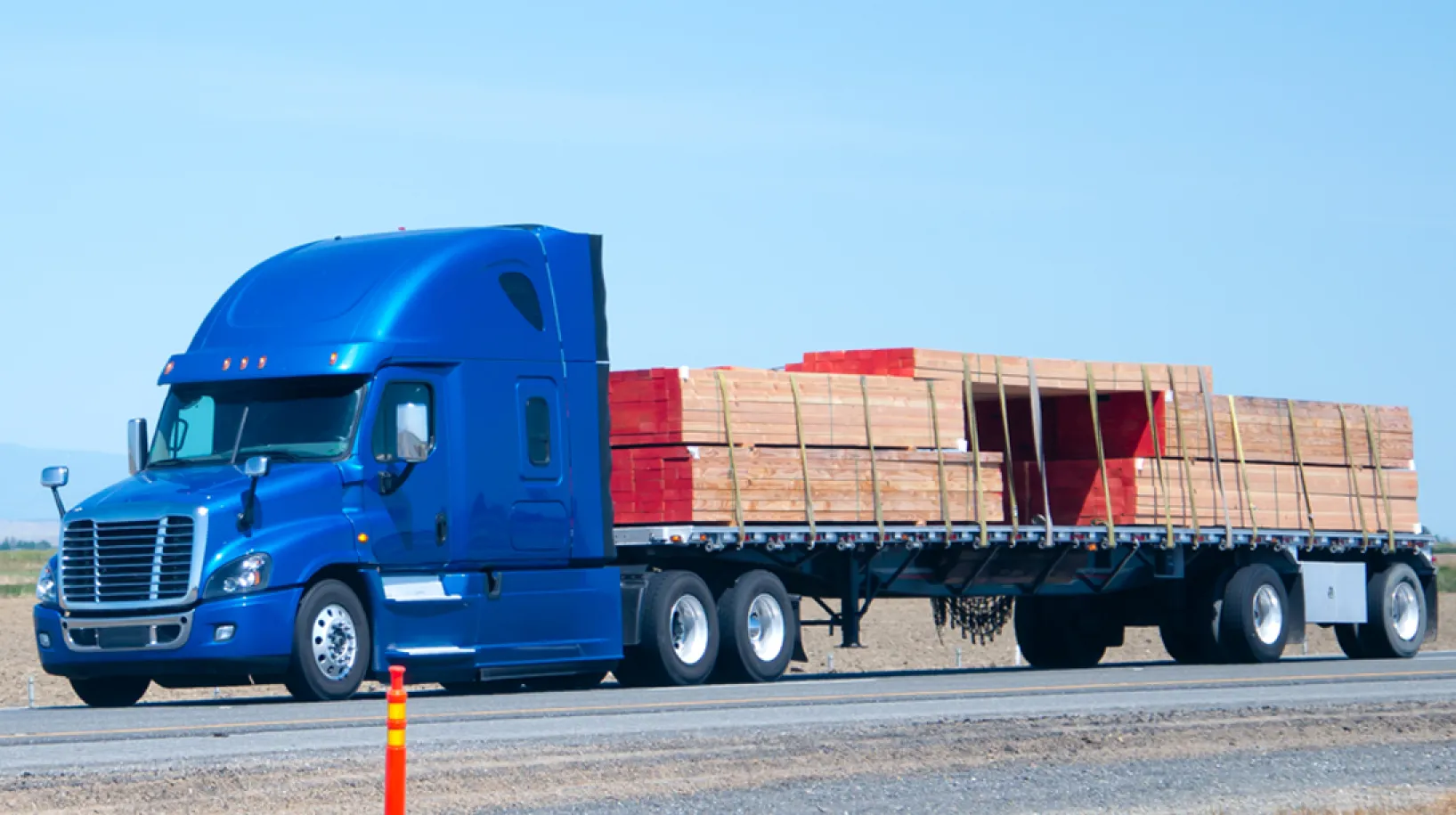
Flatbed freight is the right call when cargo is too large, too heavy, or too irregularly shaped to fit inside an enclosed trailer. Because a flatbed has no walls or roof, equipment can be loaded from the top, sides, or rear with a crane or forklift — something a box trailer simply can’t offer.
Typical flatbed cargo includes:
- Construction materials (steel beams, pipe, lumber, drywall)
- Heavy machinery and industrial equipment
- Prefabricated building components
- Large agricultural equipment
- Palletized freight that exceeds standard trailer height
A standard 48-foot flatbed can typically carry loads up to 8 feet, 6 inches wide and tall before requiring oversize permits, though exact limits vary by state. Anything wider, taller, or heavier usually calls for a step deck or removable-gooseneck (RGN) trailer instead — both variants of the same open-deck concept, just with lower deck heights for extra clearance.
The trade-off: flatbed cargo rides exposed to the elements. Drivers use tarps, straps, and chains to protect against rain, wind, and road debris, but that protection is never as complete as a sealed trailer. Flatbed freight also typically requires more hands-on securement expertise and carries stricter DOT tie-down regulations than van freight.
Sprinter Van Freight: Best For Small, Urgent, or High-Value Loads
Sprinter van freight is the right fit for smaller shipments that need to move fast and stay fully protected from weather and theft. These vans are essentially scaled-down box trucks — enclosed, weatherproof, and nimble enough to make multiple stops or hit tight urban delivery windows that a full tractor-trailer can’t access.
Sprinter vans work well for:
- Time-critical or expedited shipments
- E-commerce parcels and last-mile delivery
- Medical supplies, electronics, and other sensitive cargo
- Small pallets or boxed freight that doesn’t justify a full trailer
- Deliveries to locations without dock access (loading is via rear or side doors at ground level)
Because sprinter vans are smaller and more fuel-efficient than tractor-trailers, they’re also a cost-effective option when a shipment doesn’t come close to filling a standard 53-foot van. Paying for a sprinter run instead of a partial truckload can be cheaper and faster, since sprinter freight often skips the multi-stop consolidation that slows down traditional LTL (less-than-truckload) shipping.
The trade-off: limited capacity. A sprinter van can’t handle heavy machinery, oversized freight, or high-volume pallet counts — so it’s the wrong choice the moment a shipment outgrows a few hundred cubic feet or a couple thousand pounds.
Power-Only Freight: Best For Shippers Who Already Have a Trailer
Power-only freight means hiring just the tractor and driver — no trailer included — to move a trailer that’s already loaded and waiting. It’s the right solution for companies that own or lease their own trailers (drop trailer programs, retail distribution networks, private fleets) but don’t have enough drivers or tractors to move every trailer themselves.
Power-only makes sense when:
- You run a drop-and-hook trailer pool and need extra capacity during peak season
- Your private fleet is short on drivers but has trailers sitting loaded at a dock
- You need to reposition empty or loaded trailers between facilities
- You want predictable capacity without the overhead of owning more tractors
Because the shipper (not the carrier) usually owns the trailer, power-only freight shifts some cost and liability structure compared to standard truckload service — carriers charge for the tractor and driver’s time, not for trailer wear, cargo insurance on the trailer itself, or equipment depreciation. That can make power-only cheaper per mile in the right volume, but it also means you’re responsible for trailer maintenance, DOT trailer inspections, and demurrage if the trailer sits too long at a facility.
The trade-off: protection and loading method depend entirely on whichever trailer is attached — an enclosed dry van trailer offers full weather protection, while an open flatbed trailer carries the same exposure risk described above. Power-only isn’t a trailer type so much as a service model layered on top of one.
Flatbed vs. Sprinter Van vs. Power-Only: Quick Comparison
| Factor | Flatbed | Sprinter Van | Power-Only |
|---|---|---|---|
| Best for | Oversized, heavy, irregular cargo | Small, urgent, high-value loads | Shippers with their own trailers |
| Loading method | Top, side, rear (crane/forklift) | Rear/side doors, ground-level | Depends on attached trailer |
| Weather protection | Tarps only, exposed | Fully enclosed | Depends on attached trailer |
| Typical weight range | Up to ~48,000 lbs | Up to ~3,000–4,000 lbs | Depends on attached trailer |
| Who owns the trailer | Carrier | Carrier | Shipper |
| Cost driver | Deck space, permits, tarping labor | Speed, distance, urgency | Driver/tractor time only |
How to Choose the Right Trailer Type: A Step-by-Step Approach
Working through cargo size, loading access, weather exposure, and trailer ownership in order will point you to the right equipment almost every time — and catch the edge cases that a single “best for” label misses.
- Measure and weigh the freight first. Anything under a few thousand pounds and a couple pallets usually fits a sprinter van. Anything approaching truckload weight or dimensions that exceed standard trailer height needs flatbed, step deck, or RGN.
- Check the pickup and delivery dock access. No loading dock, or a residential/urban delivery point? Sprinter van. Facility with forklifts or a crane? Flatbed is loadable from any side.
- Consider weather and cargo sensitivity. Electronics, food, pharmaceuticals, or anything moisture-sensitive belongs in an enclosed trailer — sprinter van for small volume, dry van for full truckload.
- Ask whether a trailer is already involved. If freight is already loaded on a company-owned or leased trailer sitting at a dock, power-only is almost always the cheaper move versus booking a full truckload service.
- Factor in urgency and distance. Short, fast, time-critical runs favor sprinter vans. Long-haul, high-weight freight favors flatbed or standard van truckload.
- Get quotes across all applicable types. In a tightening 2026 capacity market, rates vary more by lane and carrier availability than by trailer type alone — comparing quotes protects margin either way.
Why Trailer Selection Matters More in 2026’s Freight Market
Freight capacity has been tightening through 2026 as carriers exit the market and driver shortages persist, which means rate pressure is building across nearly every trailer type. Spot rates have moved above contract rates in parts of the market for the first time in several years, and tender rejection rates — a signal of how much leverage carriers have to turn down loads — have climbed to their highest levels since 2022.
That shift matters for trailer selection because equipment availability isn’t uniform. Flatbed and specialized-deck capacity tends to tighten fastest in industrial and construction-heavy regions, while enclosed van and sprinter capacity is more sensitive to e-commerce demand swings. Shippers who lock in the correct equipment type early — rather than defaulting to whatever’s easiest to book — are better positioned as rates continue adjusting through the second half of the year.
For companies running their own trailer pools, this is also where power-only freight tends to look more attractive: it lets a shipper add capacity without competing for scarce tractor-trailer combinations in a tight market.
Frequently Asked Questions
What is a power-only trailer type?
Power-only isn’t a trailer type itself — it’s a freight service where a carrier supplies only the tractor and driver to move a trailer the shipper already owns or leases. The trailer can be any type (dry van, flatbed, reefer), so protection and loading method depend entirely on that trailer, not on the power-only arrangement.
What’s the difference between flatbed and step deck trailers?
A flatbed has a single, level deck the full length of the trailer, while a step deck (or drop deck) has two deck heights — a raised front section and a lower main deck — which allows taller cargo to clear legal height limits without needing an oversize permit. Step decks are typically chosen when cargo height, not weight or length, is the limiting factor.
Can sprinter vans handle palletized freight?
Yes, as long as the pallets fit through the rear or side doors and stay within the van’s weight and cubic capacity, which is typically a few thousand pounds and a handful of standard pallets. Sprinter vans are not a substitute for LTL or full truckload service once freight exceeds that volume.
How much weight can a flatbed trailer carry?
A standard 48-foot flatbed can typically carry up to around 48,000 pounds, though the exact legal maximum depends on axle configuration, state weight limits, and whether the load requires permits for oversize dimensions. Always confirm weight distribution with the carrier before dispatch, since axle overages are a common cause of roadside violations.
Is power-only freight cheaper than standard truckload?
It can be, because the carrier isn’t pricing in trailer ownership, trailer insurance, or equipment depreciation — you’re paying primarily for driver and tractor time. However, the shipper takes on trailer maintenance, inspection compliance, and potential demurrage costs, so the total cost comparison depends on how efficiently the trailer pool is managed.
What happens if freight doesn’t fit any of these three categories?
Plenty of freight needs specialized equipment outside these three — reefer trailers for temperature-controlled goods, RGNs for very heavy or tall equipment, or double-drop trailers for extreme height clearance. If a shipment doesn’t cleanly match flatbed, sprinter van, or power-only, it’s worth getting a broker or carrier’s input before booking, since misclassifying freight is one of the most common causes of load rejections and delivery delays.
Do I need special insurance for flatbed freight?
Flatbed cargo generally carries higher cargo insurance requirements than enclosed freight because of its exposure to weather, road debris, and shifting during transit. Confirm coverage limits with your carrier or broker before shipping high-value flatbed loads, since standard cargo policies don’t always cover every scenario.
How do I know if my freight qualifies as oversized?
Freight is generally considered oversized once it exceeds 8 feet, 6 inches in width or height, or extends beyond standard trailer length — though exact thresholds vary by state, so always check the specific permitting rules for every state on the route before dispatch.