
Automotive logistics runs on a tighter margin for error than almost any other freight category. A single late delivery can stop an assembly line, and a single freight class error can turn a routine parts shipment into an unexpected cost. ENorth Logistics’ Freight and Carrier Operations team works with automotive manufacturers, parts suppliers, and dealers across Canada and the USA, so this guide reflects how automotive freight actually moves, not just the theory behind it.
What Automotive Logistics Covers
Automotive logistics is the planning, transportation, and coordination of parts, materials, and finished vehicles across the automotive supply chain, from raw material suppliers through assembly plants to dealerships and aftermarket service centers. It spans several connected stages: inbound logistics that bring components to a plant, production logistics that sequence parts inside the facility, outbound logistics that move finished vehicles to dealers, and aftermarket logistics that supply replacement parts to repair shops.
What separates automotive logistics from general freight is timing precision. A manufacturing plant does not just need a shipment to arrive eventually. It needs specific parts to arrive in a specific order, in the right quantity, at the right moment on the production line. That precision requirement shapes almost every decision covered in this guide, from freight mode selection to inventory strategy.
What Just-in-Time (JIT) Parts Management Means
Just-in-time logistics is an inventory strategy where parts arrive at the assembly line exactly when needed, in the exact quantity required, rather than being stored in advance as safety stock. The delivery schedule itself acts as the buffer instead of a warehouse full of extra inventory.
JIT exists to solve a cost problem. Holding large amounts of inventory ties up capital, warehouse space, and handling labor. By synchronizing delivery with production schedules, manufacturers lower holding costs and reduce waste from excess or obsolete parts. The tradeoff is that JIT removes the safety net a warehouse would normally provide, which means transportation reliability becomes the primary risk factor instead of inventory availability.
Just-in-sequence (JIS) logistics takes this a step further. Instead of just arriving on time, parts arrive in the exact order the assembly line will install them, often delivered directly to the line side. JIS is common for parts with many variants, such as seats or dashboards, where sequencing errors are costly to correct mid-production.
How ENorth Logistics’ Team Handles This
Our Freight and Carrier Operations team builds delivery schedules around a client’s actual production cadence, not a generic transit time estimate. For JIT and JIS programs, dedicated routes and consistent carrier assignments reduce the variability that puts a production schedule at risk. When a delay is developing, whether from weather, a border hold, or a carrier issue, our Customer Support and Tracking team flags it early so a client’s production planning team has time to adjust before it reaches the line.
Key Steps in Automotive Freight Movement
Automotive freight moves through four connected stages, and a breakdown in any one of them can affect the others.
- Inbound logistics: Raw materials and components move from Tier 1 and Tier 2 suppliers to the manufacturing plant, often on tight, repeating schedules.
- Production synchronization: Parts are delivered directly to the production line in the correct sequence, a process known as line-side delivery or just-in-sequence delivery.
- Outbound logistics: Finished vehicles ship from the plant on specialized car haulers or flatbed trailers to regional distribution centers and dealerships.
- Aftermarket and reverse logistics: Replacement parts move to repair shops and dealer service centers, while defective parts, warranty returns, and returnable packaging move back through the network.
Each stage depends on accurate data moving alongside the physical freight. Electronic data interchange (EDI) and scheduling software help coordinate arrival windows across suppliers, carriers, and plants, which is part of why visibility tools have become as important to automotive logistics as the trucks themselves.
Freight Modes Used in Automotive Logistics
Choosing the right freight mode for automotive parts depends on shipment size, urgency, and cost sensitivity.
| Freight Mode | Best For | Tradeoff |
|---|---|---|
| Full Truckload (FTL) | Large, regular volume shipments between fixed points | Less flexible for small or irregular loads |
| Less Than Truckload (LTL) | Smaller parts shipments that don’t fill a trailer | Longer transit time, more handling touchpoints |
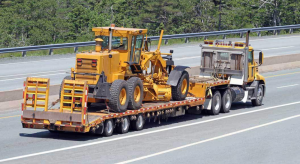
| Flatbed | Oversized components, machinery, or heavy parts | Requires specialized equipment and securement |
| Expedited/dedicated freight | Line-down or production-critical shipments | Higher cost per shipment |
| Rail and intermodal | Long-haul, high-volume, less time-sensitive freight | Longer lead times, less flexibility for last-mile delivery |
For finished vehicles, transportation typically runs on specialized car haulers rather than standard trailers, since vehicles need to be loaded, secured, and unloaded without damage across multiple stops on a single route.
How ENorth Logistics’ Team Handles This
Our team selects freight mode based on the shipment’s role in the client’s production schedule, not just cost per mile. A routine parts replenishment might move efficiently on ground freight or LTL, while a production-critical shortage gets escalated to expedited freight through our established carrier network, which includes partners such as Purolator, DHL Freight, Day and Ross, XPO Logistics, TForce Freight, and FedEx Freight. This gives clients flexibility to match the transportation method to how urgent each specific shipment actually is.
Time-Critical and Line-Down Freight
Line-down freight refers to shipments that must move immediately because a missing part has stopped or is about to stop an assembly line. Because JIT systems carry little to no safety stock, a delayed shipment can escalate from a minor scheduling issue to a full production stoppage within hours.
Automotive shippers typically classify time-sensitive freight into tiers, from standard scheduled delivery to same-day emergency transport, and pre-arrange expedited options in advance rather than scrambling to find capacity after a delay is already underway. Proactive exception handling, meaning a carrier or logistics provider flags a potential delay before it becomes critical, is one of the most valuable services an automotive shipper can build into a freight program.
How Finished Vehicles Move: Outbound Vehicle Freight
Once a vehicle rolls off the assembly line, outbound logistics moves it from the plant to regional distribution yards and then to individual dealerships. This typically happens on multi-car haulers designed to transport several vehicles at once, minimizing cost per unit while protecting each vehicle from damage during loading, transit, and unloading.
Vehicle freight scheduling has to account for dealer allocation, regional demand, and yard capacity at each stop, which is why outbound vehicle logistics is usually planned as a network rather than point-to-point shipments. A well-run outbound network reduces the time a finished vehicle sits idle in a lot before reaching a dealership, which directly affects how quickly a manufacturer can convert production into revenue.
Inventory Strategy: Safety Stock, Stockouts, and Risk
JIT logistics minimizes inventory, but it does not eliminate the need for inventory strategy. Manufacturers still have to decide how much buffer, if any, to carry for parts with higher supply risk, longer lead times, or single-source suppliers.
Common risk factors that push a manufacturer toward carrying more safety stock include:
- Long-distance or cross-border sourcing, where transit delays are harder to recover from quickly.
- Single-source components with no readily available backup supplier.
- Parts with volatile demand, such as those tied to a limited production run or a popular trim option.
- Categories prone to broader disruption, such as semiconductor-dependent components.
The goal is not to abandon JIT principles but to apply them selectively, keeping true just-in-time delivery for stable, low-risk parts while building in a measured buffer for parts where a delay would be more costly than the extra holding expense.
Cross-Border Automotive Freight
Automotive supply chains in North America routinely move parts and vehicles across the Canada-US border, and cross-border shipments introduce customs documentation, tariff classification, and border timing as additional variables on top of standard transit planning.
A cross-border automotive shipment typically requires accurate commercial invoices, correct tariff classification, and complete customs documentation before the shipment reaches the border, since incomplete paperwork is one of the most common causes of unplanned delays. For JIT programs where a shipment is timed to the hour, even a short customs hold can create the same production risk as a mechanical breakdown or weather delay.
How ENorth Logistics’ Team Handles This
Our Client Onboarding team reviews documentation requirements for cross-border automotive freight before a shipment is scheduled, not after it reaches the border. With coverage across Ontario, Quebec, British Columbia, Texas, California, and Illinois, our Freight and Carrier Operations team plans routing with border timing in mind, which is designed to support on-time delivery rather than leaving cross-border risk to be managed at the last minute.
Technology and Visibility in Automotive Logistics
Modern automotive logistics depends on real-time tracking, electronic data interchange, and scheduling software to keep dozens of suppliers and carriers synchronized with a single production schedule. Visibility tools let a plant see not just where a shipment is, but whether it is still on pace to hit its delivery window.
This matters most for JIT and JIS programs, where the value of visibility is not just knowing a shipment’s location, but having enough lead time to react if that shipment is falling behind schedule. A logistics provider that can flag a developing delay hours in advance gives a production team time to adjust staffing or sequencing, while a provider that only reports after a delay has already happened leaves the plant reacting to a problem instead of managing around it.
How ENorth Logistics’ Team Handles This
Live shipment tracking synced to a client’s own systems is built into how our Warehouse Management and Freight Operations teams run automotive accounts, so a client’s procurement or production team has the same visibility our internal teams do. This shared visibility, combined with a unified platform for orders, inventory, and shipment data, is what lets exception handling happen before a delay becomes a client-facing problem.
Cost and Performance in Automotive Logistics
Automotive logistics costs are commonly evaluated using a mix of freight cost per unit, inventory carrying cost, and on-time-in-full (OTIF) delivery performance. Kearney’s research on the automotive sector has noted that logistics can represent a meaningful share of total vehicle production cost, which is part of why manufacturers scrutinize freight mode selection and network design as closely as they scrutinize manufacturing costs themselves.
Reducing automotive logistics cost usually comes from a combination of levers rather than one single change: consolidating shipments through cross-docking or milk runs, matching freight mode to shipment urgency instead of defaulting to expedited freight, and improving inventory accuracy so fewer emergency shipments are needed in the first place.
EV and Battery Logistics Considerations
Electric vehicle components, particularly lithium-ion batteries, add regulatory and handling requirements that traditional automotive parts freight does not carry. Battery shipments are classified as dangerous goods in many jurisdictions, which means additional documentation, packaging standards, and carrier certifications apply.
As EV production scales, automotive logistics networks are adapting existing JIT and JIS frameworks to account for these added compliance steps, rather than building entirely separate systems, since the underlying goals of timing precision and delivery reliability remain the same.
Choosing Between In-House Logistics and a 3PL Partner
Manufacturers and suppliers generally weigh three factors when deciding whether to manage automotive freight in-house or through a third-party logistics provider: the complexity of their carrier network, how much internal bandwidth their team has for exception management, and how much visibility technology they would need to build versus access through a partner.
A third-party logistics provider becomes especially valuable for cross-border programs, multi-region distribution, or clients managing several freight modes at once, since it consolidates carrier relationships, documentation handling, and shipment visibility under a single point of contact instead of spreading that work across multiple internal roles.
Frequently Asked Questions
What is the difference between JIT and JIS in automotive logistics?
Just-in-time (JIT) delivery means parts arrive when needed in the right quantity, without extra safety stock. Just-in-sequence (JIS) goes further by delivering parts in the exact order the assembly line will install them, which is common for high-variant components like seats or interior trim.
What happens when a JIT automotive shipment is delayed?
Because JIT systems carry little to no safety stock, a delayed shipment can quickly escalate into a production stoppage, often called a line-down event. Automotive shippers typically pre-arrange expedited freight options and proactive delay tracking specifically to catch and resolve these risks before the line is affected.
How are finished vehicles transported from the factory to dealerships?
Finished vehicles move on specialized multi-car haulers or flatbed trailers from the assembly plant to regional distribution yards, and then on to individual dealerships. Outbound vehicle logistics is typically planned as a coordinated network rather than as individual point-to-point shipments.
When should automotive freight use LTL versus FTL?
Full truckload (FTL) makes sense for large, regular volume shipments moving between fixed points, while less than truckload (LTL) fits smaller parts shipments that don’t fill an entire trailer. Automotive shippers often use both depending on shipment size and urgency.
What documentation is required for cross-border automotive freight?
Cross-border automotive shipments generally require accurate commercial invoices, correct tariff classification, and complete customs documentation before reaching the border. Incomplete or inaccurate documentation is one of the most common causes of unplanned border delays.
How is automotive logistics different from general freight?
Automotive logistics requires much tighter timing precision than general freight, since parts often need to arrive at a specific moment in a production sequence rather than just within a general delivery window. This makes reliability, visibility, and exception handling more critical than in most other freight categories.
Do automotive manufacturers still keep safety stock if they use JIT?
Many manufacturers keep a measured safety stock for higher-risk parts, such as single-source components or those with long transit distances, while maintaining true just-in-time delivery for stable, low-risk parts. This selective approach balances JIT’s cost savings against the risk of a stockout on critical components.