Warehouses in 2026 look nothing like they did even five years ago. Instead of relying on fixed conveyor systems and large upfront investments, facilities are shifting toward modular, software-defined setups that adjust as demand changes. This shift is being driven by AI-orchestrated robotics, predictive digital twins, and autonomous systems that handle tasks with little human input.
The reasons behind this change are practical. Labor shortages have made it harder to staff warehouses at the levels older models required, and businesses need more inventory visibility than manual tracking can provide. Warehouse automation solutions solve both problems by replacing rigid infrastructure with flexible technology that scales up or down as needed.
This guide covers the technology trends defining warehouse automation in 2026, from AI warehousing and warehouse robotics to the logistics tracking systems keeping goods visible at every stage, along with how these tools connect to broader supply chain optimization and last-mile delivery.
What Is Warehouse Automation in 2026?
Warehouse automation in 2026 refers to the mix of AI, robotics, and connected sensors that run daily warehouse operations with minimal manual intervention. Unlike older automation, which relied on fixed equipment built for one specific task, today’s systems are modular. They adjust to seasonal demand, new product lines, or shifting order volume without requiring a full equipment overhaul.
Info: The biggest shift isn’t the robots themselves. It’s the software layer coordinating them, which is why AI orchestration sits at the center of nearly every trend below.
Businesses evaluating warehouse automation solutions in 2026 are also finding the entry cost lower than in past years. Subscription-based robotics and cloud-hosted orchestration software mean a mid-sized warehouse can adopt the same core technology as a much larger distribution center, just at a scale that fits its order volume.
Key Technological Trends Shaping Warehouse Automation
Several technologies are converging to define how modern warehouses operate. Each one solves a different piece of the automation puzzle, from task sequencing to quality control.
AI-Driven Orchestration – The Co-Pilot for WMS and WES
Artificial intelligence now acts as a co-pilot for Warehouse Management and Execution Systems (WMS/WES). Rather than following static rules, AI sequences tasks, optimizes picking routes, and balances workloads dynamically as demand shifts throughout the day.
This matters because warehouse activity rarely stays constant. Order volume can spike within hours, and AI orchestration adjusts staffing and robot assignments in response, instead of waiting for someone to notice the backlog manually.
Robotics-as-a-Service – Scalable AGVs and AMRs
Robotics-as-a-Service (RaaS) has made automated guided vehicles (AGVs) and autonomous mobile robots (AMRs) accessible to warehouses that couldn’t previously justify the cost.
- Facilities pay a subscription instead of a large upfront purchase.
- Robot fleets scale up during seasonal peaks and scale down afterward.
- Maintenance and updates are typically handled by the provider, not the warehouse.
Note: RaaS lowers the barrier to entry significantly, but contracts vary widely on what’s included. It’s worth confirming maintenance terms before signing.
Warehouse robotics adopted through RaaS also tend to integrate faster than owned equipment, since providers handle the setup and calibration as part of the subscription. This shortens the gap between signing a contract and seeing actual throughput gains on the floor.
Digital Twins and Simulation for Warehouse Planning
Digital twins create a virtual model of a warehouse before any physical changes happen. Teams use these models to test fleet routing, storage layouts, and equipment placement, catching problems on screen instead of on the warehouse floor.
This approach eliminates expensive rework. A layout that looks efficient on paper might create bottlenecks once robots and staff are moving through it, and simulation catches that before construction crews ever get involved.
Computer Vision for Quality Control and SKU Verification
Overhead camera arrays and vision systems are replacing manual barcode scanning in many facilities. These systems track pallets, check packaging integrity, and verify SKU counts in milliseconds as goods move through the warehouse.
Info: Computer vision doesn’t just speed things up. It catches damaged packaging and mislabeled items that a rushed manual scan might miss entirely.
Native Case Handling in Automated Storage Systems
Modern automated storage and retrieval systems (ASRS) now accept full master cases directly, without requiring staff to break them down first. This eliminates a manual step that used to slow down receiving and introduce counting errors.
Fewer manual touches mean fewer chances for mistakes. A case that goes straight from the truck to storage without being opened and repacked stays more accurate throughout the process.
Supply Chain Optimization and Last-Mile Delivery Trends
Warehouse automation doesn’t stop at the facility walls. These same technologies are reshaping how goods move through the wider supply chain and reach customers faster.
Agentic AI for Autonomous Inventory Management
Agentic AI refers to digital systems that manage tasks with minimal human oversight, using domain-specific models to adjust routing and inventory decisions on their own. Instead of waiting for a manager to approve a reorder or reroute a shipment, these systems act within set parameters and flag only the exceptions that need a human decision.
This shift toward agentic AI is one of the more significant supply chain optimization trends of 2026, since it reduces the delay between a problem appearing and a decision getting made.
Micro-Fulfillment Centers for Same-Day Delivery
Businesses are placing smaller, targeted inventory caches closer to end consumers rather than relying only on large central warehouses. This trend is especially visible in dense metro regions, such as the Greater Toronto Area, where a hub near Mississauga can shorten delivery times for the surrounding population significantly.
Note: Micro-fulfillment works best for high-demand, fast-moving products. Slower-selling inventory usually stays more cost-effective in a central warehouse.
Real-Time IoT and Asset Tracking
Self-repairing IoT sensor networks have become standard in many automated warehouses. These networks track conditions ranging from temperature control in refrigerated storage to real-time parts availability on the warehouse floor.
Because these sensors can detect and correct minor faults on their own, warehouses spend less time on manual maintenance checks and catch equipment issues before they cause a bigger disruption.
Benefits of Adopting Warehouse Automation Solutions
The appeal of warehouse automation goes beyond keeping up with trends. It solves specific, measurable problems that older systems struggle with.
Faster Throughput Without Adding Headcount
Automated picking, sorting, and orchestration let warehouses handle higher order volumes without proportionally increasing staff. This matters most during seasonal peaks, when hiring temporary workers is often slower and more expensive than scaling a robot fleet through RaaS.
Fewer Errors Across Receiving and Fulfillment
Computer vision, native case handling, and real-time IoT tracking all reduce the manual steps where mistakes typically happen. Fewer touches on each item generally means fewer chances for a miscount, a mislabel, or a damaged product reaching a customer.
Better Inventory Visibility for Decision-Making
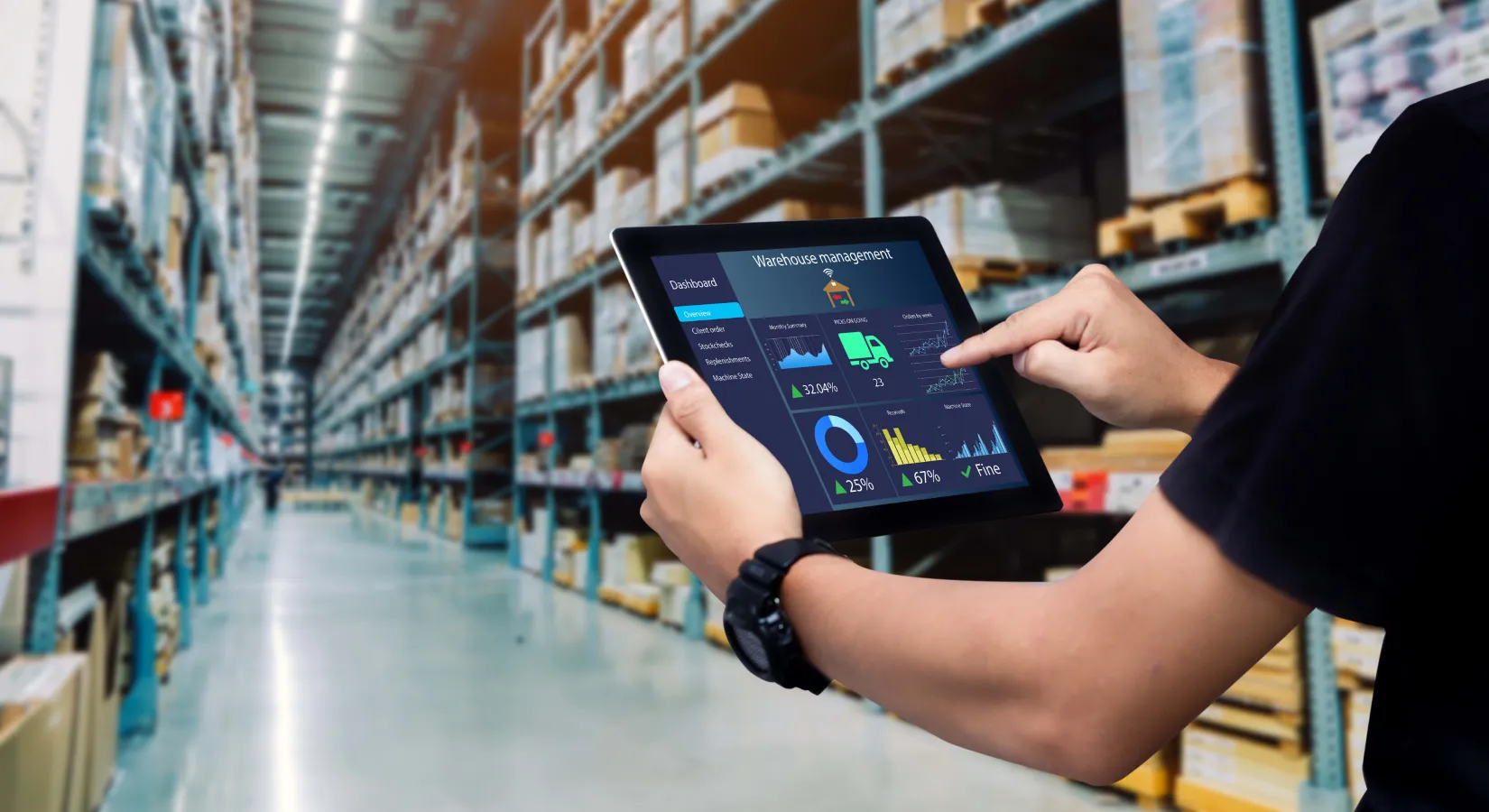
Real-time tracking gives managers an accurate picture of stock levels at any moment, rather than relying on periodic counts. This kind of inventory visibility supports faster reordering decisions and reduces both stockouts and excess holding costs.
Challenges to Watch For When Adopting Automation
Automation delivers real benefits, but it isn’t without friction. A few challenges come up often enough to plan for in advance.
Integration With Existing Systems
New automation tools need to connect cleanly with a warehouse’s existing WMS or WES. A mismatch here can create data gaps rather than the smooth orchestration these systems promise, so integration testing deserves attention before a full rollout.
Staff Training and Role Changes
Automation shifts staff roles rather than eliminating them entirely. Workers who once did manual picking may move into roles overseeing robot fleets or handling exceptions to the AI flags. Training for this shift takes time and should start before the equipment arrives, not after.
Info: Facilities that involve floor staff early in automation planning tend to see smoother adoption, since workers can flag practical issues that planning software alone won’t catch.
Cybersecurity for Connected Systems
IoT sensors and AI orchestration tools depend on constant connectivity, which expands the number of points a warehouse needs to secure. Facilities investing in automation should treat network security as part of the rollout budget, not an afterthought addressed later.
Comparing Traditional Warehouses to 2026 Automated Models
The shift from older systems to modern automation is easiest to see side by side.
Factor | Traditional Warehouse | 2026 Automated Warehouse |
Equipment investment | Large upfront capital cost | Subscription-based (RaaS) scaling |
Task coordination | Manual scheduling and fixed rules | AI orchestration adjusting in real time |
Layout testing | Trial and error on the floor | Digital twin simulation before changes |
Quality checks | Manual barcode scanning | Computer vision and automated SKU checks |
Inventory visibility | Periodic manual counts | Real-time IoT tracking |
How to Prepare Your Warehouse for These Trends
Adopting warehouse automation solutions doesn’t need to happen all at once. A few starting points make the transition more manageable:
- Start with AI orchestration layered onto your existing WMS before investing in new hardware.
- Test RaaS providers with a smaller robot fleet before committing to a larger rollout.
- Use digital twin software to model any layout change before making it physically.
- Prioritize inventory visibility tools first, since better tracking data improves every other automation decision that follows.
Conclusion
Warehouse automation in 2026 is less about adding more machines and more about connecting existing operations with smarter, more flexible software. AI orchestration, RaaS robotics, digital twins, and real-time IoT tracking all work together to solve labor shortages while improving inventory visibility and supply chain optimization across the board.
ENorth Logistics helps businesses adopt these tools at a pace that fits their operations, from AI-driven task orchestration to real-time asset tracking. If your warehouse is still running on last decade’s systems, now is a practical time to explore what modern automation can actually do for your throughput and accuracy.
Curious how warehouse automation could fit your operations? Talk to ENorth Logistics about where to start.
Frequently Asked Questions
Is warehouse automation only for large companies?
No. Robotics-as-a-Service models have made automation accessible to smaller warehouses by removing the large upfront investment that automation used to require.
What is the difference between AGVs and AMRs?
AGVs follow fixed paths, usually guided by wires or markers on the floor. AMRs move more freely using sensors and mapping software, which makes them more adaptable to layout changes.
Do digital twins require special software to set up?
Yes, digital twins rely on simulation software that models the physical warehouse. Many WMS providers now offer this as a built-in feature rather than a separate purchase.
How does computer vision improve inventory accuracy?
Computer vision systems scan pallets and packaging automatically as they move through the warehouse, catching mislabeled or damaged items faster and more consistently than manual checks.
Will automation replace warehouse jobs entirely?
Not typically. Most automation shifts staff into oversight and exception-handling roles rather than removing jobs outright, though the specific skills required on the floor do change.