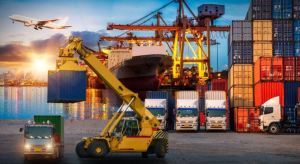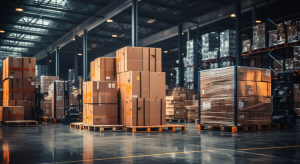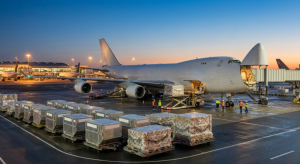
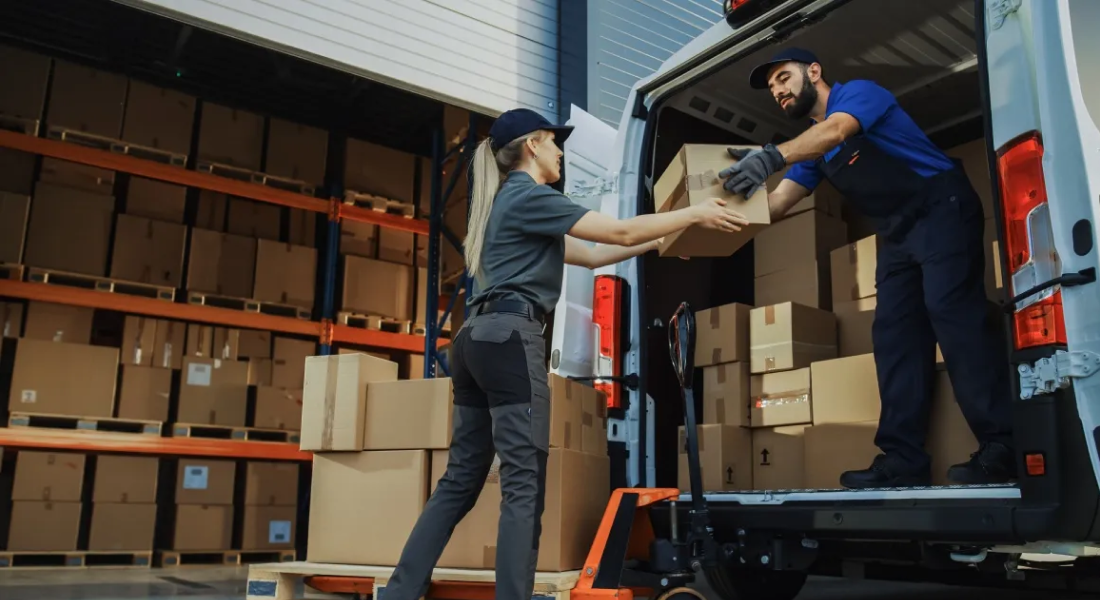
A logistics company is a business that plans, coordinates, and manages the movement, storage, and delivery of goods on behalf of another company. Instead of a business building its own trucking fleet, warehouses, and fulfillment staff, it hands that work to a logistics provider that already has the network and systems in place.
Businesses turn to a logistics company when shipping, storing, or fulfilling orders becomes too complex or too costly to manage in-house. ENorth Logistics works with ecommerce businesses, retailers, manufacturers, and distributors across Canada and the USA, handling freight, warehousing, and fulfillment through the same Fulfillment Operations, Freight and Carrier Operations, and Warehouse Management teams for every client.
What Does a Logistics Company Actually Do?
A logistics company manages the physical movement and storage of goods, along with the information that keeps that movement organized, from the point a product is ready to ship to the moment it reaches its destination. This typically covers transportation, warehousing, inventory tracking, and order fulfillment under one relationship.
The core functions a logistics company performs include:
- Transportation. Moving freight by truck, rail, air, or ocean, matched to the shipment’s size, weight, and timeline.
- Warehousing. Storing inventory in a facility until it is ready to ship, with proper handling for the product type.
- Inventory management. Tracking stock levels in real time so a business always knows what it has on hand and where it is.
- Order fulfillment. Picking, packing, and shipping individual customer orders, often for ecommerce and retail clients.
- Carrier coordination. Managing relationships with freight carriers to secure capacity and consistent service.
- Shipment visibility. Providing tracking so a business and its customers know where a shipment is at any point.
A logistics company’s exact scope varies by provider. Some focus narrowly on transportation, while others, like ENorth Logistics, combine freight, warehousing, and fulfillment into one coordinated operation.
Types of Logistics Providers: 1PL, 2PL, 3PL, and 4PL
Logistics providers are generally grouped into four categories based on how much of the supply chain they manage and whether they own the underlying transportation and storage assets.
| Type | What It Means | Example |
|---|---|---|
| 1PL (First-Party Logistics) | A company manages its own shipping with its own resources | A manufacturer that runs its own delivery trucks |
| 2PL (Second-Party Logistics) | A carrier that owns and operates transportation assets | A trucking company or airline |
| 3PL (Third-Party Logistics) | An outside provider that manages transportation, warehousing, and fulfillment for a business | A company like ENorth Logistics handling freight and fulfillment for ecommerce clients |
| 4PL (Fourth-Party Logistics) | A provider that manages an entire supply chain strategy, often coordinating multiple 3PLs | A consulting-style logistics manager overseeing several vendors |
Most businesses working directly with a logistics company are working with a 3PL, since it combines transportation, storage, and fulfillment services without requiring the business to own any of the underlying infrastructure.
Logistics Company vs. Freight Broker vs. Freight Forwarder
These terms are often used interchangeably, but they describe different scopes of service.
| Term | What They Do | Do They Own Trucks or Warehouses? |
|---|---|---|
| Logistics company (3PL) | Manages transportation, warehousing, fulfillment, and inventory as a combined service | Sometimes owns warehousing; typically uses a carrier network for transportation |
| Freight broker | Arranges transportation by matching shippers with carriers | No, acts as an intermediary |
| Freight forwarder | Organizes international shipments, including customs documentation | No, coordinates carriers and paperwork |
| Carrier | Physically transports freight | Yes, owns trucks, planes, ships, or rail assets |
A logistics company sits above a freight broker or single carrier in scope, since it typically manages the full flow of goods, transportation, warehousing, and fulfillment, rather than a single transaction.
Services a Logistics Company Provides
A full-service logistics company typically offers a mix of transportation and warehousing services that can be used individually or combined into one ongoing relationship.
Common services include:
- LTL (less-than-truckload) shipping. Freight that shares trailer space with other shipments, priced by weight and space used.
- FTL (full-truckload) shipping. An entire trailer dedicated to one shipment.
- Ground freight. General trucking for regional or long-haul freight.
- Flatbed transport. Open-deck trailers for oversized, irregular, or construction-related freight.
- Refrigerated transport. Temperature-controlled trucking for food, beverage, and other perishable freight.
- Ecommerce fulfillment. Receiving, storing, and shipping individual customer orders on behalf of an online retailer.
- Amazon FBA prep and fulfillment. Preparing and labeling inventory to meet Amazon’s fulfillment center requirements.
- Warehousing and inventory management. Storage combined with real-time inventory tracking.
- Pick and pack services. Order-level picking and packaging as part of fulfillment.
- Distribution logistics. Coordinating the movement of goods across multiple regions or retail locations.
[INTERNAL LINK: ecommerce fulfillment services] [INTERNAL LINK: warehousing and inventory management]
How a Logistics Company’s Process Works
A logistics company’s process generally starts with intake and ends with delivery confirmation, with tracking, exception handling, and reporting running throughout. The exact steps vary by service type, but the overall sequence is consistent.
A typical logistics workflow includes:
- Onboarding. The provider reviews the client’s shipping volume, product types, and destinations to set up the account.
- Order or shipment intake. A shipment request or customer order enters the provider’s system.
- Routing and carrier assignment. The provider selects the right freight mode or fulfillment path for the shipment.
- Warehousing or staging. If applicable, inventory is stored, picked, or staged for outbound shipping.
- Transportation. The shipment moves via the assigned carrier or internal fleet.
- Tracking and exception handling. The provider monitors the shipment and manages any delays, damage, or documentation issues.
- Delivery and reporting. The shipment is delivered, and the client receives confirmation and performance data.
How ENorth Logistics’ Team Handles This: New clients go through a structured intake process with the Client Onboarding team, which sets up account details, shipping patterns, and inventory requirements before the first shipment moves. From there, the Fulfillment Operations and Freight and Carrier Operations teams manage day-to-day execution, while the Customer Support and Tracking team stays available if a shipment needs attention.
How Much Does a Logistics Company Cost?
Logistics costs are usually made up of a combination of transportation charges, storage or handling fees, and any technology or account management costs, rather than a single flat rate. The exact combination depends on which services a business uses.
Common cost components include:
- Transportation fees. Freight charges based on distance, weight, dimensions, and freight mode.
- Warehousing and storage fees. Charges based on the physical space or pallet positions a business’s inventory occupies.
- Labor and handling fees. Costs for receiving, picking, packing, and processing orders.
- Accessorial charges. Additional fees for things like liftgate service, inside delivery, or appointment scheduling.
- Technology or platform fees. Costs tied to inventory visibility, tracking, and reporting tools.
- Fuel surcharges. Variable charges tied to current fuel prices, common in most freight pricing.
Businesses evaluating logistics costs should ask for a full breakdown of these categories rather than comparing a single quoted rate, since two providers quoting different headline prices may bundle very different services underneath.
What Determines Logistics Pricing
Several factors influence what a specific shipment or fulfillment relationship costs, beyond the base rate a provider quotes.
Key pricing factors include:
- Shipment weight and dimensions. Heavier or bulkier freight generally costs more to move and store.
- Freight class. For LTL shipping, freight class affects pricing based on density, handling difficulty, and liability.
- Distance and destination. Longer distances and remote destinations typically increase transportation cost.
- Shipment volume. Higher, consistent volume often qualifies for better rates than occasional, low-volume shipping.
- Delivery speed. Same-day or expedited shipping costs more than standard transit times.
- Special handling requirements. Refrigerated freight, oversized freight, or fragile goods often carry additional charges.
Understanding these factors helps a business ask more useful questions when comparing quotes, since two shipments that look similar on paper can have very different cost drivers underneath.
Benefits of Hiring a Logistics Company
Hiring a logistics company generally reduces the cost and complexity of shipping and fulfillment by giving a business access to established carrier relationships, warehouse space, and freight technology without building any of it internally.
Common benefits include:
- Lower fixed costs. No need to invest in trucks, warehouse space, or fulfillment staff.
- Established carrier relationships. Access to negotiated rates and consistent capacity through an existing carrier network.
- Scalability. Ability to handle seasonal volume swings without hiring or leasing space directly.
- Shipment visibility. Real-time tracking that would otherwise require building an in-house system.
- Reduced administrative burden. One point of contact for freight, warehousing, and fulfillment instead of managing several vendors separately.
When Should a Business Use a Logistics Company?
A business should consider a logistics company once shipping volume, warehouse needs, or fulfillment complexity start requiring more time, staff, or infrastructure than the business wants to manage directly. This point looks different for every business, but a few signals are common.
Signs it may be time to bring in a logistics partner:
- Shipping volume has grown beyond what current staff can manage accurately
- Storage needs have outgrown available space
- Orders are being delayed or shipped incorrectly due to manual processes
- The business is expanding into new regions or a new marketplace, such as Amazon
- Seasonal demand creates staffing or space problems that are hard to plan around
How to Choose a Logistics Company
Choosing a logistics company means matching a provider’s specific services, coverage, and technology to what a business actually ships, not just comparing price quotes side by side.
Points worth evaluating before selecting a provider:
- Service match. Does the provider offer the specific services needed, such as refrigerated transport, Amazon FBA prep, or ecommerce fulfillment?
- Regional coverage. Does the provider operate in the regions the business ships to and from?
- Technology. Does the provider offer real-time inventory visibility and shipment tracking, or only periodic updates?
- Carrier network. Does the provider have established carrier relationships that support consistent capacity and service?
- Pricing structure. Are all fees clearly broken down, including accessorial and handling charges?
- Scalability. Can the provider handle peak-season volume without a separate onboarding process?
- Point of contact. Is there a dedicated team or contact for onboarding, day-to-day operations, and exception handling?
Questions to Ask Before Hiring a Logistics Company
Before signing on with a provider, it helps to ask direct questions rather than relying on a general sales pitch.
Useful questions include:
- What regions and shipping modes do you cover?
- How is inventory tracked, and can I see it in real time?
- What does your pricing include, and what counts as an accessorial charge?
- How do you handle exceptions like delays, damage, or lost freight?
- What is your process for onboarding a new client?
- Who is my point of contact once we are working together?
- Can you scale with seasonal volume changes without a new contract?
Credentials, Technology, and Compliance to Verify
Before committing to a logistics provider, a business should verify that the provider has the operational and technical foundation to support its shipments reliably, not just a service list on a website.
Worth confirming:
- Carrier network strength. An established set of carrier relationships supports more consistent capacity than a provider relying on spot-market bookings.
- Warehouse management technology. Real-time, WMS-based inventory scanning reduces manual errors compared to spreadsheet-based tracking.
- Shipment tracking integration. Tracking that syncs to a client’s own systems or storefront is more useful than a separate tracking portal.
- Multi-region capability. Coverage across the specific provinces or states a business ships to and from.
- Insurance and liability terms. Clear terms on what happens if freight is lost or damaged in transit.
How ENorth Logistics’ Team Handles This: ENorth Logistics runs on a unified platform that connects orders, inventory, shipments, and performance data in one place, with real-time WMS-based inventory scanning and live shipment tracking synced to client storefronts. This is designed to give clients the same visibility internally that a large in-house logistics team would have, without the cost of building that system themselves.
Logistics KPIs Worth Tracking
Logistics performance is usually measured through a small set of metrics that show whether shipments are moving accurately, on time, and without unnecessary cost.
Common logistics KPIs include:
| KPI | What It Measures |
|---|---|
| On-time delivery rate | Percentage of shipments delivered within the expected window |
| Order accuracy | Percentage of orders picked and shipped without errors |
| Freight damage rate | Percentage of shipments arriving damaged |
| Inventory accuracy | How closely recorded stock levels match actual warehouse counts |
| Cost per shipment or order | Average logistics cost per unit of freight or fulfillment activity |
| Claims ratio | Rate of freight claims relative to total shipment volume |
Reviewing these metrics regularly, rather than only when a problem occurs, helps a business catch small issues before they become recurring costs.
Common Logistics Problems and How Providers Should Handle Them
Most logistics problems fall into a small number of categories: delays, damage, inventory inaccuracy, and communication gaps. How a provider handles these issues matters more than whether they occur at all, since no logistics operation runs with zero exceptions.
- Delays. A reliable provider identifies delays early and communicates proactively rather than leaving a client to discover the problem at delivery.
- Damaged freight. Clear claims processes and documentation make it easier to resolve damage issues quickly.
- Inventory inaccuracy. Real-time, scan-based inventory tracking reduces the gap between recorded and actual stock levels.
- Communication gaps. A dedicated point of contact prevents issues from getting lost between departments or support tickets.
Domestic vs. International Logistics
Domestic logistics covers shipments that stay within one country, while international logistics adds customs documentation, cross-border compliance, and coordination between multiple regulatory systems.
| Factor | Domestic Logistics | International Logistics |
|---|---|---|
| Documentation | Standard bill of lading and shipping labels | Customs forms, commercial invoices, and import/export documentation |
| Regulatory complexity | Single country’s regulations | Multiple countries’ regulations, including customs clearance |
| Transit time | Generally shorter and more predictable | Longer, with possible delays at borders or ports |
| Carrier coordination | Often a single carrier or network | May require multiple carriers across different legs of the journey |
Businesses shipping between Canada and the USA specifically benefit from a provider that already operates in both countries, since cross-border freight still needs to satisfy both countries’ documentation and compliance requirements.
[INTERNAL LINK: ground freight services] [INTERNAL LINK: amazon FBA prep and fulfillment]
Frequently Asked Questions
What is a logistics company?
A logistics company is a business that manages the movement, storage, and delivery of goods on behalf of another business, typically covering transportation, warehousing, inventory management, and order fulfillment.
What is the difference between a logistics company and a freight broker?
A freight broker arranges transportation by matching shippers with carriers, while a logistics company typically manages a broader scope of services, including warehousing, fulfillment, and inventory tracking, in addition to transportation.
How much does a logistics company cost?
Logistics costs typically combine transportation fees, warehousing or storage charges, labor and handling fees, and any accessorial charges. The total depends on shipment weight, distance, service type, and volume.
What is a 3PL, and is it the same as a logistics company?
A 3PL, or third-party logistics provider, manages transportation, warehousing, and fulfillment for another business. Most companies referred to as logistics companies operate as 3PLs.
How do I choose the right logistics company for my business?
Match a provider’s services, regional coverage, and technology to your specific shipping and fulfillment needs, and confirm pricing structure, carrier network strength, and how the provider handles delays or damaged freight before signing on.
Does a logistics company own its own trucks and warehouses?
It depends on the provider. Some logistics companies own warehouse space and use an established carrier network for transportation rather than owning trucks directly, which is common among 3PLs like ENorth Logistics.
What industries use logistics companies?
Ecommerce businesses, retailers, manufacturers, automotive companies, construction firms, food and beverage businesses, wholesale distributors, and import/export businesses all commonly rely on logistics companies for freight, warehousing, and fulfillment.
Can a logistics company handle both domestic and cross-border shipping?
Many logistics companies handle both, though cross-border shipping requires additional customs documentation and compliance. A provider operating in multiple countries, such as across Canada and the USA, can typically manage both under one relationship.